




1 Bligh Street
Sydney










ingenhovenh_g_-esch.jpg)



ingenhovenh_g_-esch.jpg)


ingenhovenh_g_-esch.jpg)


ingenhovenh_g_-esch.jpg)


ingenhovenh_g_-esch.jpg)

- CVU Drawing
- Facts
-
Metrics
You must be a CVU Member to view this resource.
To Tip:
Height is measured from the level of the lowest, significant, open-air, pedestrian entrance to the highest point of the building, irrespective of material or function of the highest element (i.e., including antennae, flagpoles, signage and other functional-technical equipment).Architectural:
Height is measured from the level of the lowest, significant, open-air, pedestrian entrance to the architectural top of the building, including spires, but not including antennae, signage, flag poles or other functional-technical equipment. This measurement is the most widely utilized and is employed to define the Council on Vertical Urbanism (CVU) rankings of the "World's Tallest Buildings."Occupied:
Height is measured from the level of the lowest, significant, open-air, pedestrian entrance to the highest occupied floor within the building.Above Ground
The number of floors above ground should include the ground floor level and be the number of main floors above ground, including any significant mezzanine floors and major mechanical plant floors. Mechanical mezzanines should not be included if they have a significantly smaller floor area than the major floors below. Similarly, mechanical penthouses or plant rooms protruding above the general roof area should not be counted. Note: CVU floor counts may differ from published accounts, as it is common in some regions of the world for certain floor levels not to be included (e.g., the level 4, 14, 24, etc. in Hong Kong).Below Ground
The number of floors below ground should include all major floors located below the ground floor level.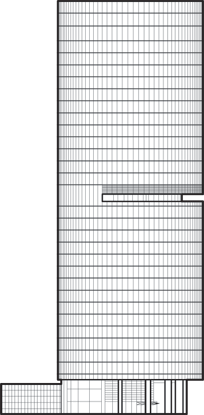
Official Name
1 Bligh Street
Other Names
Space
Type
Building
Status
Completed
Completion
2011
Country
City
Address
Function
A mixed-use tall building contains two or more functions (or uses), where each of the functions occupy a significant proportion of the tower's total space. Support areas such as car parks and mechanical plant space do not constitute mixed-use functions. Functions are denoted on CVU "Tallest Building" lists in descending order, e.g., "hotel/office" indicates hotel function above office function.
Office
Structural Material
Both the main vertical/lateral structural elements and the floor spanning systems are constructed from steel. Note that a building of steel construction with a floor system of concrete planks or concrete slab on top of steel beams is still considered an “all-steel” structure as the concrete elements are not acting as the primary structure.
All-Concrete
Both the main vertical/lateral structural elements and the floor spanning systems are constructed from concrete which has been cast in place and utilizes steel reinforcement bars and/or steel reinforced concrete which has been precast as individual components and assembled together on-site.
All-Timber
Both the main vertical/lateral structural elements and the floor spanning systems are constructed from timber. An all-timber structure may include the use of localized non-timber connections between timber elements. Note that a building of timber construction with a floor system of concrete planks or concrete slab on top of timber beams is still considered an “all-timber” structure as the concrete elements are not acting as the primary structure.
Mixed-Structure
Utilizes distinct systems (e.g. all-steel, all-concrete, all-timber), one on top of the other. For example, a Steel Over Concrete indicates an all-steel structural system located on top of an all-concrete structural system, with the opposite true of Concrete Over Steel.
Composite
A combination of materials (e.g. steel, concrete, timber) are used together in the main structural elements. Examples include buildings which utilize: steel columns with a floor system of reinforced concrete beams; a steel frame system with a concrete core; concrete-encased steel columns; concrete-filled steel tubes; etc. Where known, the CVU database breaks out the materials used within a composite building’s primary structural elements.
All-Concrete
Energy Label
6 Star Green Star
Official Website
Height
133 m / 436 ft
Floors Above Ground
30
Floors Below Ground
5
# of Parking Spaces
96
# of Elevators
17
Top Elevator Speed
6 m/s
Tower GFA
45,700 m² / 491,911 ft²
Rankings
-
By function
You must be a CVU Member to view this resource.
-
By material
You must be a CVU Member to view this resource.
Construction Schedule
Proposed
Construction Start
Completed
Owner/Developer
Architect
Usually involved in the front end design, with a "typical" condition being that of a leadership role through either Schematic Design or Design Development, and then a monitoring role through the CD and CA phases.
Usually takes on the balance of the architectural effort not executed by the "Design Architect," typically responsible for the construction documents, conforming to local codes, etc. May often be referred to as "Executive," "Associate," or "Local" Architect, however, for consistency CTBUH uses the term "Architect of Record" exclusively.
Structural Engineer
The Design Engineer is usually involved in the front end design, typically taking the leadership role in the Schematic Design and Design Development, and then a monitoring role through the CD and CA phases.
MEP Engineer
The Design Engineer is usually involved in the front end design, typically taking the leadership role in the Schematic Design and Design Development, and then a monitoring role through the CD and CA phases.
Other Consultant
Other Consultant refers to other organizations which provided significant consultation services for a building project (e.g. wind consultants, environmental consultants, fire and life safety consultants, etc).
Other Consultant refers to other organizations which provided significant consultation services for a building project (e.g. wind consultants, environmental consultants, fire and life safety consultants, etc).
Material Supplier
Material Supplier refers to organizations which supplied significant systems/materials for a building project (e.g. elevator suppliers, facade suppliers, etc).
Material Supplier refers to organizations which supplied significant systems/materials for a building project (e.g. elevator suppliers, facade suppliers, etc).
You must be a CVU Member to view this resource.
Owner/Developer
Cbus Property
Architect
Usually involved in the front end design, with a "typical" condition being that of a leadership role through either Schematic Design or Design Development, and then a monitoring role through the CD and CA phases.
Usually takes on the balance of the architectural effort not executed by the "Design Architect," typically responsible for the construction documents, conforming to local codes, etc. May often be referred to as "Executive," "Associate," or "Local" Architect, however, for consistency CTBUH uses the term "Architect of Record" exclusively.
Structural Engineer
The Design Engineer is usually involved in the front end design, typically taking the leadership role in the Schematic Design and Design Development, and then a monitoring role through the CD and CA phases.
MEP Engineer
The Design Engineer is usually involved in the front end design, typically taking the leadership role in the Schematic Design and Design Development, and then a monitoring role through the CD and CA phases.
Project Manager
The CTBUH lists a project manager when a specific firm has been commissioned to oversee this aspect of a tall building’s design/construction. When the project management efforts are handled by the developer, main contract, or architect, this field will be omitted.
The CTBUH lists a project manager when a specific firm has been commissioned to oversee this aspect of a tall building’s design/construction. When the project management efforts are handled by the developer, main contract, or architect, this field will be omitted.
APP Corporation; Drees & Sommer Advanced Building
Contractor
The main contractor is the supervisory contractor of all construction work on a project, management of sub-contractors and vendors, etc. May be referred to as "Construction Manager," however, for consistency CTBUH uses the term "Main Contractor" exclusively.
Grocon
Other Consultant
Other Consultant refers to other organizations which provided significant consultation services for a building project (e.g. wind consultants, environmental consultants, fire and life safety consultants, etc).
Other Consultant refers to other organizations which provided significant consultation services for a building project (e.g. wind consultants, environmental consultants, fire and life safety consultants, etc).
These are firms that consult on the design of a building's façade. May often be referred to as "Cladding," "Envelope," "Exterior Wall," or "Curtain Wall" Consultant, however, for consistency CTBUH uses the term "Façade Consultant" exclusively.
G.James Glass and Aluminium Pty. Ltd
Group DLA
Material Supplier
Material Supplier refers to organizations which supplied significant systems/materials for a building project (e.g. elevator suppliers, facade suppliers, etc).
Material Supplier refers to organizations which supplied significant systems/materials for a building project (e.g. elevator suppliers, facade suppliers, etc).
AkzoNobel
CVU Awards & Distinctions
10 Year Award 2021 Winner
2021 CVU Awards
Best Tall Building, by Region, Asia & Australasia 2012 Winner
2012 CVU Awards
About 1 Bligh Street
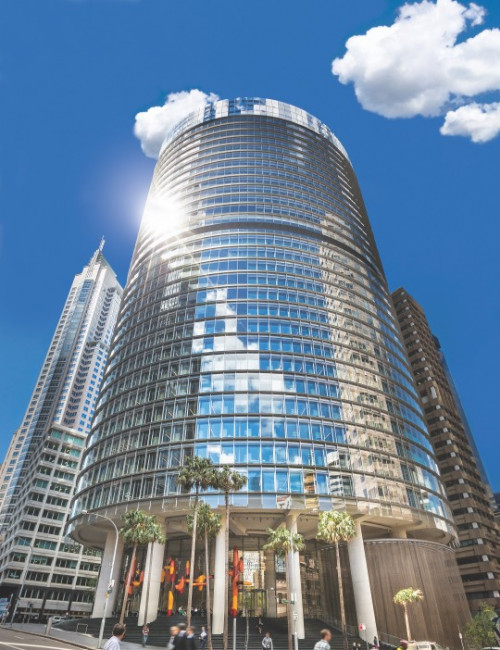
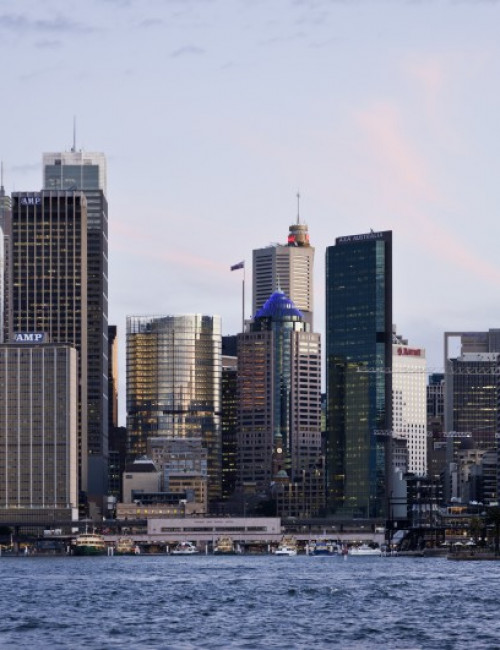
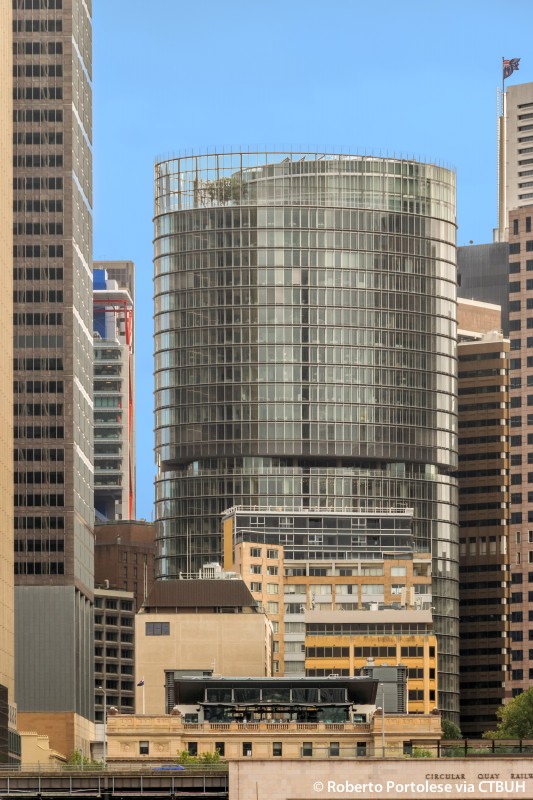
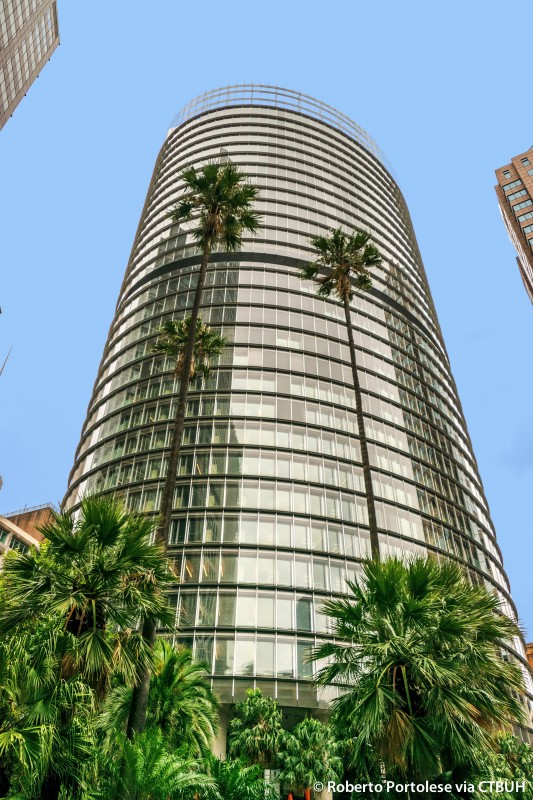
Instead of attempting to create an iconic new high-rise landmark in the heart of Sydney’s financial district, the client and design team of 1 Bligh Street desired to set new standards for site consciousness and sustainability. The new tower, located on a corner site in a densely packed district of the city, does not stand out as the tallest building in Sydney’s skyline, but instead has become well known as a welcoming and pleasant place to work that integrates well with its environment while responding directly to concerns of resource and material use.
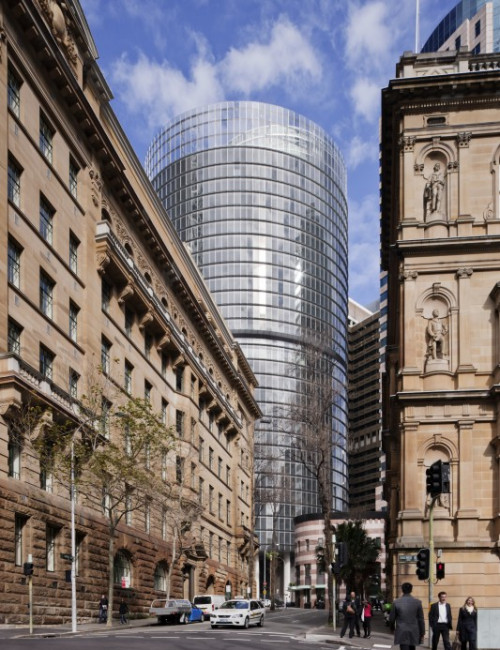
Located at the convergence of Bligh, O’Connell, and Bent Streets, the client’s goals for the new tower were to create a flexible, efficient, and transparent design for the boxed-in site. Across Bent Street lies a public plaza, Farrer Place, to which the client hoped to preserve direct sunlight by minimizing shadows cast by the new tower. Two mid-rise, 19th-century buildings are situated adjacent to the plaza, allowing ample natural light to reach the site. However, the surrounding outdoor areas had become deactivated to public use because of the built-up and sterile nature of the business district.
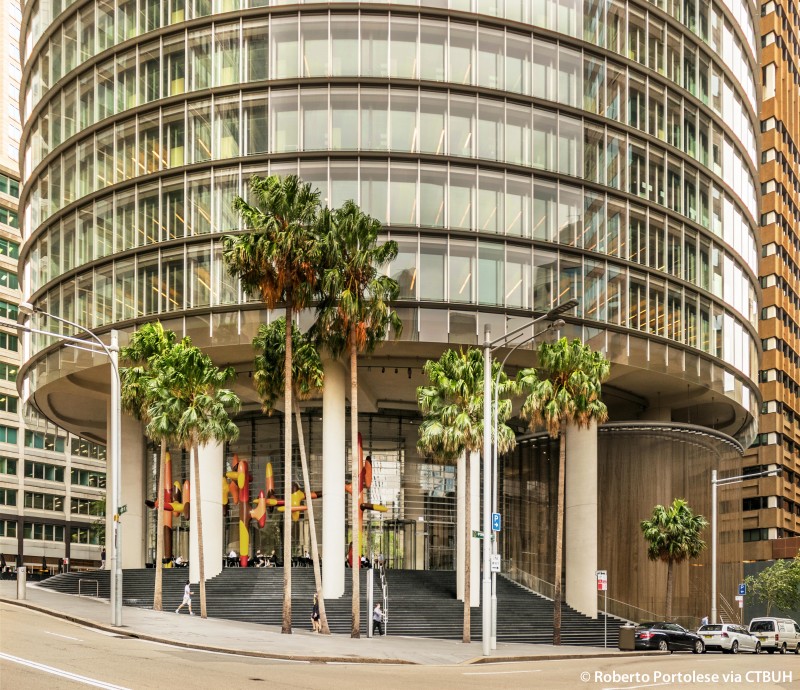
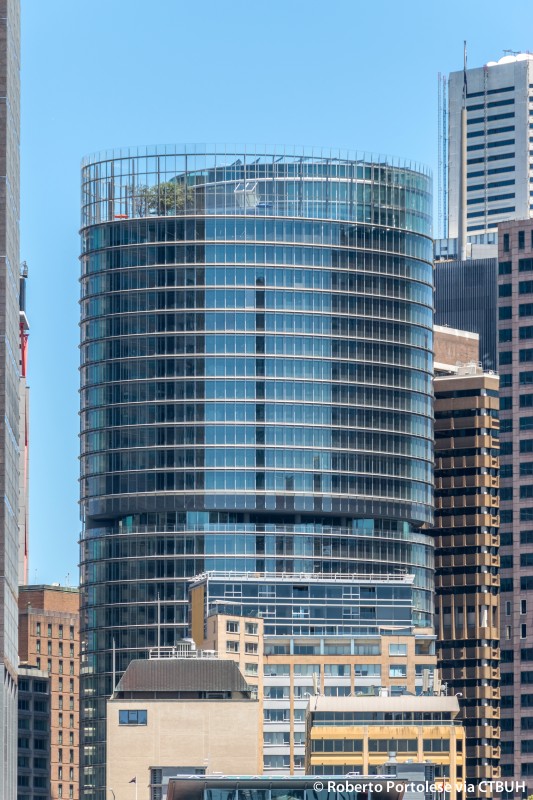
In response to the site restrictions and client goals, the overall form of the building is elliptical and oriented to take advantage of the best Sydney Harbor views. The ellipse was formed in response to the Sydney grid and its termination, resolving the issue of converging street geometries. This shape also allows a dialogue with the surrounding buildings while preventing the area from feeling overly encompassed with built forms and allowing daylight to filter to ground level.
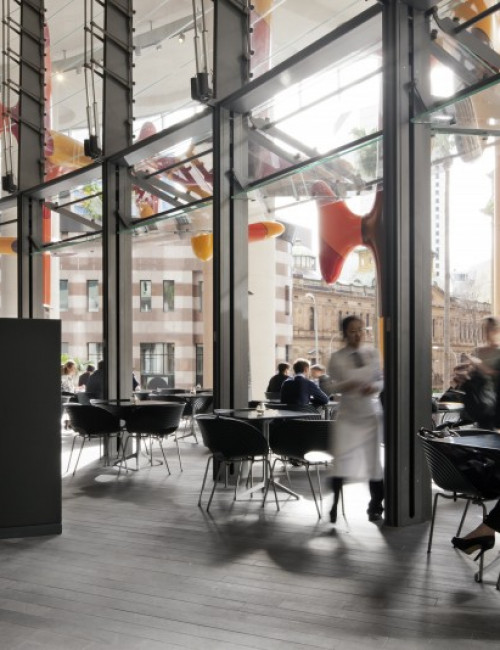
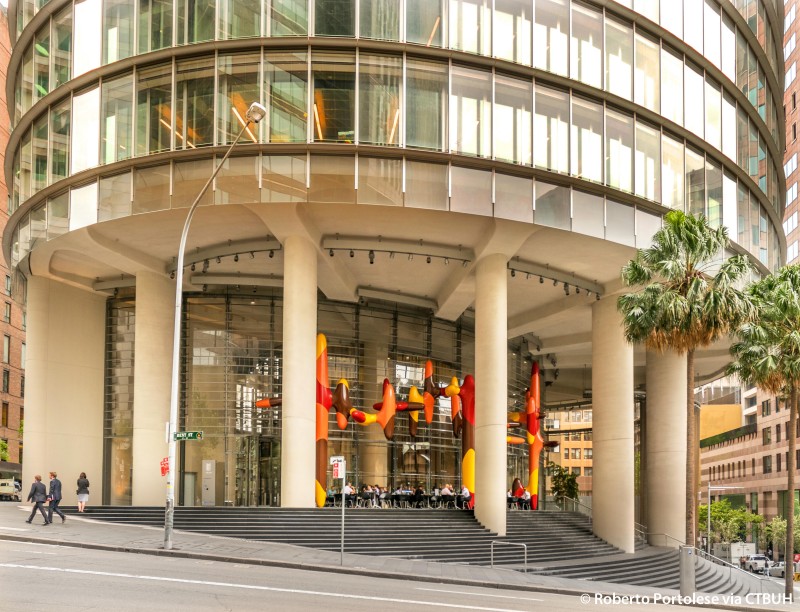
At its base, the tower is mostly open to the public, with only 40% of the overall footprint enclosed, providing an overhang for public activities. Under this canopy are a large staircase which also serves as an open public meeting spot, a children’s play area, and open-air café seating. This expansive civic space connects to the neighboring Farrer Place and has completely transformed the area, enlivening the precinct and encouraging activity.
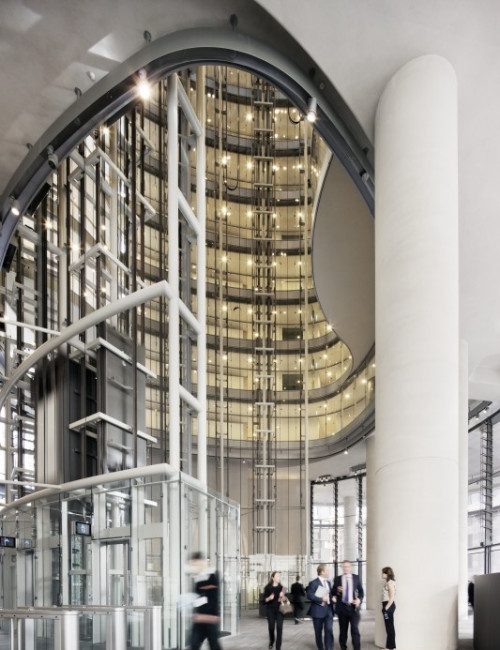
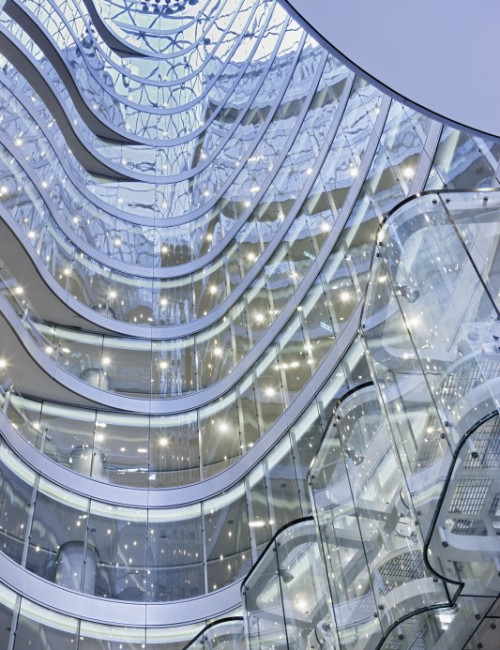
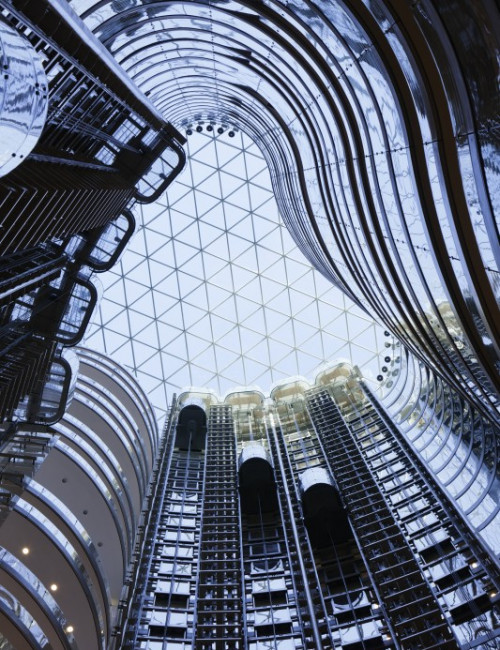
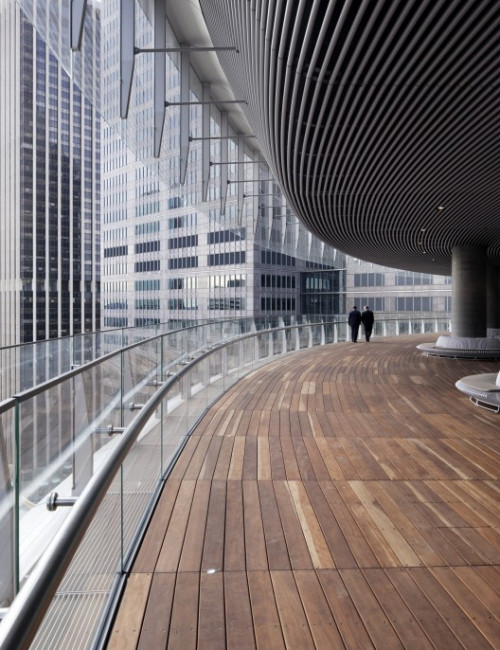
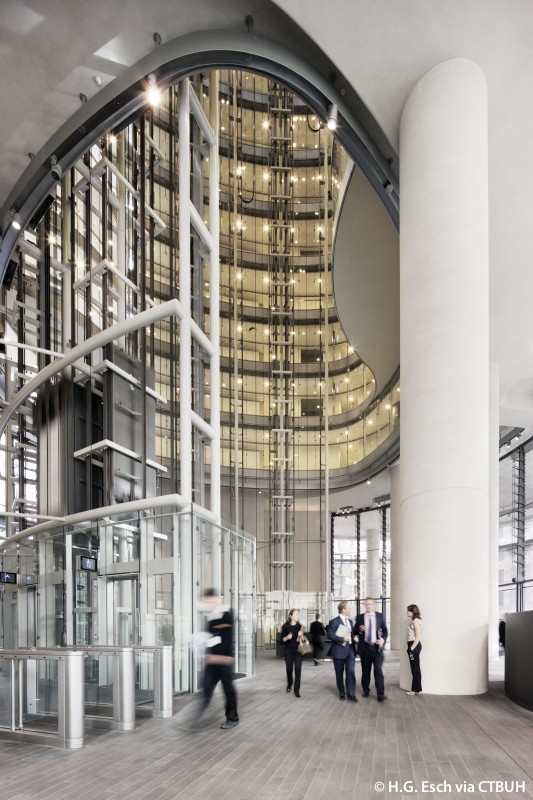
Upon entering the ground floor of the tower, users are greeted by a soaring full-height, naturally ventilated atrium. This curvilinear space serves to bring daylight and fresh air into the core of the building, creating a unique experience for the balconies on the office floors. Eight of the tower’s fourteen lifts accessing the office floors are also placed within this atrium, each with glazed walls to provide a unique traveling experience through the light-filled space. A large winter garden with views of the harbor is located at level 15, and a large rooftop garden also provides views of the city and harbor, 28 stories above ground level.
The floor plates of the building, 1,600 square meters each, are highly efficient with a 92% net lettable to gross floor area ratio, while also providing a maximum amount of daylight to all areas. The elliptical shape minimizes distances to vertical transportation and amenities, and is 12% more efficient than rectilinear options in façade-to-floor area.
The exterior of the building is a double-skin glazed façade, which is externally ventilated to improve performance and also houses automated solar blinds to protect from direct sunlight. The façade system was designed to promote exterior views and daylighting while minimizing glare and solar heat gain. In addition, views and comfort for occupants are increased. As a significant contributor to the energy efficiency of the overall building, the façade has a shading coefficient of 0.15.
To achieve a Six Star Green Star rating, the tower also implemented several other key sustainable features. A hybrid tri-generation plant installed on the premises utilizes gas-fired power, absorption chillers, and solar-powered cooling to increase efficiency and minimize peak loads. The building is estimated to provide a 40% decrease in energy consumption over a comparable Five Star NABERS Energy Rated building.
A comprehensive blackwater treatment facility was also designed for the tower to use filtered sewer water from the municipal waste stream to flush toilets and provide makeup water for the cooling towers. This system provides 100,000 liters per day, reducing the demand on municipal potable water by 90%.
The materials used in the construction of the tower also contribute greatly to the sustainability of the building. Over 20% of the aggregate used in concrete was recycled material, and about 41% of the cement was replaced with industrial waste by-products, diverting them from traditional waste streams. Ninety percent of the structural steel has a recycled content of at least 50%. Lastly, all timber used was either recycled or from an FSC-certified source.
CVU Awards & Distinctions
10 Year Award 2021 Winner
2021 CVU Awards
Best Tall Building, by Region, Asia & Australasia 2012 Winner
2012 CVU Awards
Learn more about the Council on Vertical Urbanism
Discover how vertical living is shaping the next generation of urban environments. Explore insights, research, and global leadership in vertical urban development