




Height rank
Shanghai World Financial Center
Shanghai




terrimeyerboake.jpg)
tm.jpg)

tm.jpg)
tm.jpg)
kpf.jpg)


kpf.jpg)
kpf.jpg)
kpf.jpg)
tm.jpg)

kpf.jpg)
kpf.jpg)
kpf.jpg)
moribuilding.jpg)
kpf.jpg)
leslieeroberston.jpg)
timothy__johnson.jpg)
leslieeroberston.jpg)

kpf.jpg)

kpf-0.jpg)
- CVU Drawing
- Facts
-
Metrics
You must be a CVU Member to view this resource.
To Tip:
Height is measured from the level of the lowest, significant, open-air, pedestrian entrance to the highest point of the building, irrespective of material or function of the highest element (i.e., including antennae, flagpoles, signage and other functional-technical equipment).Architectural:
Height is measured from the level of the lowest, significant, open-air, pedestrian entrance to the architectural top of the building, including spires, but not including antennae, signage, flag poles or other functional-technical equipment. This measurement is the most widely utilized and is employed to define the Council on Vertical Urbanism (CVU) rankings of the "World's Tallest Buildings."Occupied:
Height is measured from the level of the lowest, significant, open-air, pedestrian entrance to the highest occupied floor within the building.
Above Ground
The number of floors above ground should include the ground floor level and be the number of main floors above ground, including any significant mezzanine floors and major mechanical plant floors. Mechanical mezzanines should not be included if they have a significantly smaller floor area than the major floors below. Similarly, mechanical penthouses or plant rooms protruding above the general roof area should not be counted. Note: CVU floor counts may differ from published accounts, as it is common in some regions of the world for certain floor levels not to be included (e.g., the level 4, 14, 24, etc. in Hong Kong).Below Ground
The number of floors below ground should include all major floors located below the ground floor level.Official Name
Shanghai World Financial Center
Other Names
SWFC, Park Hyatt Shanghai
Type
Building
Status
Completed
Completion
2008
Country
City
Function
A mixed-use tall building contains two or more functions (or uses), where each of the functions occupy a significant proportion of the tower's total space. Support areas such as car parks and mechanical plant space do not constitute mixed-use functions. Functions are denoted on CVU "Tallest Building" lists in descending order, e.g., "hotel/office" indicates hotel function above office function.
Hotel / Office
Structural Material
Both the main vertical/lateral structural elements and the floor spanning systems are constructed from steel. Note that a building of steel construction with a floor system of concrete planks or concrete slab on top of steel beams is still considered an “all-steel” structure as the concrete elements are not acting as the primary structure.
All-Concrete
Both the main vertical/lateral structural elements and the floor spanning systems are constructed from concrete which has been cast in place and utilizes steel reinforcement bars and/or steel reinforced concrete which has been precast as individual components and assembled together on-site.
All-Timber
Both the main vertical/lateral structural elements and the floor spanning systems are constructed from timber. An all-timber structure may include the use of localized non-timber connections between timber elements. Note that a building of timber construction with a floor system of concrete planks or concrete slab on top of timber beams is still considered an “all-timber” structure as the concrete elements are not acting as the primary structure.
Mixed-Structure
Utilizes distinct systems (e.g. all-steel, all-concrete, all-timber), one on top of the other. For example, a Steel Over Concrete indicates an all-steel structural system located on top of an all-concrete structural system, with the opposite true of Concrete Over Steel.
Composite
A combination of materials (e.g. steel, concrete, timber) are used together in the main structural elements. Examples include buildings which utilize: steel columns with a floor system of reinforced concrete beams; a steel frame system with a concrete core; concrete-encased steel columns; concrete-filled steel tubes; etc. Where known, the CVU database breaks out the materials used within a composite building’s primary structural elements.
Concrete-Steel Composite
Official Website
Height
492 m / 1,614 ft
Floors Above Ground
101
Floors Below Ground
3
# of Parking Spaces
1100
# of Elevators
91
Top Elevator Speed
10 m/s
Tower GFA
381,600 m² / 4,107,508 ft²
Rankings
-
By function
You must be a CVU Member to view this resource.
-
By material
You must be a CVU Member to view this resource.
Construction Schedule
Proposed
Construction Start
Completed
Developer
Architect
Usually involved in the front end design, with a "typical" condition being that of a leadership role through either Schematic Design or Design Development, and then a monitoring role through the CD and CA phases.
Usually takes on the balance of the architectural effort not executed by the "Design Architect," typically responsible for the construction documents, conforming to local codes, etc. May often be referred to as "Executive," "Associate," or "Local" Architect, however, for consistency CTBUH uses the term "Architect of Record" exclusively.
Structural Engineer
The Design Engineer is usually involved in the front end design, typically taking the leadership role in the Schematic Design and Design Development, and then a monitoring role through the CD and CA phases.
The Engineer of Record takes the balance of the engineering effort not executed by the “Design Engineer,” typically responsible for construction documents, conforming to local codes, etc.
Other Consultant
Other Consultant refers to other organizations which provided significant consultation services for a building project (e.g. wind consultants, environmental consultants, fire and life safety consultants, etc).
Other Consultant refers to other organizations which provided significant consultation services for a building project (e.g. wind consultants, environmental consultants, fire and life safety consultants, etc).
These are firms that consult on the design of a building's façade. May often be referred to as "Cladding," "Envelope," "Exterior Wall," or "Curtain Wall" Consultant, however, for consistency CTBUH uses the term "Façade Consultant" exclusively.
Material Supplier
Material Supplier refers to organizations which supplied significant systems/materials for a building project (e.g. elevator suppliers, facade suppliers, etc).
Material Supplier refers to organizations which supplied significant systems/materials for a building project (e.g. elevator suppliers, facade suppliers, etc).
You must be a CVU Member to view this resource.
Developer
Architect
Usually involved in the front end design, with a "typical" condition being that of a leadership role through either Schematic Design or Design Development, and then a monitoring role through the CD and CA phases.
Kohn Pedersen Fox Associates; Mori Building; Irie Miyake Architects and Engineers
Usually takes on the balance of the architectural effort not executed by the "Design Architect," typically responsible for the construction documents, conforming to local codes, etc. May often be referred to as "Executive," "Associate," or "Local" Architect, however, for consistency CTBUH uses the term "Architect of Record" exclusively.
East China Architectural Design & Research Institute; Shanghai Modern Architectural Design Company
Structural Engineer
The Design Engineer is usually involved in the front end design, typically taking the leadership role in the Schematic Design and Design Development, and then a monitoring role through the CD and CA phases.
The Engineer of Record takes the balance of the engineering effort not executed by the “Design Engineer,” typically responsible for construction documents, conforming to local codes, etc.
MEP Engineer
The Design Engineer is usually involved in the front end design, typically taking the leadership role in the Schematic Design and Design Development, and then a monitoring role through the CD and CA phases.
Kenchiku Setsubi Sekkei Kenkyusho
Contractor
The main contractor is the supervisory contractor of all construction work on a project, management of sub-contractors and vendors, etc. May be referred to as "Construction Manager," however, for consistency CTBUH uses the term "Main Contractor" exclusively.
China State Construction Engineering Corporation; Shanghai Construction Group
Other Consultant
Other Consultant refers to other organizations which provided significant consultation services for a building project (e.g. wind consultants, environmental consultants, fire and life safety consultants, etc).
Other Consultant refers to other organizations which provided significant consultation services for a building project (e.g. wind consultants, environmental consultants, fire and life safety consultants, etc).
These are firms that consult on the design of a building's façade. May often be referred to as "Cladding," "Envelope," "Exterior Wall," or "Curtain Wall" Consultant, however, for consistency CTBUH uses the term "Façade Consultant" exclusively.
ALT Limited; Permasteelisa Group
Hyatt Hotels Corporation; CBRE
Langdon & Seah
Material Supplier
Material Supplier refers to organizations which supplied significant systems/materials for a building project (e.g. elevator suppliers, facade suppliers, etc).
Material Supplier refers to organizations which supplied significant systems/materials for a building project (e.g. elevator suppliers, facade suppliers, etc).
HALFEN
Hitachi Elevator (China) Co,. Ltd.; Otis Elevator Company; thyssenkrupp; Toshiba Elevator and Building Systems Corporation (TELC)
AkzoNobel
Dow Corning Corporation; Momentive
China Construction Steel Structure Corporation; ArcelorMittal
CVU Awards & Distinctions
Best Tall Building Worldwide 2008 Winner
2008 CVU Awards
10 Year Award 2018 Winner
2018 CVU Awards
Best Tall Building, by Region, Asia & Australasia 2008 Winner
2008 CVU Awards
About Shanghai World Financial Center
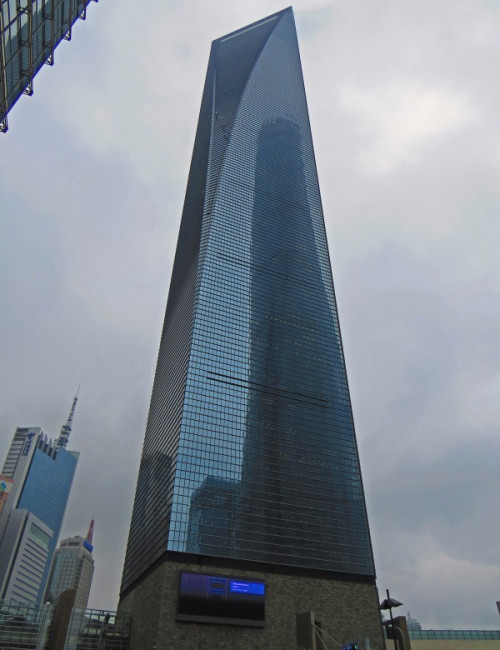
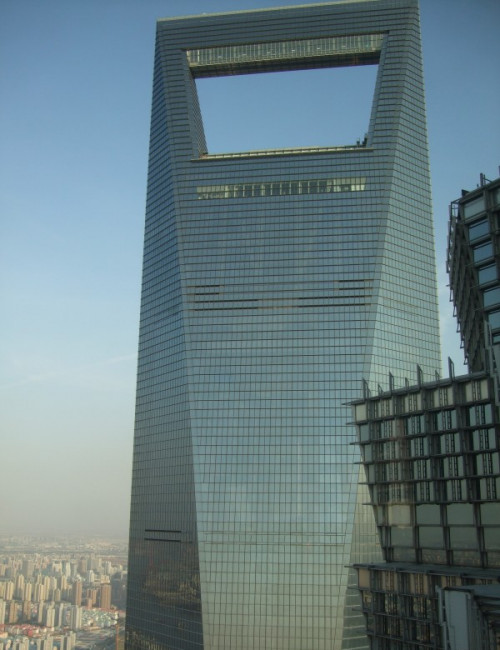
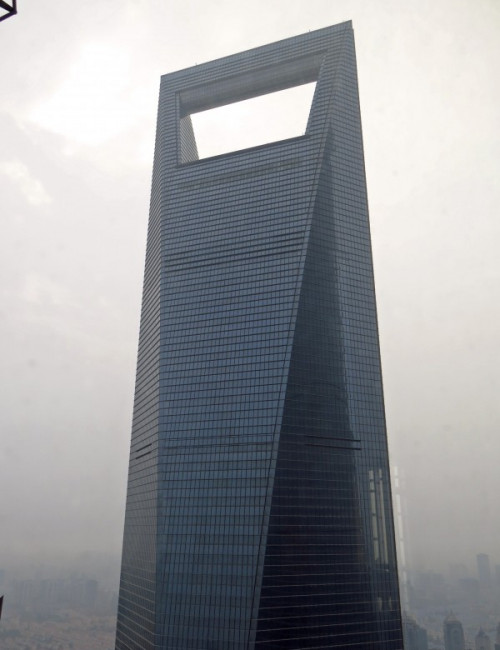
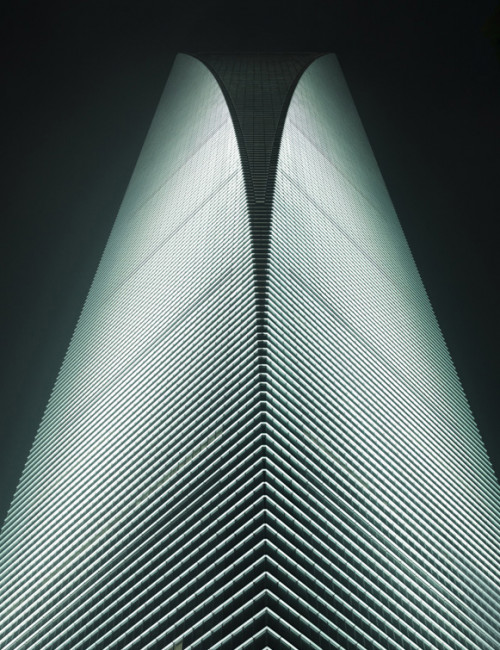
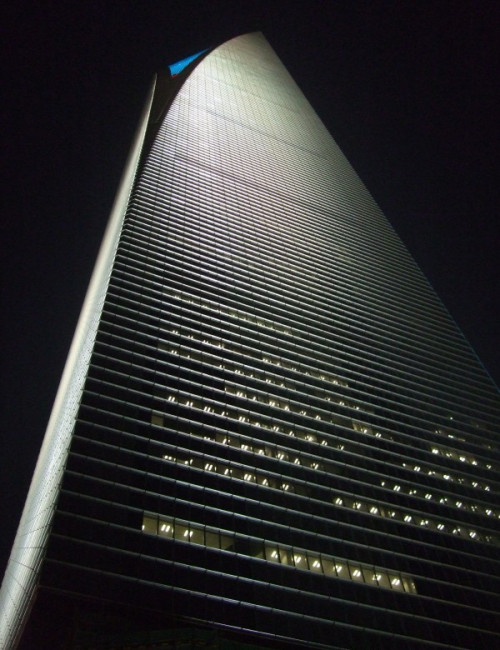
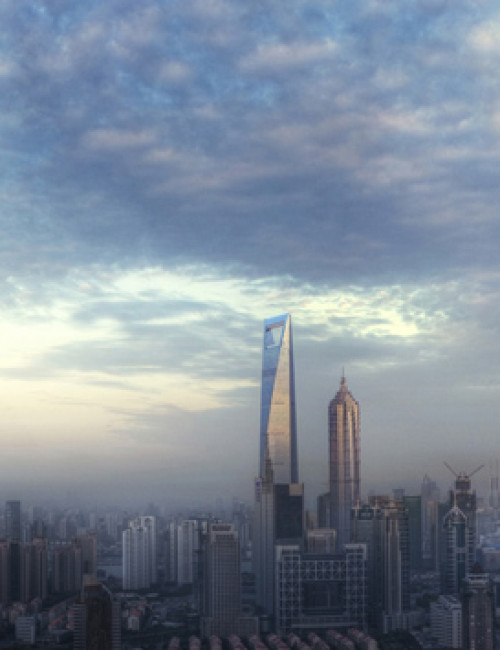
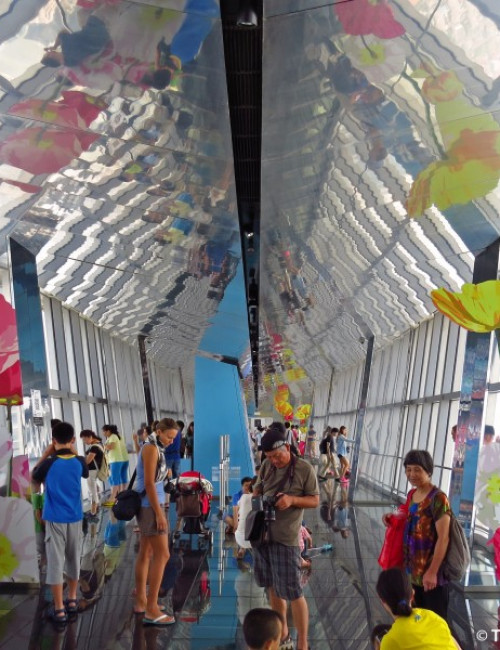
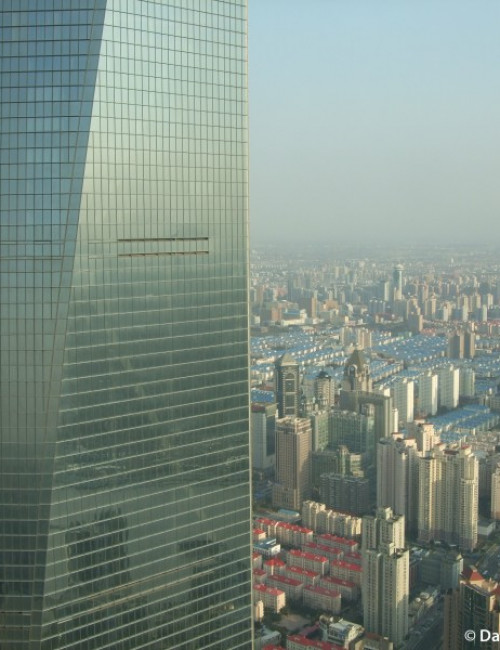
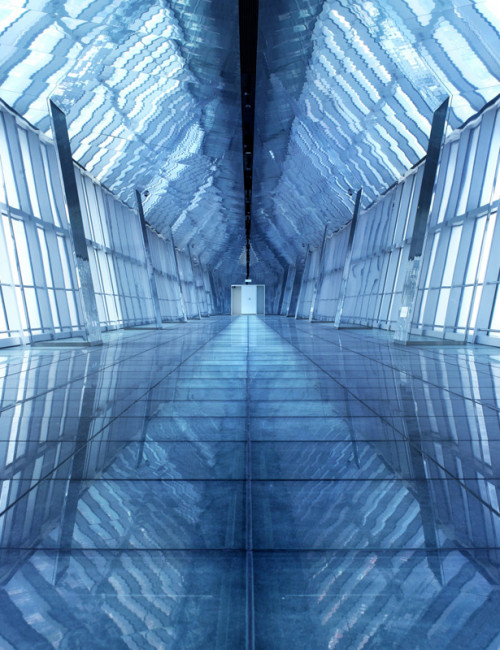
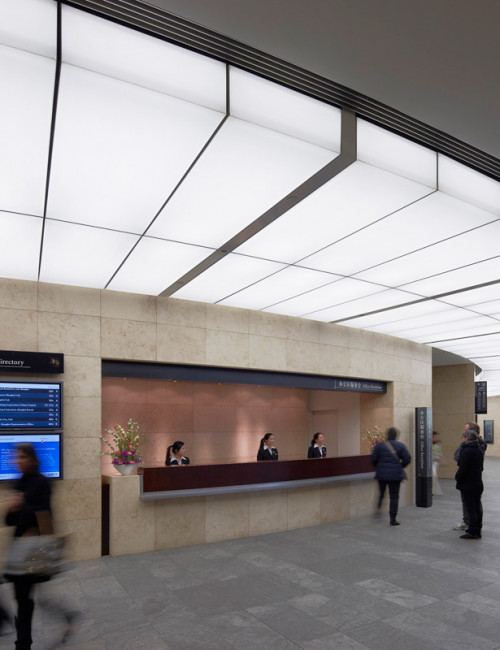
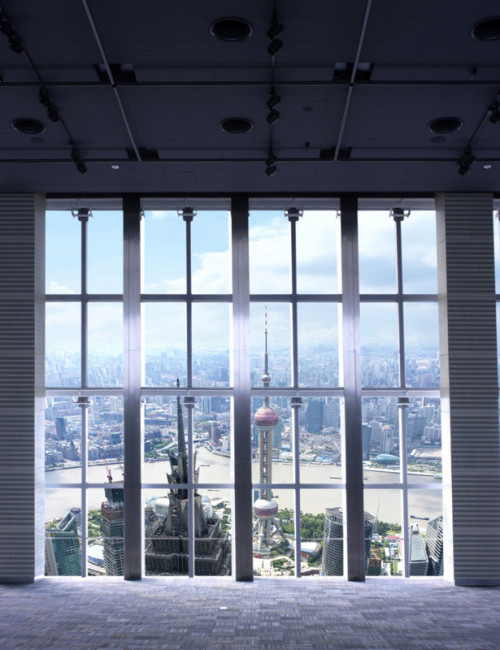
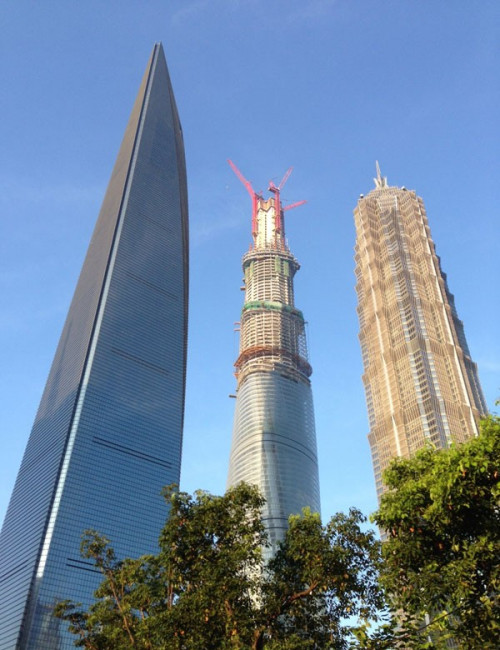
The Shanghai World Financial Center is a symbol of commerce and culture that speaks to the city’s emergence as a global capital. Located in Shanghai’s Pudong District, the mixed-used Shanghai World Financial Center is a vertical city, containing 62 office floors, conference facilities, urban retail and dining spaces, and a 174-room five-star Park Hyatt Hotel at the top—the world’s highest hotel from the 79th to 93rd floors. Above the hotel, at the 94th to 100th floors, is a visitors’ square and observatory.
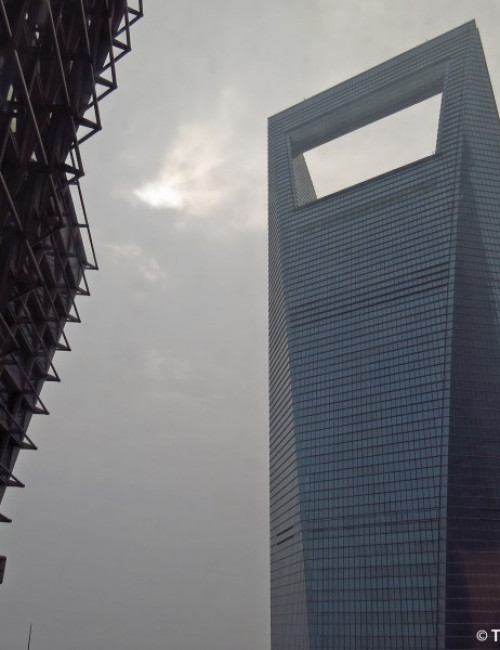
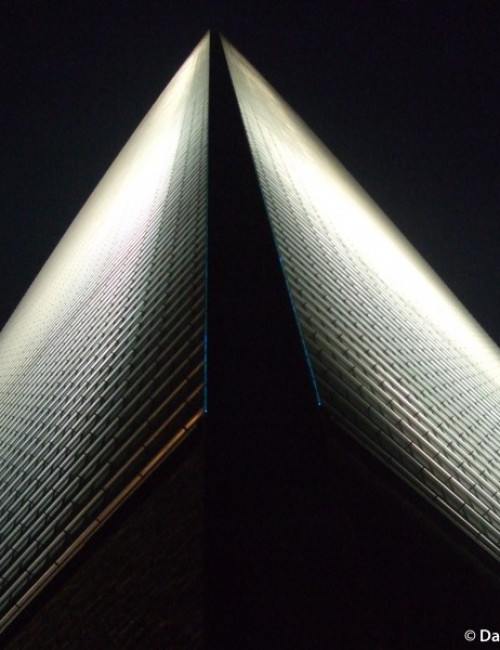
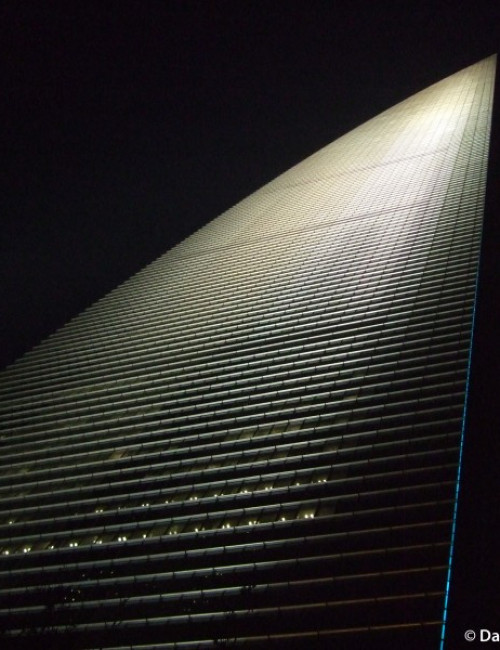
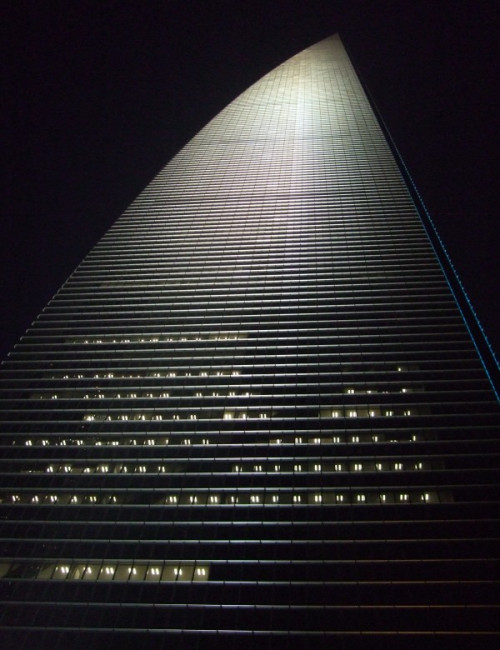
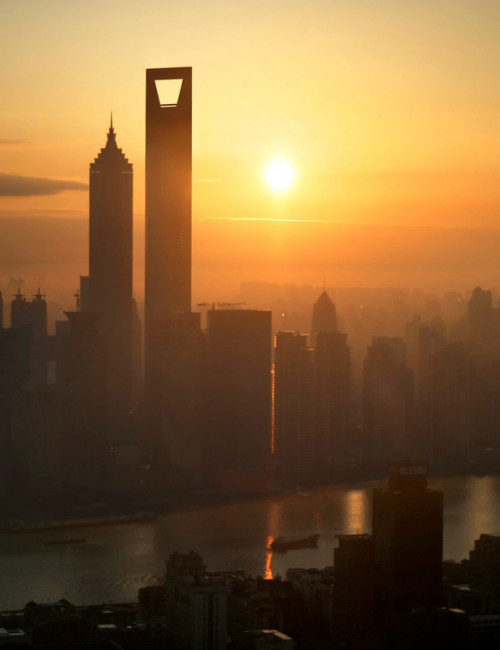
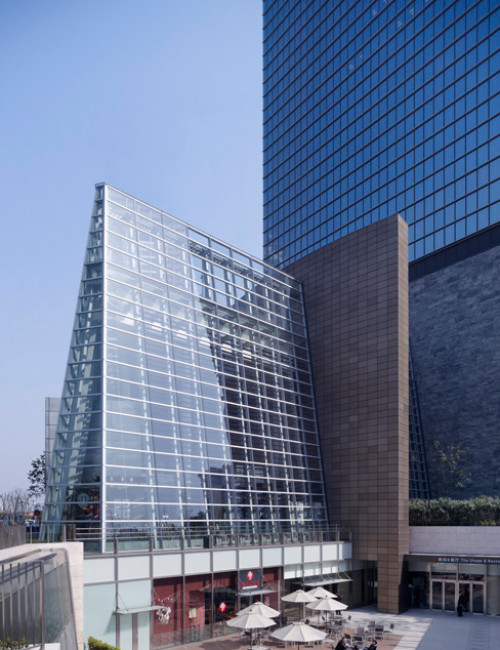
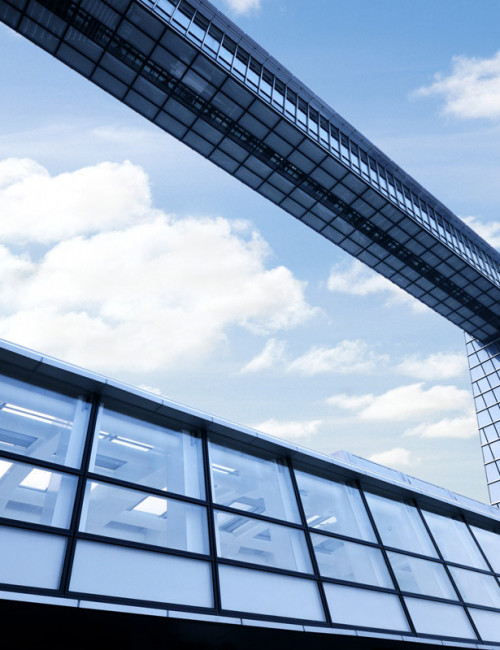
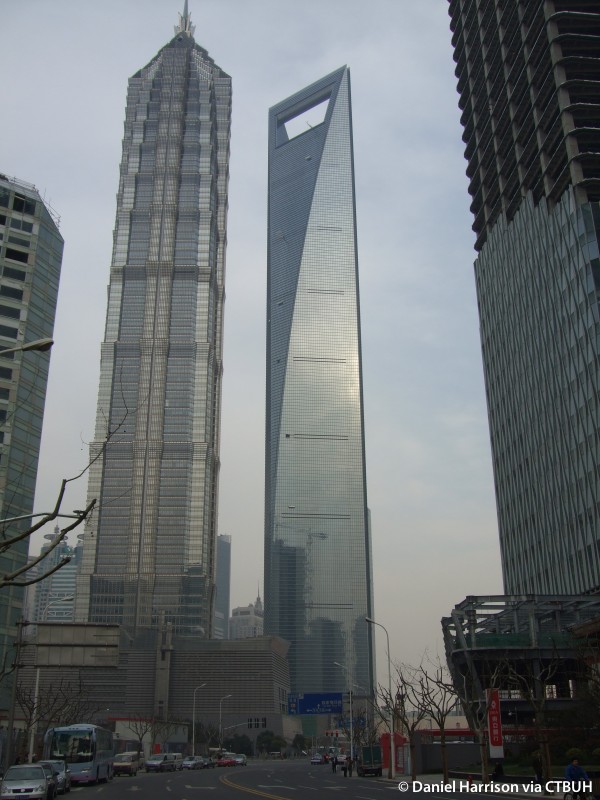
Shaped by the intersection of two sweeping arcs and a square prism—shapes representing ancient Chinese symbols of heaven and earth, respectively—the tower’s tapering form supports programmatic efficiencies, from large floor plates at its base for offices to rectilinear floors near the top for hotel rooms. Its boldest feature, the 164-foot-wide portal carved through its upper levels relieves the enormous wind pressures on the building. The project activates the ground plane through function-specific entrance volumes (e.g., hotel, office and retail) that extend from its stone-clad base. To further connect the activities of the building to the city, the retail volume is oriented toward a public park planned for an adjacent site.
Optimizing form and function was paramount to the design, integrating the structure, mechanical systems, and exterior envelope in a modular system that repeats every 13 floors to facilitate the fabrication and installation of components, and, in turn, reduce construction time, material waste, and structural inefficiencies. The purity of the tower’s design belies the inherent complexity of the various building systems within, and is readily adaptable to the changing programmatic requirements that often arise during the long timeline of such a large project, as well as to the changing needs of building users.
The project was put on hold in 1995 after the completion of the foundations. When revived in 1999 the height and base dimensions were both increased from the original design. Reinforcing the existing piles to accommodate these changes would have been possible but costly. The new, taller structure would not only have to be made lighter, but would need to resist higher wind loads, which increase exponentially with height.
The project’s structural engineer developed a new system, employing composite mega-columns, diagonal mega-braces, steel out-riggers, belt trusses, and core wall trusses, the pile loads were redistributed to accept increased lateral loads from wind and earthquake. The stiffness of the lateral force-resisting system of the perimeter wall was increased, and as such, the original design for the perimeter framing was abandoned in favor of a diagonal-braced frame with added outrigger trusses coupled to the columns of the mega-structure. This enabled the weight of the building to be reduced by more than 10% and resulted in a reduced cost for the structure, provided for speedier construction, and significantly reduced the material that went into the building and thus made the building even more environmentally friendly.
CVU Awards & Distinctions
Best Tall Building Worldwide 2008 Winner
2008 CVU Awards
10 Year Award 2018 Winner
2018 CVU Awards
Best Tall Building, by Region, Asia & Australasia 2008 Winner
2008 CVU Awards
Learn more about the Council on Vertical Urbanism
Discover how vertical living is shaping the next generation of urban environments. Explore insights, research, and global leadership in vertical urban development