




Height rank
Zifeng Tower
Nanjing



ecadi.jpg)
ecadi.jpg)
ecadi.jpg)
ecadi.jpg)

ECADI.jpg)


jackno1.jpg)
ecadi.jpg)
- CVU Drawing
- Facts
-
Metrics
You must be a CVU Member to view this resource.
To Tip:
Height is measured from the level of the lowest, significant, open-air, pedestrian entrance to the highest point of the building, irrespective of material or function of the highest element (i.e., including antennae, flagpoles, signage and other functional-technical equipment).Architectural:
Height is measured from the level of the lowest, significant, open-air, pedestrian entrance to the architectural top of the building, including spires, but not including antennae, signage, flag poles or other functional-technical equipment. This measurement is the most widely utilized and is employed to define the Council on Vertical Urbanism (CVU) rankings of the "World's Tallest Buildings."Occupied:
Height is measured from the level of the lowest, significant, open-air, pedestrian entrance to the highest occupied floor within the building.Above Ground
The number of floors above ground should include the ground floor level and be the number of main floors above ground, including any significant mezzanine floors and major mechanical plant floors. Mechanical mezzanines should not be included if they have a significantly smaller floor area than the major floors below. Similarly, mechanical penthouses or plant rooms protruding above the general roof area should not be counted. Note: CVU floor counts may differ from published accounts, as it is common in some regions of the world for certain floor levels not to be included (e.g., the level 4, 14, 24, etc. in Hong Kong).Below Ground
The number of floors below ground should include all major floors located below the ground floor level.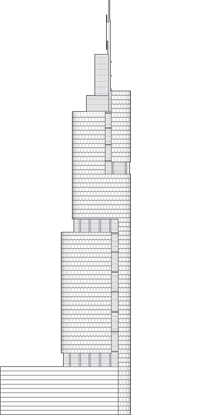
Official Name
Zifeng Tower
Other Names
InterContinental Hotel Nanjing, Nanjing Greenland Financial Center
Type
Building
Status
Completed
Completion
2010
Country
City
Function
A mixed-use tall building contains two or more functions (or uses), where each of the functions occupy a significant proportion of the tower's total space. Support areas such as car parks and mechanical plant space do not constitute mixed-use functions. Functions are denoted on CVU "Tallest Building" lists in descending order, e.g., "hotel/office" indicates hotel function above office function.
Hotel / Office
Structural Material
Both the main vertical/lateral structural elements and the floor spanning systems are constructed from steel. Note that a building of steel construction with a floor system of concrete planks or concrete slab on top of steel beams is still considered an “all-steel” structure as the concrete elements are not acting as the primary structure.
All-Concrete
Both the main vertical/lateral structural elements and the floor spanning systems are constructed from concrete which has been cast in place and utilizes steel reinforcement bars and/or steel reinforced concrete which has been precast as individual components and assembled together on-site.
All-Timber
Both the main vertical/lateral structural elements and the floor spanning systems are constructed from timber. An all-timber structure may include the use of localized non-timber connections between timber elements. Note that a building of timber construction with a floor system of concrete planks or concrete slab on top of timber beams is still considered an “all-timber” structure as the concrete elements are not acting as the primary structure.
Mixed-Structure
Utilizes distinct systems (e.g. all-steel, all-concrete, all-timber), one on top of the other. For example, a Steel Over Concrete indicates an all-steel structural system located on top of an all-concrete structural system, with the opposite true of Concrete Over Steel.
Composite
A combination of materials (e.g. steel, concrete, timber) are used together in the main structural elements. Examples include buildings which utilize: steel columns with a floor system of reinforced concrete beams; a steel frame system with a concrete core; concrete-encased steel columns; concrete-filled steel tubes; etc. Where known, the CVU database breaks out the materials used within a composite building’s primary structural elements.
Concrete-Steel Composite
Official Website
Height
450 m / 1,476 ft
Floors Above Ground
66
Floors Below Ground
5
# of Hotel Rooms
450
# of Parking Spaces
1200
# of Elevators
54
Top Elevator Speed
7 m/s
Tower GFA
137,529 m² / 1,480,350 ft²
Rankings
-
By function
You must be a CVU Member to view this resource.
-
By material
You must be a CVU Member to view this resource.
Construction Schedule
Proposed
Construction Start
Completed
Architect
Usually involved in the front end design, with a "typical" condition being that of a leadership role through either Schematic Design or Design Development, and then a monitoring role through the CD and CA phases.
Structural Engineer
The Design Engineer is usually involved in the front end design, typically taking the leadership role in the Schematic Design and Design Development, and then a monitoring role through the CD and CA phases.
MEP Engineer
The Design Engineer is usually involved in the front end design, typically taking the leadership role in the Schematic Design and Design Development, and then a monitoring role through the CD and CA phases.
Other Consultant
Other Consultant refers to other organizations which provided significant consultation services for a building project (e.g. wind consultants, environmental consultants, fire and life safety consultants, etc).
Other Consultant refers to other organizations which provided significant consultation services for a building project (e.g. wind consultants, environmental consultants, fire and life safety consultants, etc).
Material Supplier
Material Supplier refers to organizations which supplied significant systems/materials for a building project (e.g. elevator suppliers, facade suppliers, etc).
Material Supplier refers to organizations which supplied significant systems/materials for a building project (e.g. elevator suppliers, facade suppliers, etc).
You must be a CVU Member to view this resource.
Owner
Nanjing Guzzi Greenland Financial Center
Developer
Greenland Group; Nanjing State Owned Assets
Architect
Usually involved in the front end design, with a "typical" condition being that of a leadership role through either Schematic Design or Design Development, and then a monitoring role through the CD and CA phases.
Usually takes on the balance of the architectural effort not executed by the "Design Architect," typically responsible for the construction documents, conforming to local codes, etc. May often be referred to as "Executive," "Associate," or "Local" Architect, however, for consistency CTBUH uses the term "Architect of Record" exclusively.
East China Architectural Design & Research Institute
Structural Engineer
The Design Engineer is usually involved in the front end design, typically taking the leadership role in the Schematic Design and Design Development, and then a monitoring role through the CD and CA phases.
The Engineer of Record takes the balance of the engineering effort not executed by the “Design Engineer,” typically responsible for construction documents, conforming to local codes, etc.
East China Architectural Design & Research Institute
MEP Engineer
The Design Engineer is usually involved in the front end design, typically taking the leadership role in the Schematic Design and Design Development, and then a monitoring role through the CD and CA phases.
The Engineer of Record takes the balance of the engineering effort not executed by the “Design Engineer,” typically responsible for construction documents, conforming to local codes, etc.
East China Architectural Design & Research Institute
Contractor
The main contractor is the supervisory contractor of all construction work on a project, management of sub-contractors and vendors, etc. May be referred to as "Construction Manager," however, for consistency CTBUH uses the term "Main Contractor" exclusively.
Shanghai Construction Group
Other Consultant
Other Consultant refers to other organizations which provided significant consultation services for a building project (e.g. wind consultants, environmental consultants, fire and life safety consultants, etc).
Other Consultant refers to other organizations which provided significant consultation services for a building project (e.g. wind consultants, environmental consultants, fire and life safety consultants, etc).
CBRE
PHA Lighting Design
InterContinental Hotels Group
Material Supplier
Material Supplier refers to organizations which supplied significant systems/materials for a building project (e.g. elevator suppliers, facade suppliers, etc).
Material Supplier refers to organizations which supplied significant systems/materials for a building project (e.g. elevator suppliers, facade suppliers, etc).
Armstrong World Industries
Dow Corning Corporation
CVU Awards & Distinctions
Best Tall Building, by Region, Asia & Australasia 2010 Award of Excellence
2010 CVU Awards
About Zifeng Tower
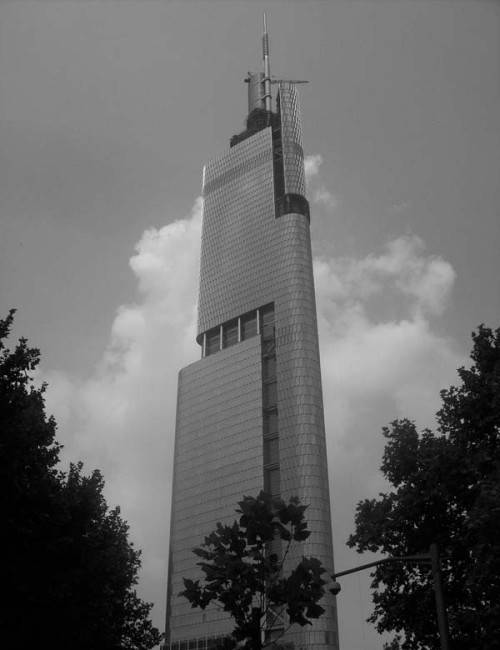
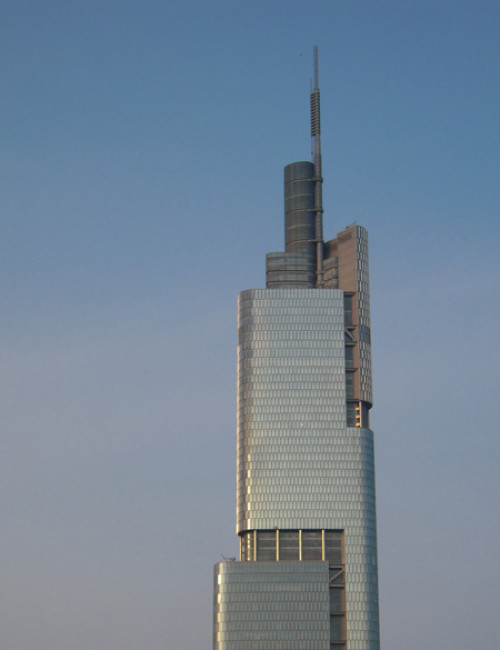
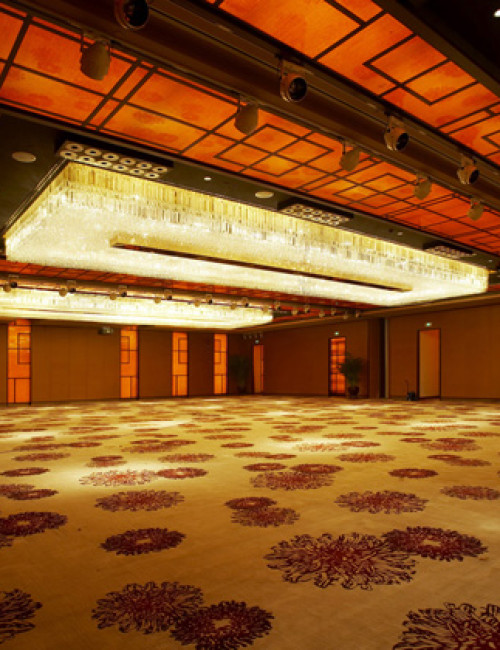
Zifeng Tower is a mixed-use complex comprising of several buildings resting on two sites, parcels A1 and A2. Parcel A1 contains a podium connecting two towers. The taller 450m (1,476ft) tower consists of offices and hotels, and the tower contains purely office space. The shape and placement of the buildings are designed to echo the geometry of the existing roads and maximize exterior views of the city. The buildings’ composition maintains the east–west viewing corridors along East Beijing Road and provides a visual link to the nearby historical drum and bell towers.
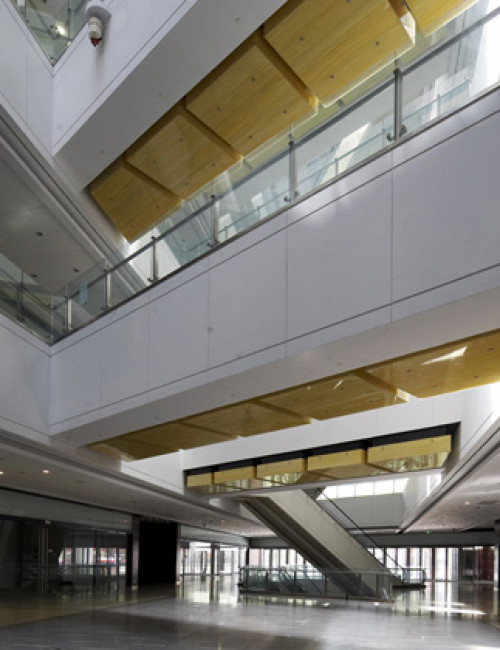
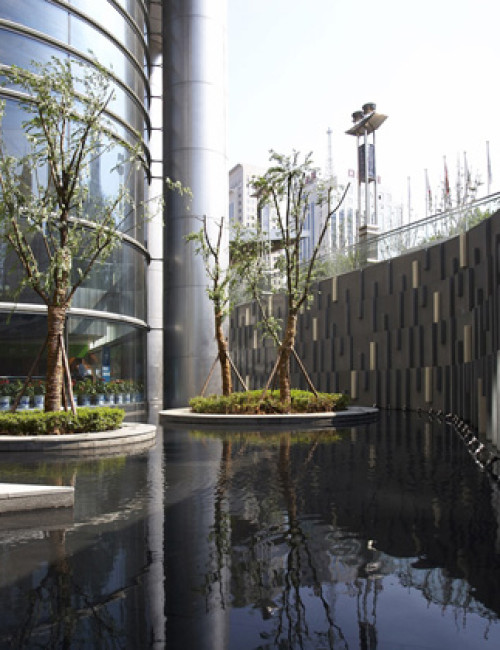
Landscaping is a significant part of the complex as the buildings are set back from the street with several large landscaped, public open spaces. South of parcel A1, is a sunken garden that will connect to the future subway. There is also a roof garden at the top of the podium in parcel A1 to reduce the heat island effect. In addition to the ground level and podium garden spaces, the design incorporates sky gardens that wind their way up the façade, bringing the green all the way up the tower.
As one of the tallest structures in the world to date and being constructed in a seismic region, enhanced design measures and performance-based evaluations were utilized in order to obtain seismic review approval for the main tower. The critical parts of the lateral system were designed for earthquake forces between two and six times more than typically required by Chinese code. Additionally, a full 3-Dimensional Non-Linear Elasto-Plastic analysis for a 2,500-year earthquake was completed to determine the structural response and serviceability. A multi-stage axial shortening, creep and shrinkage analysis was also performed to evaluate the long-term load sharing between the central core and the perimeter of the Tower through the outrigger truss system.
The tower features a unique façade system, rather than a typical flush-glass curtain wall system; it is composed of offset modular panels that protrude in plan to create a distinctive texture to the building’s elevations. Each curtain wall unit is a triangle in plan and shifts a half module between each two floors. It creates a scaled effect and has a very unique visual appeal in catching the light and reflections of the city. The small edge of the triangle unit is a fixed perforated metal panel with a hidden operable panel behind it for natural ventilation and smoke exhaust. This will help to reduce mechanical ventilation energy usage during some transitional seasons. The long edge of each triangle unit consists of a high performance insulated low-E glass panel, to help to cut down the heat gain through the building façade.
The office tower is served by floor-by-floor, variable volume, supply air handling units with variable speed drive. Four pipe fan coil units are provided for hotel guest rooms. Gas fired steam boilers and chillers, and associated water pumps are located on the first basement level. Gas service is brought into the building for the boilers and for kitchens. The fire protection system for the building consists of a zoned combination automatic sprinkler and standpipe system in accordance with regulatory requirements for a fully sprinklered high-rise building in China.
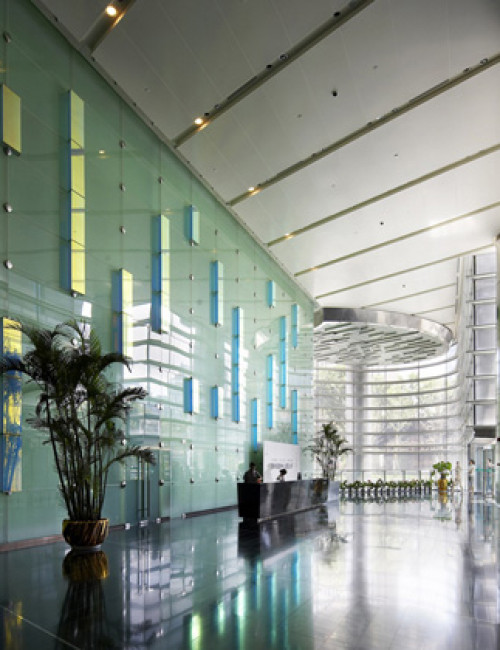
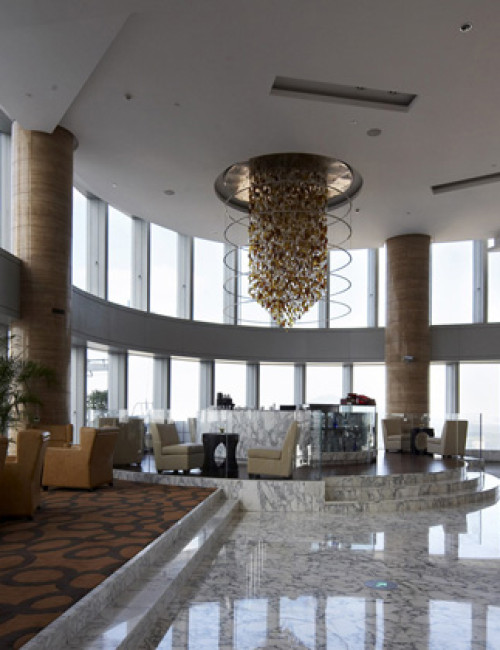
The office tower is served by two banks of seven elevators, one bank for the low-rise office levels, and one for the high-rise office levels. Two service elevators are designated as fire elevators and serve all floors of the office tower (three separate service elevators will serve all floors of the hotel). The hotel portion of the main tower will be served by three express passenger elevators from the ground floor entrance lobby to the level 36 sky lobby, where five local passenger lifts will take guests up to the highest hotel level on 65.
CVU Awards & Distinctions
Best Tall Building, by Region, Asia & Australasia 2010 Award of Excellence
2010 CVU Awards
Learn more about the Council on Vertical Urbanism
Discover how vertical living is shaping the next generation of urban environments. Explore insights, research, and global leadership in vertical urban development