




Height rank
30 Hudson Yards
New York City















related-oxford.jpg)






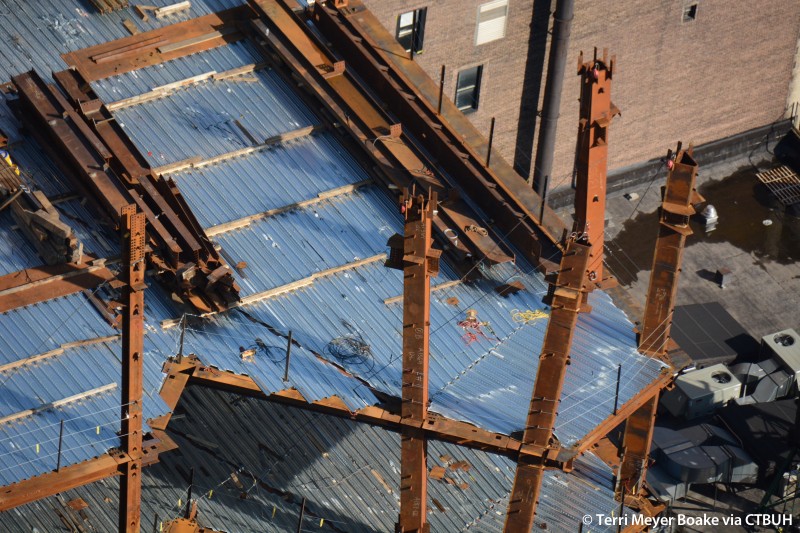


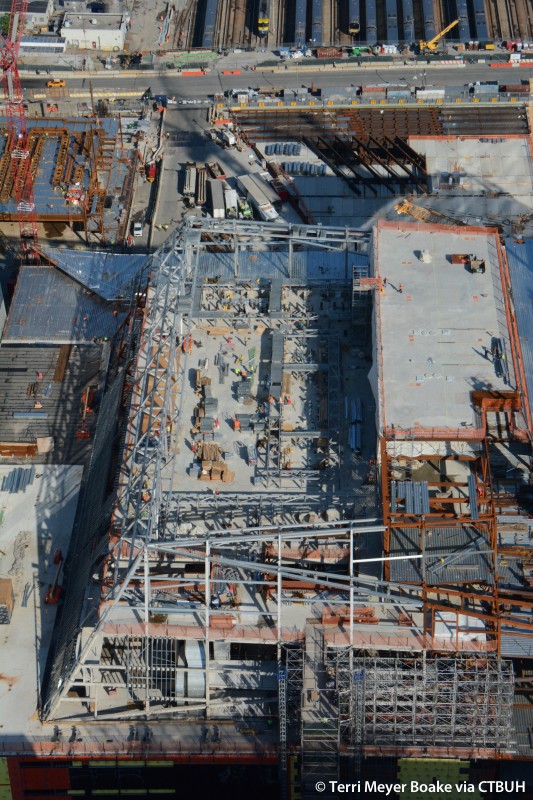

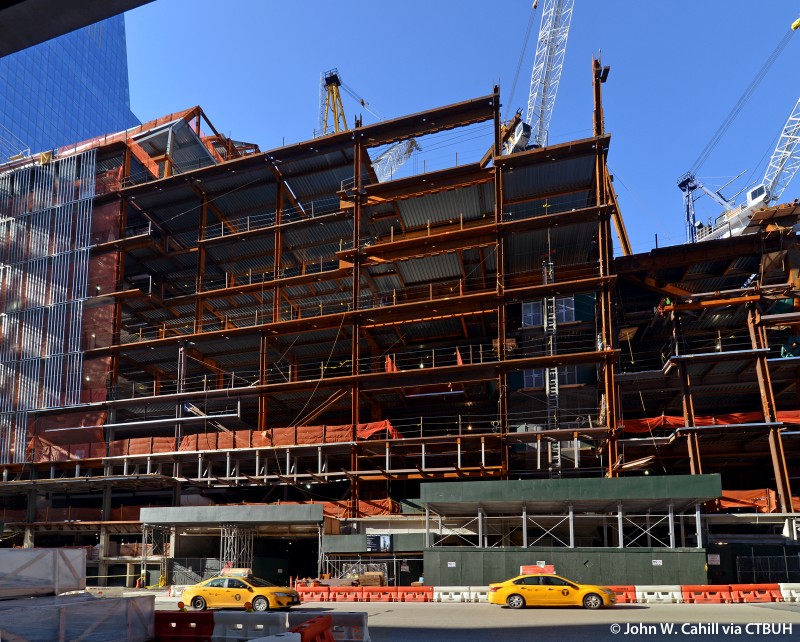


related-companies_and_oxford_properties.jpg)
related-companies_and_oxford_properties.jpg)
kohnpedersenfoxassociates.jpg)
oxford__properties__group-related__companies.jpg)
Related_Companies_and_Oxford_Properties.jpg)
related-companies_and_oxford_properties.jpg)
related-companies_and_oxford_properties.jpg)
related-companies_and_oxford_properties.jpg)
related-companies_and_oxford_properties.jpg)
related-companies_and_oxford_properties.jpg)
related-companies_and_oxford_properties.jpg)
kohnpedersenfoxassociates.jpg)
related-companies_and_oxford_properties.jpg)
related-companies_and_oxford_properties.jpg)
related-companies_and_oxford_properties.jpg)
related-companies_and_oxford_properties.jpg)
related_companies_and_oxford_properties.jpg)
related-companies_and_oxford_properties.jpg)
related-companies_and_oxford_properties.jpg)


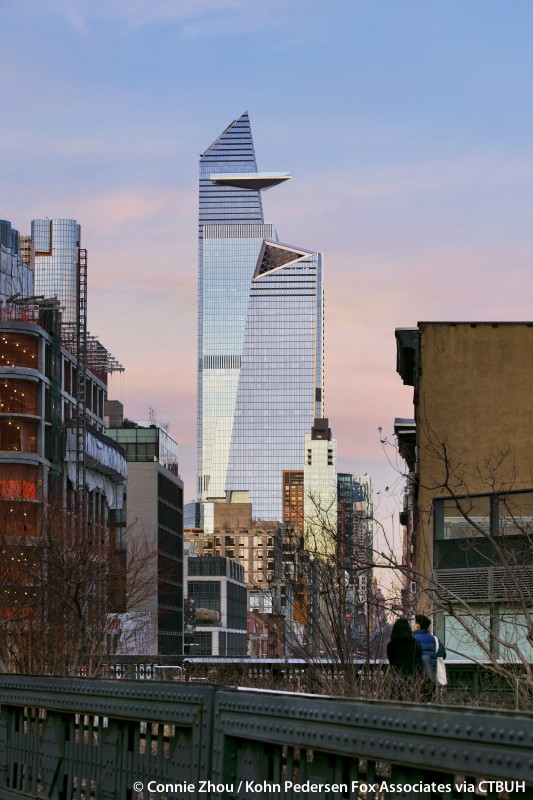

- CVU Drawing
- Facts
-
Metrics
You must be a CVU Member to view this resource.
- Structure
To Tip:
Height is measured from the level of the lowest, significant, open-air, pedestrian entrance to the highest point of the building, irrespective of material or function of the highest element (i.e., including antennae, flagpoles, signage and other functional-technical equipment).Architectural:
Height is measured from the level of the lowest, significant, open-air, pedestrian entrance to the architectural top of the building, including spires, but not including antennae, signage, flag poles or other functional-technical equipment. This measurement is the most widely utilized and is employed to define the Council on Vertical Urbanism (CVU) rankings of the "World's Tallest Buildings."Occupied:
Height is measured from the level of the lowest, significant, open-air, pedestrian entrance to the highest occupied floor within the building.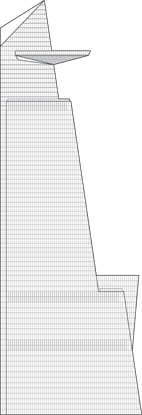
Above Ground
The number of floors above ground should include the ground floor level and be the number of main floors above ground, including any significant mezzanine floors and major mechanical plant floors. Mechanical mezzanines should not be included if they have a significantly smaller floor area than the major floors below. Similarly, mechanical penthouses or plant rooms protruding above the general roof area should not be counted. Note: CVU floor counts may differ from published accounts, as it is common in some regions of the world for certain floor levels not to be included (e.g., the level 4, 14, 24, etc. in Hong Kong).Below Ground
The number of floors below ground should include all major floors located below the ground floor level.Official Name
30 Hudson Yards
Other Names
Hudson Yards Tower A, Manhattan Tower, Hudson Yards North Tower
Name of Complex
Type
Building
Status
Completed
Completion
2019
Country
City
Address
Function
A mixed-use tall building contains two or more functions (or uses), where each of the functions occupy a significant proportion of the tower's total space. Support areas such as car parks and mechanical plant space do not constitute mixed-use functions. Functions are denoted on CVU "Tallest Building" lists in descending order, e.g., "hotel/office" indicates hotel function above office function.
Office
Structural Material
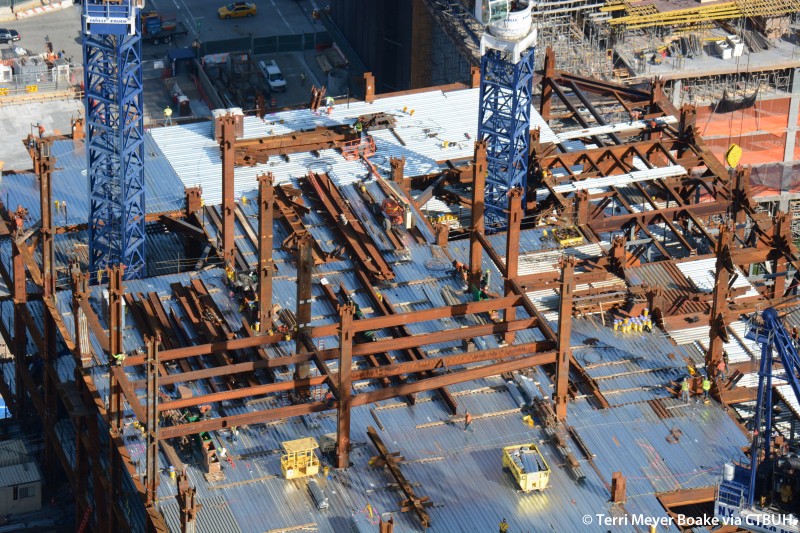
Both the main vertical/lateral structural elements and the floor spanning systems are constructed from steel. Note that a building of steel construction with a floor system of concrete planks or concrete slab on top of steel beams is still considered an “all-steel” structure as the concrete elements are not acting as the primary structure.
All-Concrete
Both the main vertical/lateral structural elements and the floor spanning systems are constructed from concrete which has been cast in place and utilizes steel reinforcement bars and/or steel reinforced concrete which has been precast as individual components and assembled together on-site.
All-Timber
Both the main vertical/lateral structural elements and the floor spanning systems are constructed from timber. An all-timber structure may include the use of localized non-timber connections between timber elements. Note that a building of timber construction with a floor system of concrete planks or concrete slab on top of timber beams is still considered an “all-timber” structure as the concrete elements are not acting as the primary structure.
Mixed-Structure
Utilizes distinct systems (e.g. all-steel, all-concrete, all-timber), one on top of the other. For example, a Steel Over Concrete indicates an all-steel structural system located on top of an all-concrete structural system, with the opposite true of Concrete Over Steel.
Composite
A combination of materials (e.g. steel, concrete, timber) are used together in the main structural elements. Examples include buildings which utilize: steel columns with a floor system of reinforced concrete beams; a steel frame system with a concrete core; concrete-encased steel columns; concrete-filled steel tubes; etc. Where known, the CVU database breaks out the materials used within a composite building’s primary structural elements.
All-Steel
Energy Label
LEED Gold BD+C: Core and Shell
Official Website
Height
387.1 m / 1,270 ft
Floors Above Ground
73
Floors Below Ground
1
# of Elevators
59
Tower GFA
241,548 m² / 2,600,001 ft²
Structural Details:
Rankings
-
By function
You must be a CVU Member to view this resource.
-
By material
You must be a CVU Member to view this resource.
Construction Schedule
Proposed
Construction Start
Completed
Owner/Developer
Architect
Usually involved in the front end design, with a "typical" condition being that of a leadership role through either Schematic Design or Design Development, and then a monitoring role through the CD and CA phases.
Structural Engineer
The Design Engineer is usually involved in the front end design, typically taking the leadership role in the Schematic Design and Design Development, and then a monitoring role through the CD and CA phases.
MEP Engineer
The Design Engineer is usually involved in the front end design, typically taking the leadership role in the Schematic Design and Design Development, and then a monitoring role through the CD and CA phases.
Contractor
The main contractor is the supervisory contractor of all construction work on a project, management of sub-contractors and vendors, etc. May be referred to as "Construction Manager," however, for consistency CTBUH uses the term "Main Contractor" exclusively.
Other Consultant
Other Consultant refers to other organizations which provided significant consultation services for a building project (e.g. wind consultants, environmental consultants, fire and life safety consultants, etc).
Other Consultant refers to other organizations which provided significant consultation services for a building project (e.g. wind consultants, environmental consultants, fire and life safety consultants, etc).
Material Supplier
Material Supplier refers to organizations which supplied significant systems/materials for a building project (e.g. elevator suppliers, facade suppliers, etc).
Material Supplier refers to organizations which supplied significant systems/materials for a building project (e.g. elevator suppliers, facade suppliers, etc).
You must be a CVU Member to view this resource.
Owner/Developer
Oxford Properties Group Inc.; Related Companies
Architect
Usually involved in the front end design, with a "typical" condition being that of a leadership role through either Schematic Design or Design Development, and then a monitoring role through the CD and CA phases.
Structural Engineer
The Design Engineer is usually involved in the front end design, typically taking the leadership role in the Schematic Design and Design Development, and then a monitoring role through the CD and CA phases.
MEP Engineer
The Design Engineer is usually involved in the front end design, typically taking the leadership role in the Schematic Design and Design Development, and then a monitoring role through the CD and CA phases.
Contractor
The main contractor is the supervisory contractor of all construction work on a project, management of sub-contractors and vendors, etc. May be referred to as "Construction Manager," however, for consistency CTBUH uses the term "Main Contractor" exclusively.
Other Consultant
Other Consultant refers to other organizations which provided significant consultation services for a building project (e.g. wind consultants, environmental consultants, fire and life safety consultants, etc).
Other Consultant refers to other organizations which provided significant consultation services for a building project (e.g. wind consultants, environmental consultants, fire and life safety consultants, etc).
Cerami & Associates
Philip Habib & Associates
GERB Vibration Control Systems, Inc
Vidaris, Inc.
These are firms that consult on the design of a building's façade. May often be referred to as "Cladding," "Envelope," "Exterior Wall," or "Curtain Wall" Consultant, however, for consistency CTBUH uses the term "Façade Consultant" exclusively.
Heintges Consulting Architects & Engineers
CS Facades S.r.l.
Vidaris, Inc.
Material Supplier
Material Supplier refers to organizations which supplied significant systems/materials for a building project (e.g. elevator suppliers, facade suppliers, etc).
Material Supplier refers to organizations which supplied significant systems/materials for a building project (e.g. elevator suppliers, facade suppliers, etc).
POHL Group
Enclos Corp.; Permasteelisa Group; POHL Group
Empire Architectural Metal & Glass Corp.
Sika Services AG
ArcelorMittal; COREY; CAST CONNEX; Cimolai
CVU Awards & Distinctions
Structure Award 2022 Award of Excellence
2022 CVU Awards
Global News

02 September 2020
Skydeck Reopens in New York City With New Health Measures
Edge, among the highest outdoor sky decks in the Western Hemisphere, announced that it reopened to the public on 2 September 2020 at Noon. The...
About 30 Hudson Yards
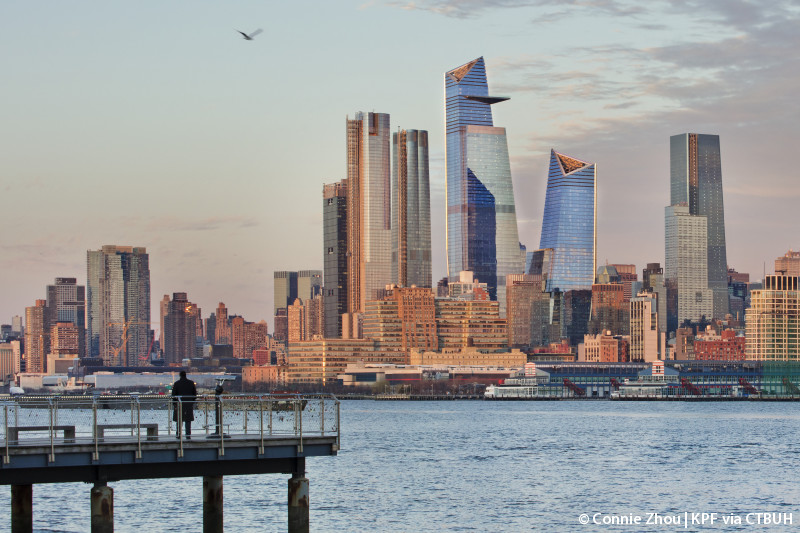
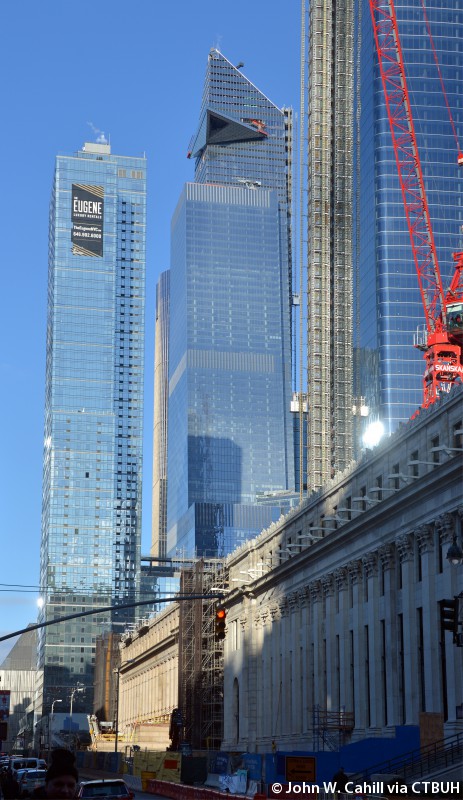
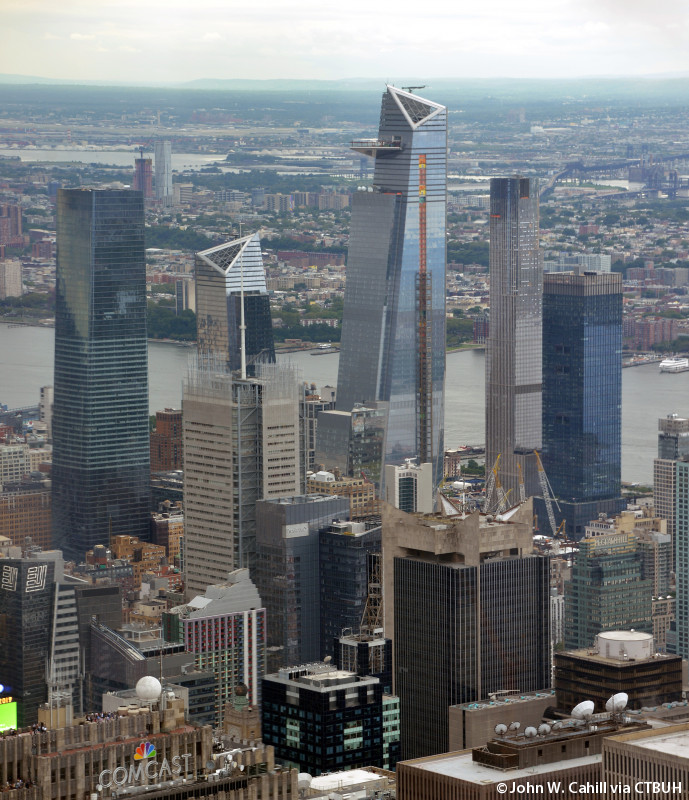
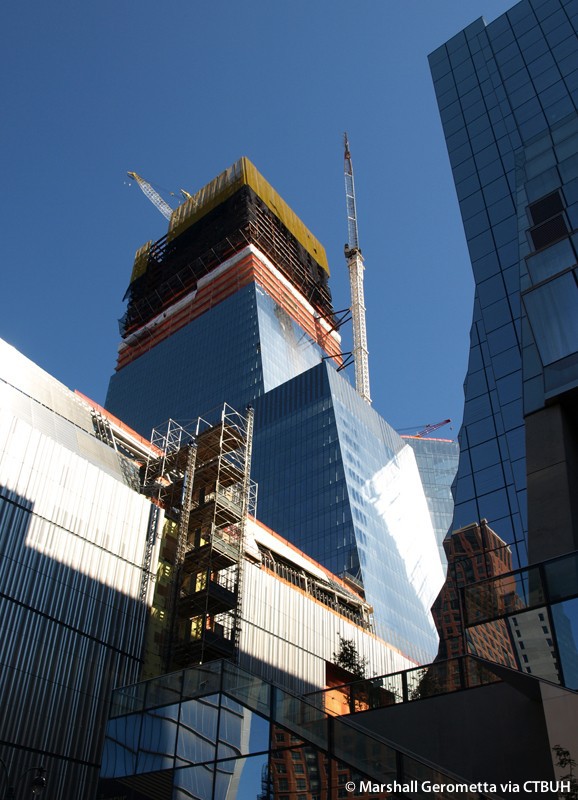
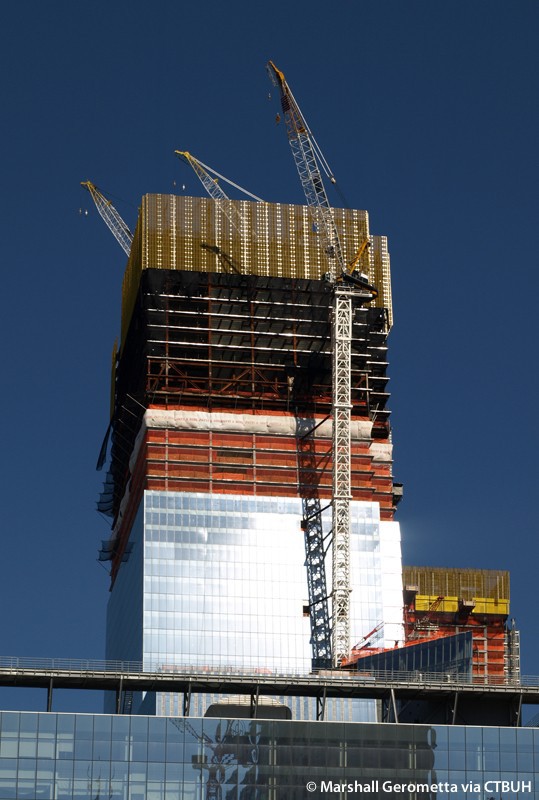
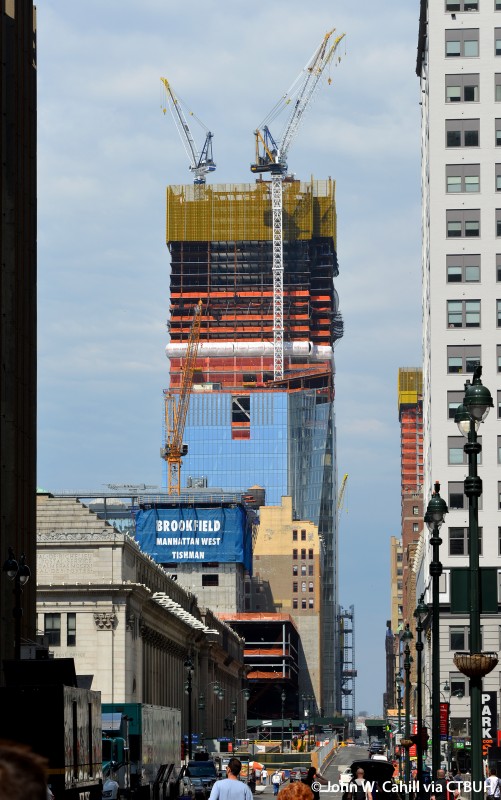
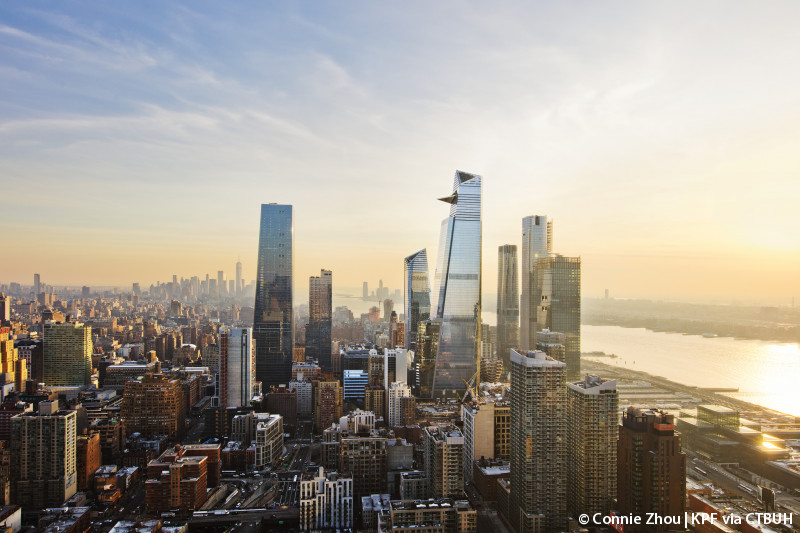
30 Hudson Yards will anchor the Hudson Yards development, touted as the largest private real estate development in United States history. Located on the west side of Manhattan, Hudson Yards is to become a new center for retail, commerce, and culture for the area. The whole development is intended to be an integrated “city within a city,” incorporating residential and office buildings, streets, parks, utilities, and commercial space into one complete whole. Built on top of an active rail yard, and located steps away from a recent subway extension, Hudson Yards will be thoroughly incorporated into the larger urban fabric.
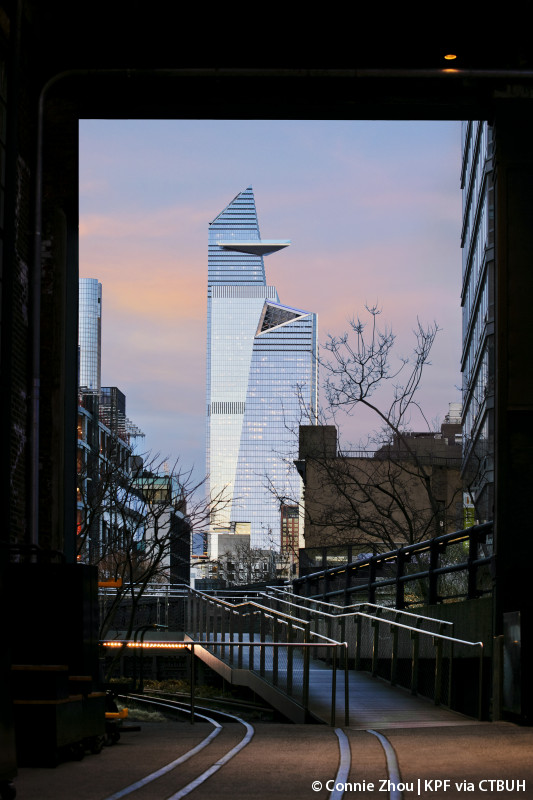
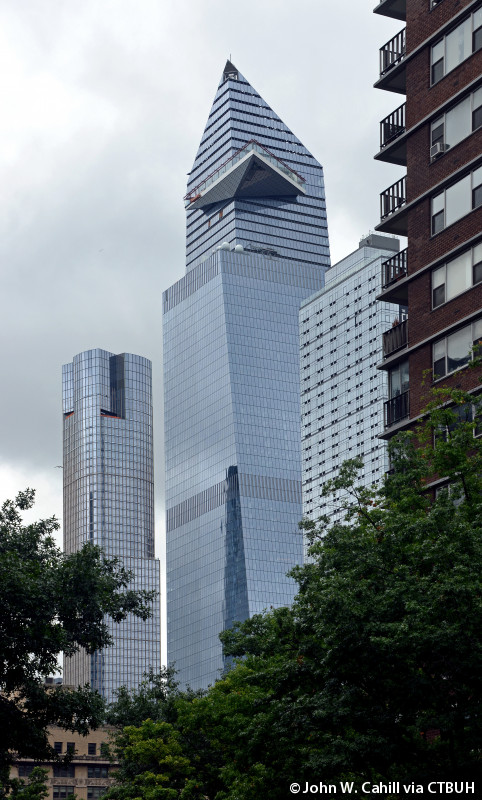
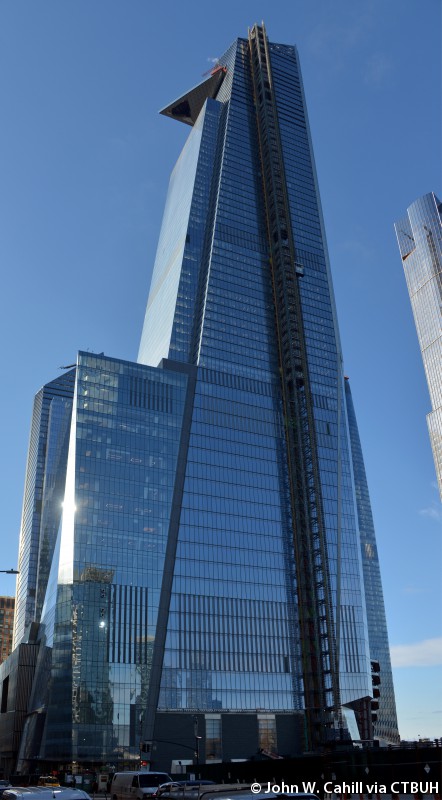
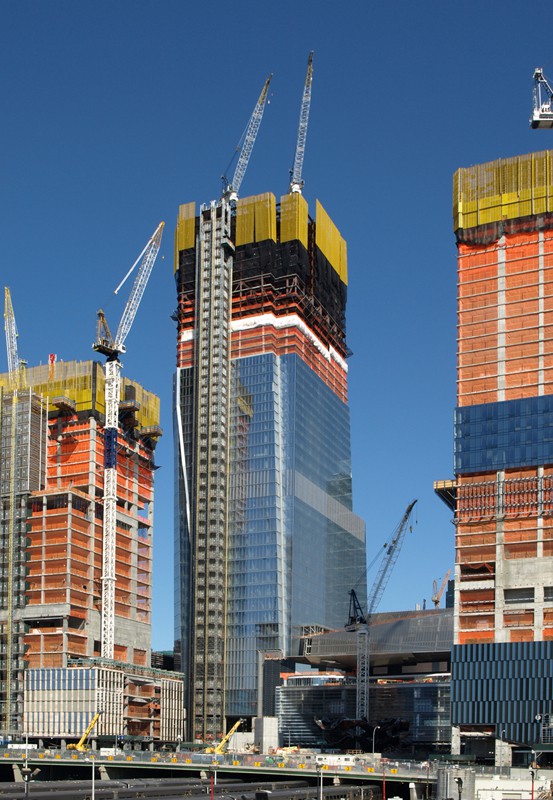
As the largest planned building in the development, 30 Hudson Yards stands out not just for its size, but for how it relates to the nearby towers through a series of setbacks and ledges. Rising from a shared podium, 10 and 30 Hudson Yards have a mirrored relationship; they gently taper away from each other, creating a “v”-shaped negative space between them. This strong visual interaction is meant to anchor the dynamic architectural presence of the development.
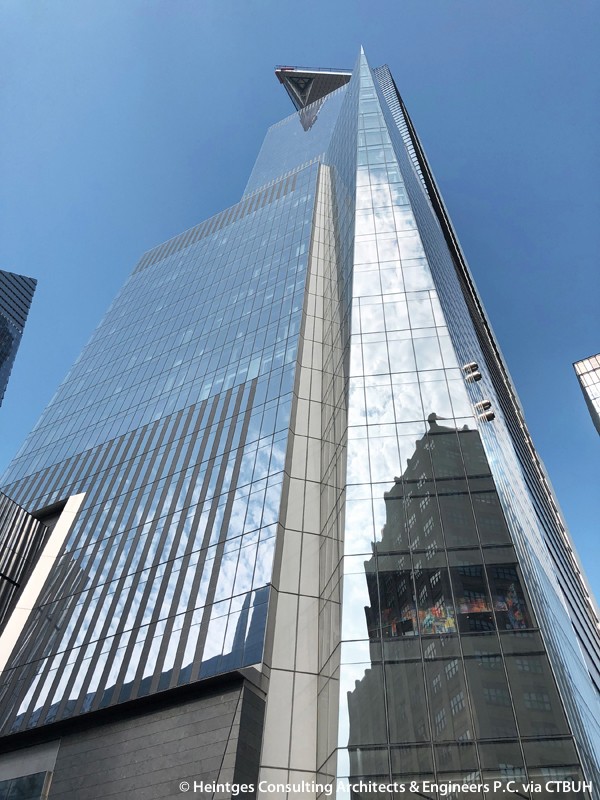
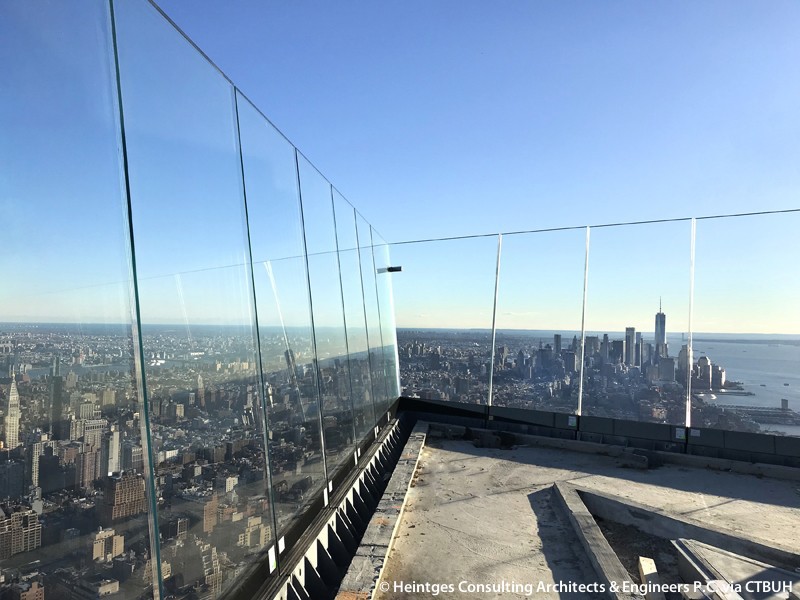
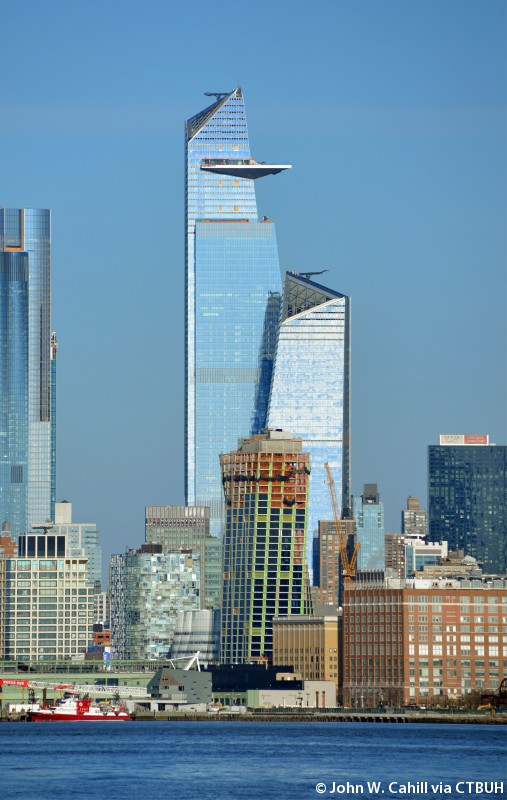
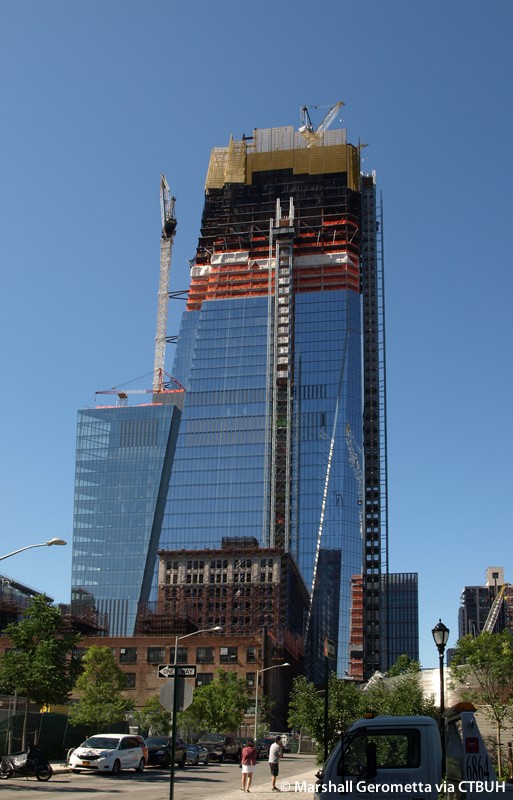
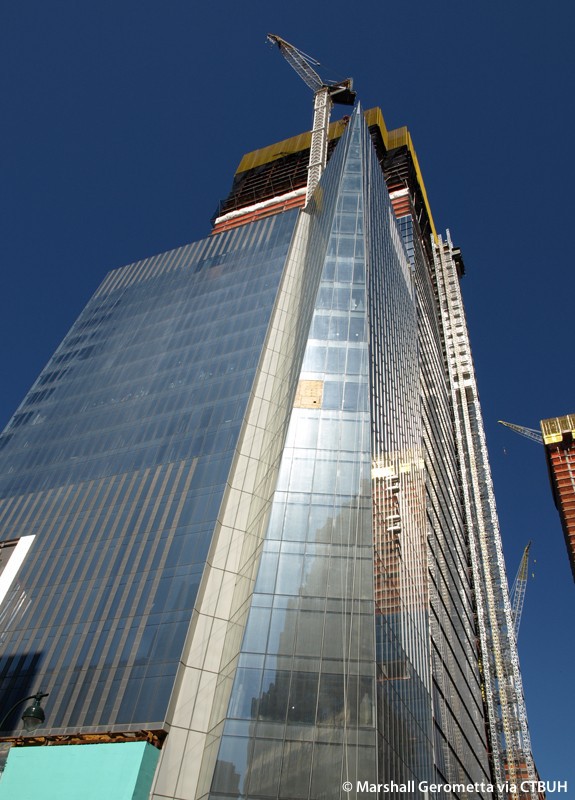
Unlike most buildings in the complex, the tower will be devoted primarily to office space. It will feature column-free floor plans and floor-to-ceiling glass in order to maximize surrounding views, as well as a cantilevered observation deck that will be open to the public. Several sustainable design solutions will be present on site, including organic waste collection and on-site energy generation, resulting in an expected LEED Gold certification and a 30 percent increase in energy efficiency when compared to the average New York City building. As the mainstay of a development that seeks to redefine Manhattan’s west side, 30 Hudson Yards is poised to make a significant and enduring mark on The Big Apple.
CVU Awards & Distinctions
Structure Award 2022 Award of Excellence
2022 CVU Awards
Global News
02 September 2020
Skydeck Reopens in New York City With New Health Measures
Edge, among the highest outdoor sky decks in the Western Hemisphere, announced that it reopened to the public on 2 September 2020 at Noon. The...

09 March 2020
New York City’s Highest Outdoor Skydeck Set to Open
The opening of Edge, the highest outdoor sky deck in the Western Hemisphere, offering 360-degree views of New York City’s iconic skyline will be celebrated...

15 March 2019
New York City’s Hudson Yards’ Shops, Restaurants, Officially Open to The Public
At noon on March 15, 2019, New York’s newest neighborhood ceremonially opened for business. Hudson Yards‘ first public-facing attractions, the Shops & Restaurants and Thomas...
Learn more about the Council on Vertical Urbanism
Discover how vertical living is shaping the next generation of urban environments. Explore insights, research, and global leadership in vertical urban development