




Height rank
875 North Michigan Avenue
Chicago









- CVU Drawing
- Facts
-
Metrics
You must be a CVU Member to view this resource.
To Tip:
Height is measured from the level of the lowest, significant, open-air, pedestrian entrance to the highest point of the building, irrespective of material or function of the highest element (i.e., including antennae, flagpoles, signage and other functional-technical equipment).Architectural:
Height is measured from the level of the lowest, significant, open-air, pedestrian entrance to the architectural top of the building, including spires, but not including antennae, signage, flag poles or other functional-technical equipment. This measurement is the most widely utilized and is employed to define the Council on Vertical Urbanism (CVU) rankings of the "World's Tallest Buildings."Occupied:
Height is measured from the level of the lowest, significant, open-air, pedestrian entrance to the highest occupied floor within the building.
Above Ground
The number of floors above ground should include the ground floor level and be the number of main floors above ground, including any significant mezzanine floors and major mechanical plant floors. Mechanical mezzanines should not be included if they have a significantly smaller floor area than the major floors below. Similarly, mechanical penthouses or plant rooms protruding above the general roof area should not be counted. Note: CVU floor counts may differ from published accounts, as it is common in some regions of the world for certain floor levels not to be included (e.g., the level 4, 14, 24, etc. in Hong Kong).Below Ground
The number of floors below ground should include all major floors located below the ground floor level.Official Name
875 North Michigan Avenue
Other Names
Big John, 175 East Delaware Place, John Hancock Center
Type
Building
Status
Completed
Completion
1969
Country
City
Address
Function
A mixed-use tall building contains two or more functions (or uses), where each of the functions occupy a significant proportion of the tower's total space. Support areas such as car parks and mechanical plant space do not constitute mixed-use functions. Functions are denoted on CVU "Tallest Building" lists in descending order, e.g., "hotel/office" indicates hotel function above office function.
Residential / Office
Structural Material
Both the main vertical/lateral structural elements and the floor spanning systems are constructed from steel. Note that a building of steel construction with a floor system of concrete planks or concrete slab on top of steel beams is still considered an “all-steel” structure as the concrete elements are not acting as the primary structure.
All-Concrete
Both the main vertical/lateral structural elements and the floor spanning systems are constructed from concrete which has been cast in place and utilizes steel reinforcement bars and/or steel reinforced concrete which has been precast as individual components and assembled together on-site.
All-Timber
Both the main vertical/lateral structural elements and the floor spanning systems are constructed from timber. An all-timber structure may include the use of localized non-timber connections between timber elements. Note that a building of timber construction with a floor system of concrete planks or concrete slab on top of timber beams is still considered an “all-timber” structure as the concrete elements are not acting as the primary structure.
Mixed-Structure
Utilizes distinct systems (e.g. all-steel, all-concrete, all-timber), one on top of the other. For example, a Steel Over Concrete indicates an all-steel structural system located on top of an all-concrete structural system, with the opposite true of Concrete Over Steel.
Composite
A combination of materials (e.g. steel, concrete, timber) are used together in the main structural elements. Examples include buildings which utilize: steel columns with a floor system of reinforced concrete beams; a steel frame system with a concrete core; concrete-encased steel columns; concrete-filled steel tubes; etc. Where known, the CVU database breaks out the materials used within a composite building’s primary structural elements.
All-Steel
Official Website
Height
343.7 m / 1,128 ft
Floors Above Ground
100
Floors Below Ground
1
# of Parking Spaces
717
# of Elevators
50
Top Elevator Speed
9.2 m/s
Tower GFA
260,126 m² / 2,799,973 ft²
Rankings
-
By function
You must be a CVU Member to view this resource.
-
By material
You must be a CVU Member to view this resource.
Construction Schedule
Construction Start
Completed
Retrofit Start
Retrofit End
Architect
Usually involved in the front end design, with a "typical" condition being that of a leadership role through either Schematic Design or Design Development, and then a monitoring role through the CD and CA phases.
Structural Engineer
The Design Engineer is usually involved in the front end design, typically taking the leadership role in the Schematic Design and Design Development, and then a monitoring role through the CD and CA phases.
Contractor
The main contractor is the supervisory contractor of all construction work on a project, management of sub-contractors and vendors, etc. May be referred to as "Construction Manager," however, for consistency CTBUH uses the term "Main Contractor" exclusively.
Other Consultant
Other Consultant refers to other organizations which provided significant consultation services for a building project (e.g. wind consultants, environmental consultants, fire and life safety consultants, etc).
Other Consultant refers to other organizations which provided significant consultation services for a building project (e.g. wind consultants, environmental consultants, fire and life safety consultants, etc).
Material Supplier
Material Supplier refers to organizations which supplied significant systems/materials for a building project (e.g. elevator suppliers, facade suppliers, etc).
Material Supplier refers to organizations which supplied significant systems/materials for a building project (e.g. elevator suppliers, facade suppliers, etc).
Retrofit Companies Involved
Architect
Usually involved in the front end design, with a "typical" condition being that of a leadership role through either Schematic Design or Design Development, and then a monitoring role through the CD and CA phases.
You must be a CVU Member to view this resource.
Owner
Hearn Company; Magnicity; Mount Kellett Capital Management; The Lynd Company
Golub & Company; John Hancock Mutual Life Insurance Co.; Shorenstein Company, LP; Whitehall Street Real Estate Fund
Developer
Jerry Wolman Associates; John Hancock Mutual Life Insurance Co.
Architect
Usually involved in the front end design, with a "typical" condition being that of a leadership role through either Schematic Design or Design Development, and then a monitoring role through the CD and CA phases.
Structural Engineer
The Design Engineer is usually involved in the front end design, typically taking the leadership role in the Schematic Design and Design Development, and then a monitoring role through the CD and CA phases.
Contractor
The main contractor is the supervisory contractor of all construction work on a project, management of sub-contractors and vendors, etc. May be referred to as "Construction Manager," however, for consistency CTBUH uses the term "Main Contractor" exclusively.
Adjustable Forms, Inc.
Other Consultant
Other Consultant refers to other organizations which provided significant consultation services for a building project (e.g. wind consultants, environmental consultants, fire and life safety consultants, etc).
Other Consultant refers to other organizations which provided significant consultation services for a building project (e.g. wind consultants, environmental consultants, fire and life safety consultants, etc).
Sudler Property Management
Material Supplier
Material Supplier refers to organizations which supplied significant systems/materials for a building project (e.g. elevator suppliers, facade suppliers, etc).
Material Supplier refers to organizations which supplied significant systems/materials for a building project (e.g. elevator suppliers, facade suppliers, etc).
Grace Construction Products
Dow Corning Corporation
American Bridge Company; Arbed
Retrofit Companies Involved
Developer
Magnicity
Architect
Usually involved in the front end design, with a "typical" condition being that of a leadership role through either Schematic Design or Design Development, and then a monitoring role through the CD and CA phases.
Other Consultant
Other Consultant refers to other organizations which provided significant consultation services for a building project (e.g. wind consultants, environmental consultants, fire and life safety consultants, etc).
Other Consultant refers to other organizations which provided significant consultation services for a building project (e.g. wind consultants, environmental consultants, fire and life safety consultants, etc).
These are firms that consult on the design of a building's façade. May often be referred to as "Cladding," "Envelope," "Exterior Wall," or "Curtain Wall" Consultant, however, for consistency CTBUH uses the term "Façade Consultant" exclusively.
Riggio / Boron
Global News

08 October 2024
Original Architects Tapped to Lead Interior Redesign of Iconic Chicago Skyscraper
On 1 October, it was announced that Skidmore, Owings & Merrill (SOM) has been brought on to lead the architectural redesign and redevelopment of the...
About 875 North Michigan Avenue
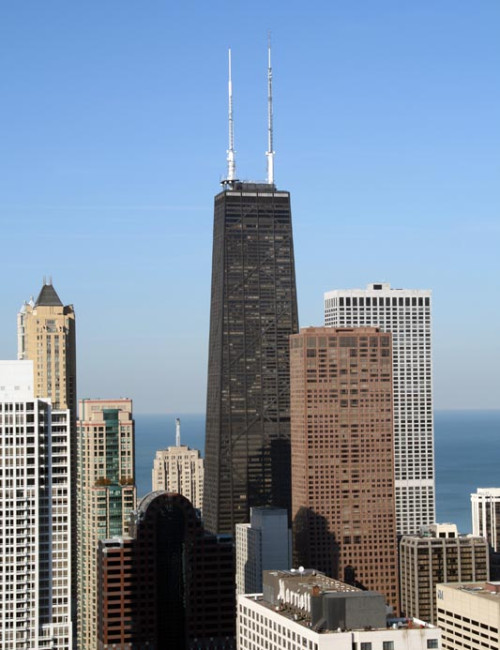
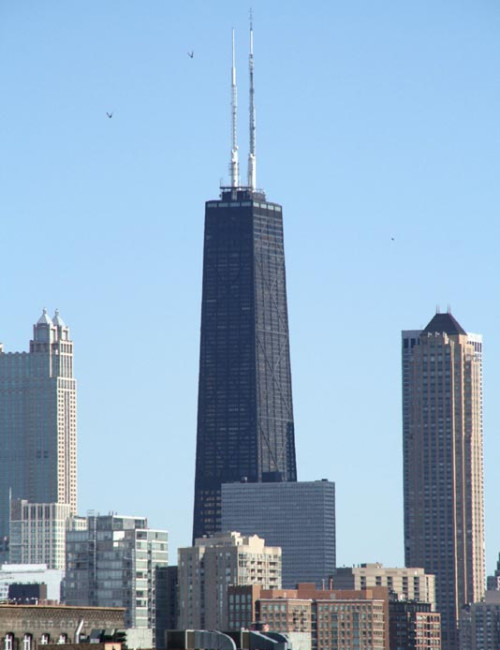
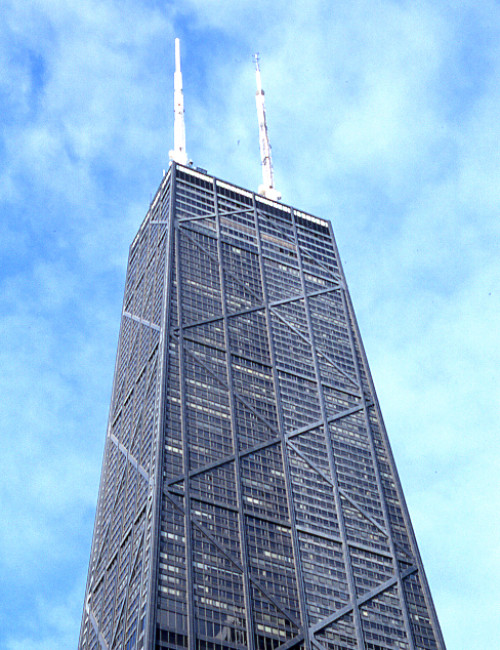
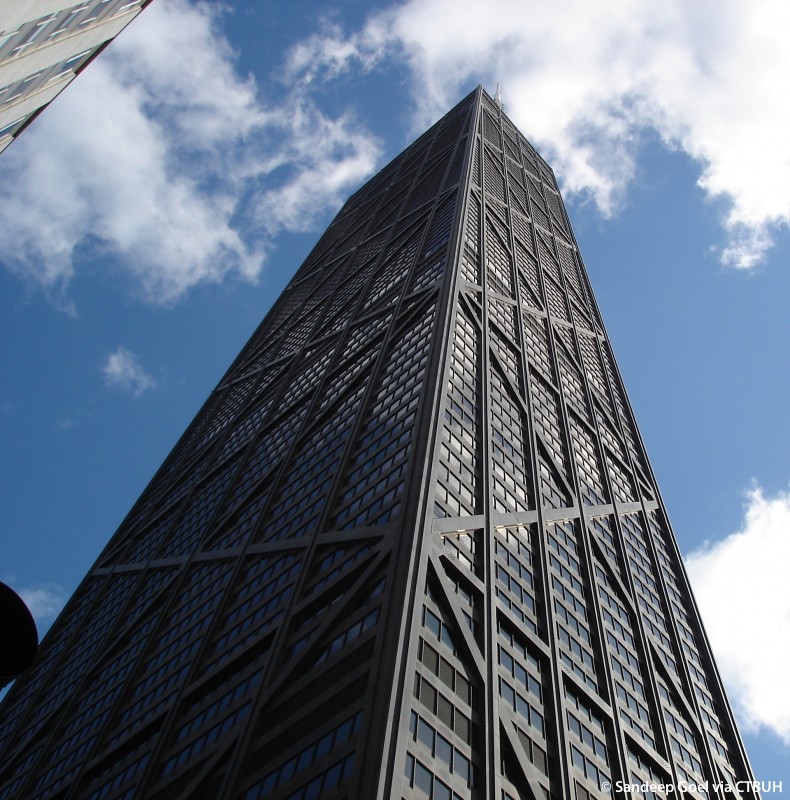
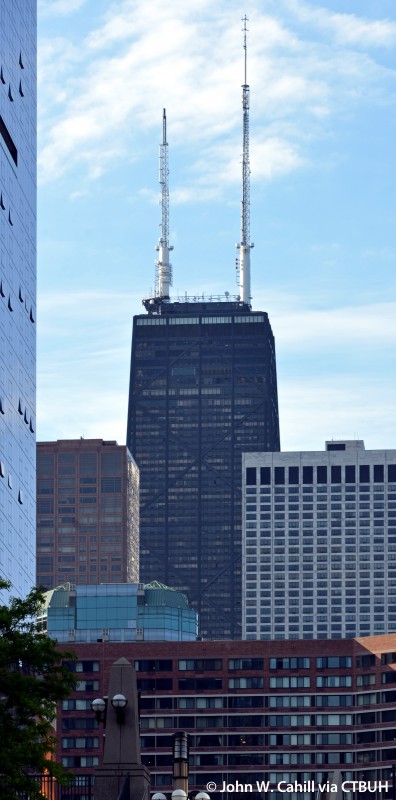
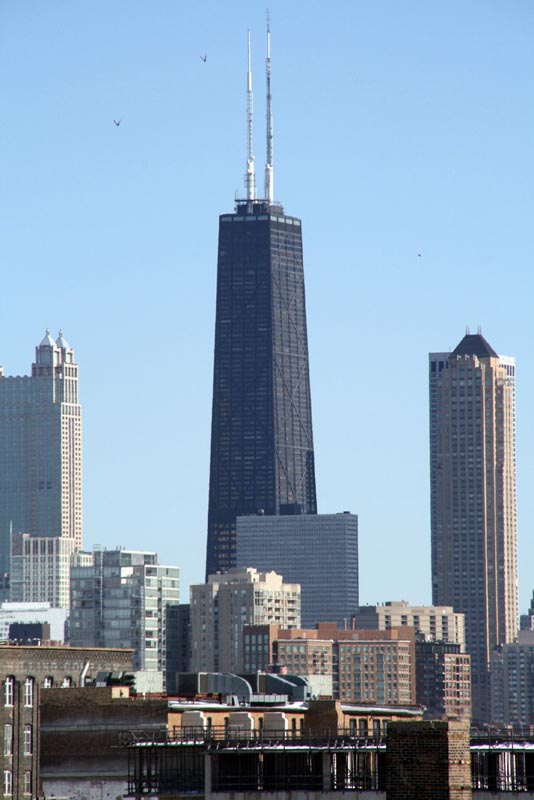
Over forty years after completion, the 875 North Michigan Avenue has established itself as one of the world’s most recognized skyscrapers and an iconic example of late twentieth century Chicago design, construction, and engineering. The building’s structural, programmatic, and architectural innovations combine to create a design that is heralded for its elegant simplicity.
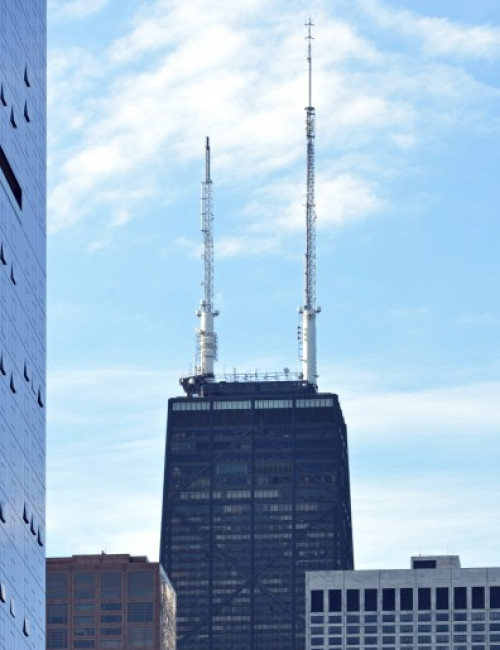
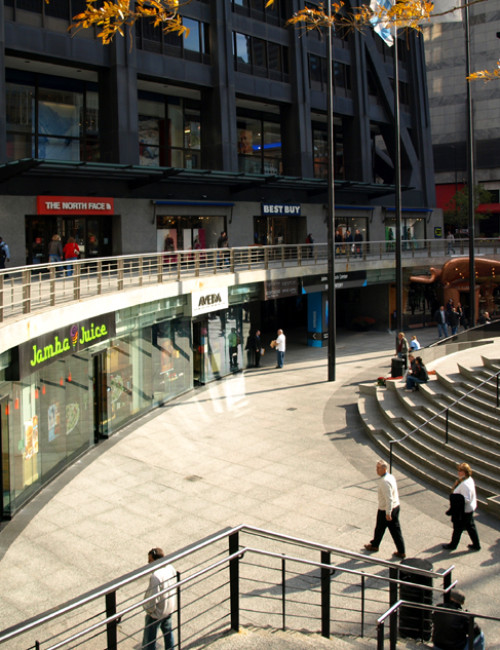
As one of the world’s first mixed-use tall building projects, the John Hancock Center design was influential in its internal organization. The complex programmatic design placed commercial space on a sub-level concourse and the first five levels. This was followed by levels of parking, office, residential, and finally dining, observation, and broadcasting facilities.
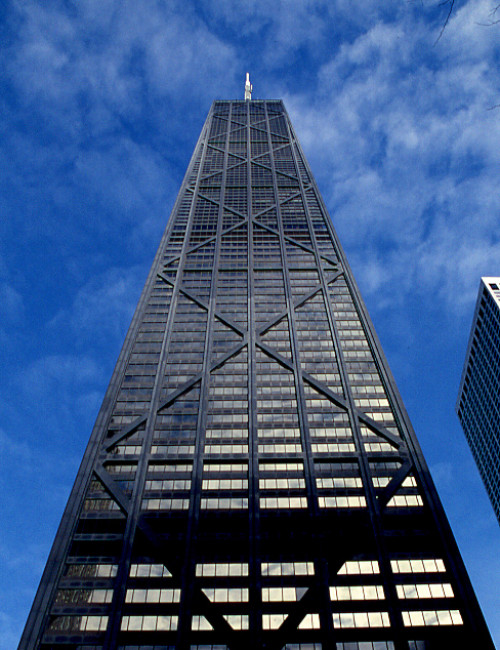
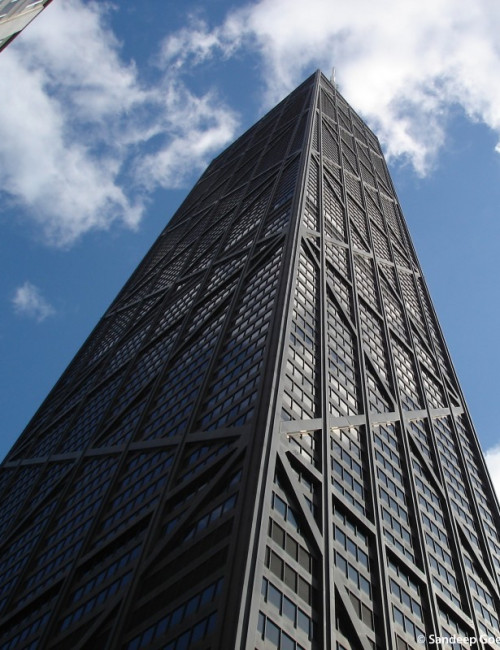
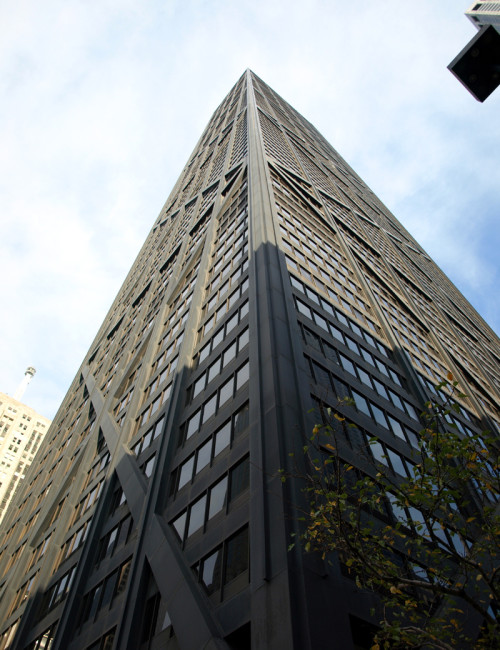
The architecture of the tower is informed by its expressive structural system and gently sloping façades. This innovative form was designed to efficiently accommodate the variety of uses contained in the building. The gentle inward slope creates optimally-sized floor plans for both the lower parking and office levels and the higher residential floors. Additionally, the tapered form significantly reduces wind loads, allowing for a reduction in the size of structural members. For Chicago’s busy streetscape, the building’s shape increases the visual verticality of the building; adding perceived height to an already impressively tall tower.
The architectural form of the 875 North Michigan Avenue represents a radical departure from established aesthetics of the time. Initially, critics labeled the building as too industrial, but over time it has come to symbolize the gutsy tradition of structural expression in Chicago. It is often characterized as super-rational, logical, and a representation of the machine age of architecture. It exhibits its true structure much in the tradition of bridge construction. These qualities are at the heart of why the building has endured in the minds of so many.
Global News
08 October 2024
Original Architects Tapped to Lead Interior Redesign of Iconic Chicago Skyscraper
On 1 October, it was announced that Skidmore, Owings & Merrill (SOM) has been brought on to lead the architectural redesign and redevelopment of the...
SawyerBengtson.jpg)
08 March 2022
Former John Hancock Center Seeking Medical Tenants in Chicago
Chicago-based real estate firm Hearn is looking for medical providers to move into the former John Hancock Center, now formally known as 875 North Michigan...

29 July 2019
Elevator Malfunctions Continue in Chicago Skyscraper
A group of people on floor 96 of the former John Hancock Center in Chicago became entrapped on their elevator to the ground floor over...
Learn more about the Council on Vertical Urbanism
Discover how vertical living is shaping the next generation of urban environments. Explore insights, research, and global leadership in vertical urban development