




Height rank
Guangzhou International Finance Center
Guangzhou

tm.jpg)
tm.jpg)
tm.jpg)
tm.jpg)
christianrichters.jpg)
tm.jpg)
tm.jpg)
tm.jpg)

terrimeyerboake.jpg)
terrimeyerboake.jpg)
christianrichters.jpg)
tm.jpg)
tm.jpg)
tm.jpg)
tm.jpg)
terrimeyerboake.jpg)
terrimeyerboake.jpg)
terrimeyerboake.jpg)
terrimeyerboake.jpg)
terrimeyerboake.jpg)
jonathanleijonhufvud-1.jpg)

christianrichters.jpg)
tm-0.jpg)
christianrichters.jpg)
tm.jpg)
- CVU Drawing
- Facts
-
Metrics
You must be a CVU Member to view this resource.
To Tip:
Height is measured from the level of the lowest, significant, open-air, pedestrian entrance to the highest point of the building, irrespective of material or function of the highest element (i.e., including antennae, flagpoles, signage and other functional-technical equipment).Architectural:
Height is measured from the level of the lowest, significant, open-air, pedestrian entrance to the architectural top of the building, including spires, but not including antennae, signage, flag poles or other functional-technical equipment. This measurement is the most widely utilized and is employed to define the Council on Vertical Urbanism (CVU) rankings of the "World's Tallest Buildings."Occupied:
Height is measured from the level of the lowest, significant, open-air, pedestrian entrance to the highest occupied floor within the building.
Above Ground
The number of floors above ground should include the ground floor level and be the number of main floors above ground, including any significant mezzanine floors and major mechanical plant floors. Mechanical mezzanines should not be included if they have a significantly smaller floor area than the major floors below. Similarly, mechanical penthouses or plant rooms protruding above the general roof area should not be counted. Note: CVU floor counts may differ from published accounts, as it is common in some regions of the world for certain floor levels not to be included (e.g., the level 4, 14, 24, etc. in Hong Kong).Below Ground
The number of floors below ground should include all major floors located below the ground floor level.Official Name
Guangzhou International Finance Center
Other Names
Guangzhou IFC, West Tower
Type
Building
Status
Completed
Completion
2010
Country
City
Address
Function
A mixed-use tall building contains two or more functions (or uses), where each of the functions occupy a significant proportion of the tower's total space. Support areas such as car parks and mechanical plant space do not constitute mixed-use functions. Functions are denoted on CVU "Tallest Building" lists in descending order, e.g., "hotel/office" indicates hotel function above office function.
Hotel / Office
Structural Material
Both the main vertical/lateral structural elements and the floor spanning systems are constructed from steel. Note that a building of steel construction with a floor system of concrete planks or concrete slab on top of steel beams is still considered an “all-steel” structure as the concrete elements are not acting as the primary structure.
All-Concrete
Both the main vertical/lateral structural elements and the floor spanning systems are constructed from concrete which has been cast in place and utilizes steel reinforcement bars and/or steel reinforced concrete which has been precast as individual components and assembled together on-site.
All-Timber
Both the main vertical/lateral structural elements and the floor spanning systems are constructed from timber. An all-timber structure may include the use of localized non-timber connections between timber elements. Note that a building of timber construction with a floor system of concrete planks or concrete slab on top of timber beams is still considered an “all-timber” structure as the concrete elements are not acting as the primary structure.
Mixed-Structure
Utilizes distinct systems (e.g. all-steel, all-concrete, all-timber), one on top of the other. For example, a Steel Over Concrete indicates an all-steel structural system located on top of an all-concrete structural system, with the opposite true of Concrete Over Steel.
Composite
A combination of materials (e.g. steel, concrete, timber) are used together in the main structural elements. Examples include buildings which utilize: steel columns with a floor system of reinforced concrete beams; a steel frame system with a concrete core; concrete-encased steel columns; concrete-filled steel tubes; etc. Where known, the CVU database breaks out the materials used within a composite building’s primary structural elements.
Concrete-Steel Composite
Official Website
Height
438.6 m / 1,439 ft
Floors Above Ground
101
Floors Below Ground
4
# of Hotel Rooms
374
# of Parking Spaces
1740
# of Elevators
71
Top Elevator Speed
8 m/s
Tower GFA
250,095 m² / 2,692,000 ft²
Rankings
-
By function
You must be a CVU Member to view this resource.
-
By material
You must be a CVU Member to view this resource.
Construction Schedule
Proposed
Construction Start
Completed
Architect
Usually involved in the front end design, with a "typical" condition being that of a leadership role through either Schematic Design or Design Development, and then a monitoring role through the CD and CA phases.
Usually takes on the balance of the architectural effort not executed by the "Design Architect," typically responsible for the construction documents, conforming to local codes, etc. May often be referred to as "Executive," "Associate," or "Local" Architect, however, for consistency CTBUH uses the term "Architect of Record" exclusively.
Structural Engineer
The Design Engineer is usually involved in the front end design, typically taking the leadership role in the Schematic Design and Design Development, and then a monitoring role through the CD and CA phases.
MEP Engineer
The Design Engineer is usually involved in the front end design, typically taking the leadership role in the Schematic Design and Design Development, and then a monitoring role through the CD and CA phases.
Other Consultant
Other Consultant refers to other organizations which provided significant consultation services for a building project (e.g. wind consultants, environmental consultants, fire and life safety consultants, etc).
Other Consultant refers to other organizations which provided significant consultation services for a building project (e.g. wind consultants, environmental consultants, fire and life safety consultants, etc).
These are firms that consult on the design of a building's façade. May often be referred to as "Cladding," "Envelope," "Exterior Wall," or "Curtain Wall" Consultant, however, for consistency CTBUH uses the term "Façade Consultant" exclusively.
Material Supplier
Material Supplier refers to organizations which supplied significant systems/materials for a building project (e.g. elevator suppliers, facade suppliers, etc).
Material Supplier refers to organizations which supplied significant systems/materials for a building project (e.g. elevator suppliers, facade suppliers, etc).
You must be a CVU Member to view this resource.
Owner/Developer
Yuexiu Real Estate Investment Trust
Architect
Usually involved in the front end design, with a "typical" condition being that of a leadership role through either Schematic Design or Design Development, and then a monitoring role through the CD and CA phases.
Usually takes on the balance of the architectural effort not executed by the "Design Architect," typically responsible for the construction documents, conforming to local codes, etc. May often be referred to as "Executive," "Associate," or "Local" Architect, however, for consistency CTBUH uses the term "Architect of Record" exclusively.
Structural Engineer
The Design Engineer is usually involved in the front end design, typically taking the leadership role in the Schematic Design and Design Development, and then a monitoring role through the CD and CA phases.
MEP Engineer
The Design Engineer is usually involved in the front end design, typically taking the leadership role in the Schematic Design and Design Development, and then a monitoring role through the CD and CA phases.
Contractor
The main contractor is the supervisory contractor of all construction work on a project, management of sub-contractors and vendors, etc. May be referred to as "Construction Manager," however, for consistency CTBUH uses the term "Main Contractor" exclusively.
China State Construction Engineering Corporation; Guangzhou Municipal Construction Group
Other Consultant
Other Consultant refers to other organizations which provided significant consultation services for a building project (e.g. wind consultants, environmental consultants, fire and life safety consultants, etc).
Other Consultant refers to other organizations which provided significant consultation services for a building project (e.g. wind consultants, environmental consultants, fire and life safety consultants, etc).
Campbell Shillinglaw Lau Ltd
These are firms that consult on the design of a building's façade. May often be referred to as "Cladding," "Envelope," "Exterior Wall," or "Curtain Wall" Consultant, however, for consistency CTBUH uses the term "Façade Consultant" exclusively.
Lichtvision; Hirsch Bedner Associates
Indiana Convention Center & Lucas Oil Stadium
Material Supplier
Material Supplier refers to organizations which supplied significant systems/materials for a building project (e.g. elevator suppliers, facade suppliers, etc).
Material Supplier refers to organizations which supplied significant systems/materials for a building project (e.g. elevator suppliers, facade suppliers, etc).
Guangdong JMA Aluminium Profile Factory (Group) Co., Ltd.
Hitachi Elevator (China) Co,. Ltd.; Otis Elevator Company
Jotun
Guangzhou Baiyun Chemical Industry Co. Ltd.
China Construction Steel Structure Corporation
CVU Awards & Distinctions
10 Year Award 2020 Award of Excellence
2020 CVU Awards
Best Tall Building, by Region, Asia & Australasia 2011 Winner
2011 CVU Awards
About Guangzhou International Finance Center
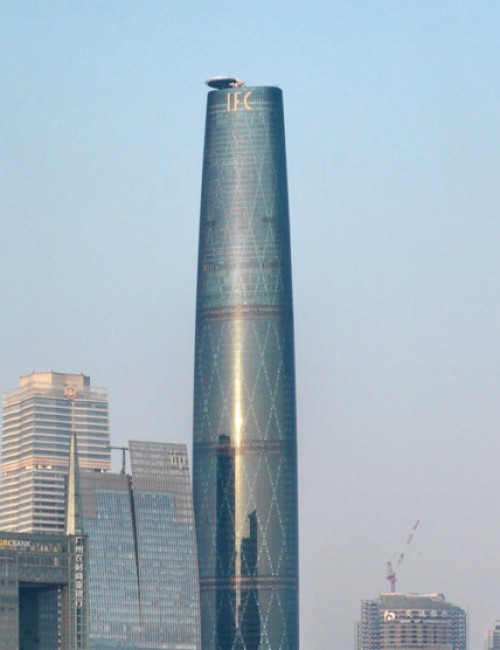
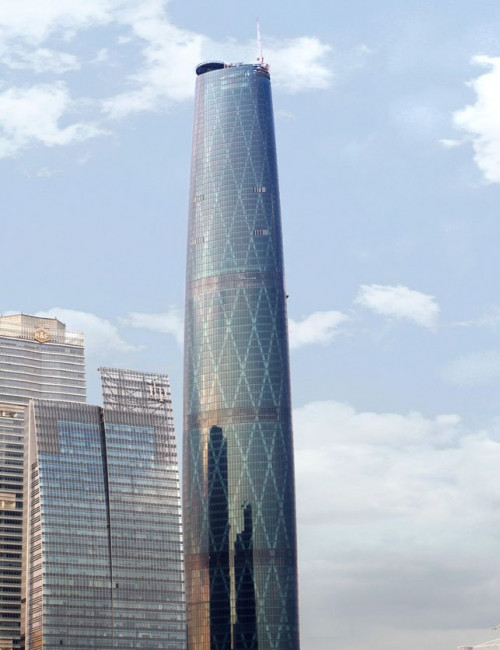
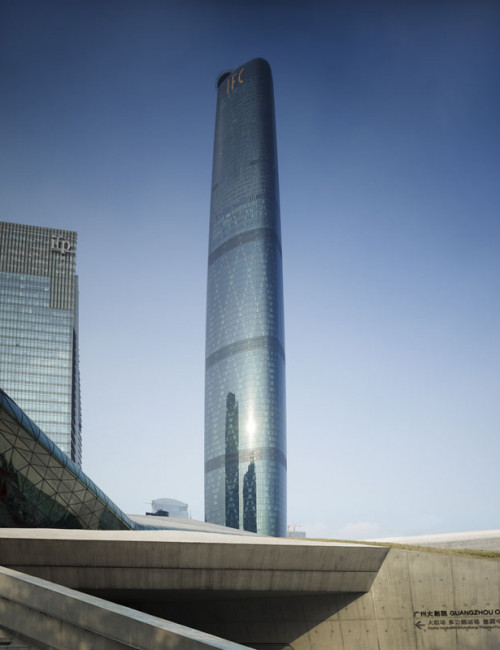
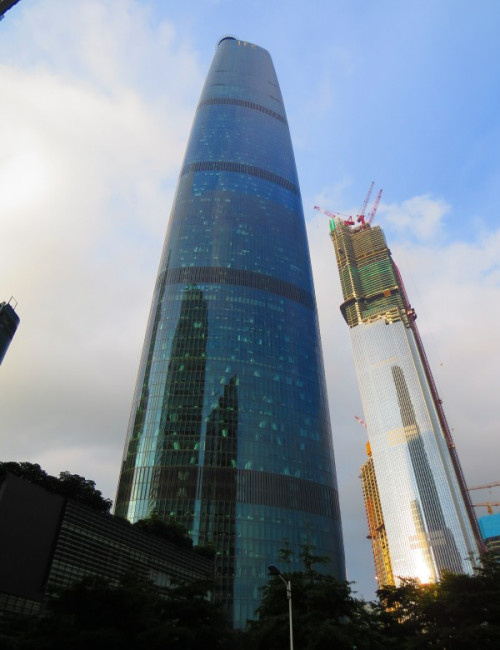
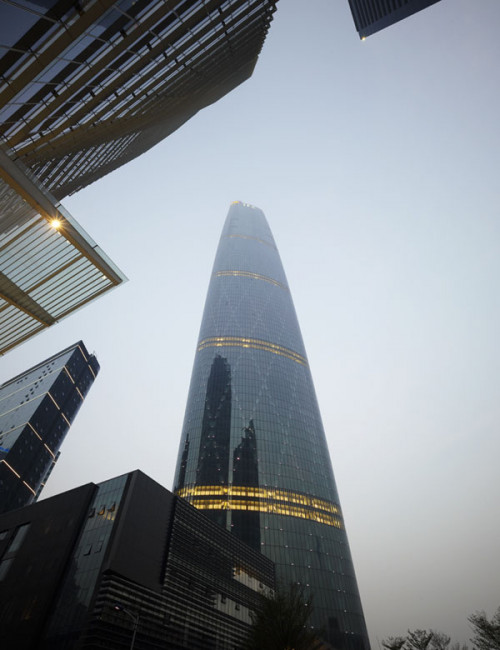
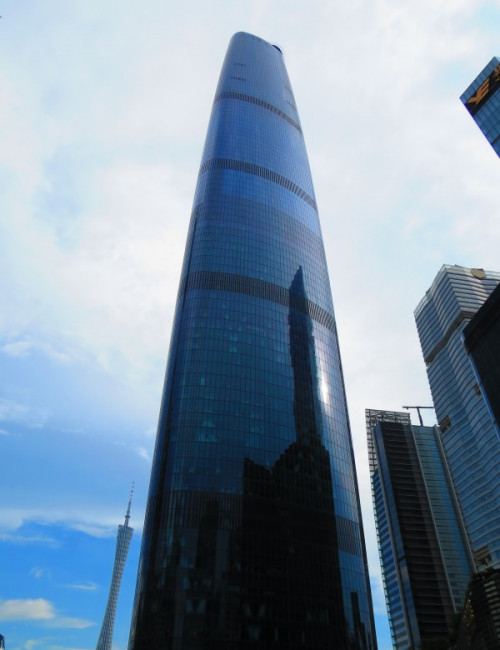
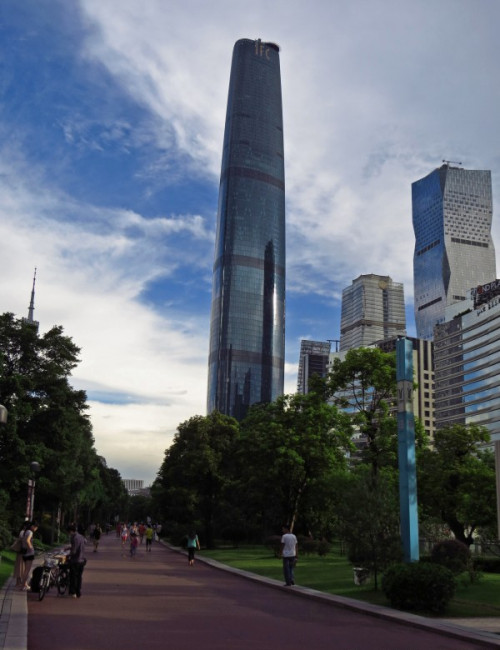
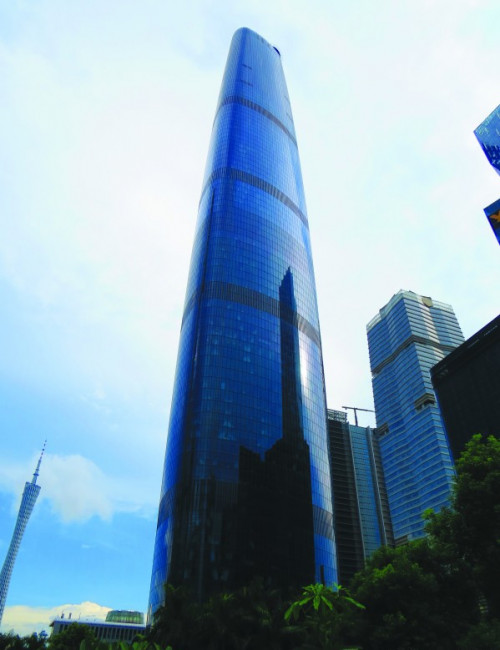
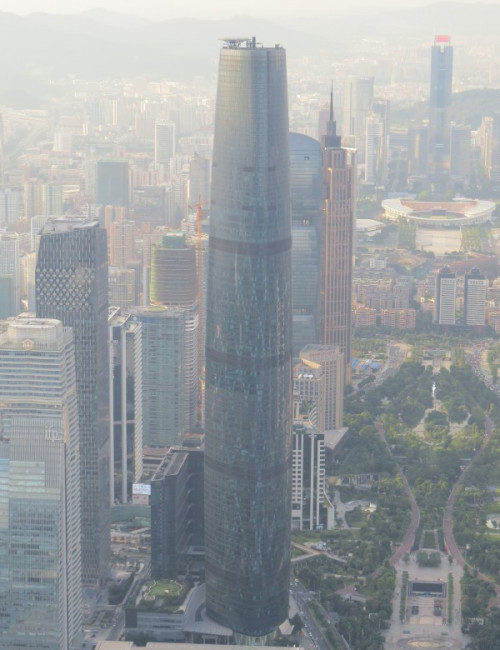
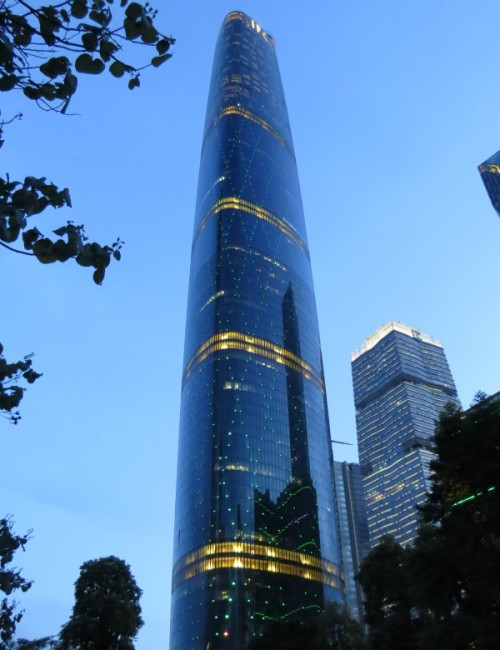
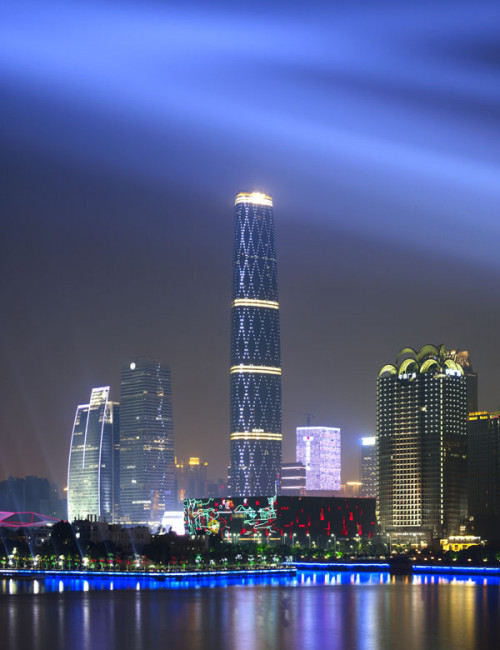
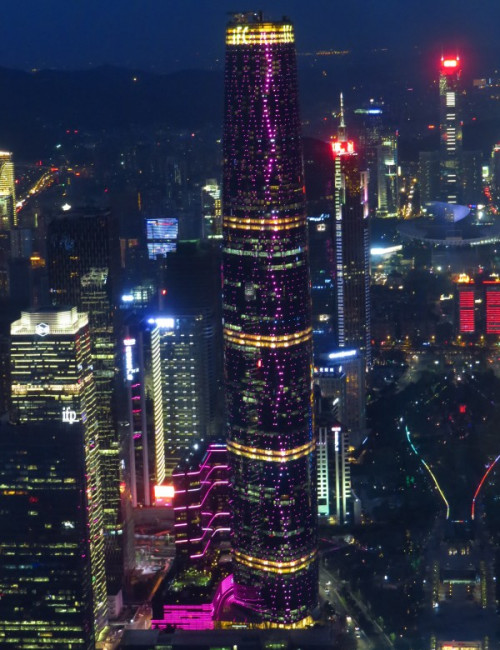
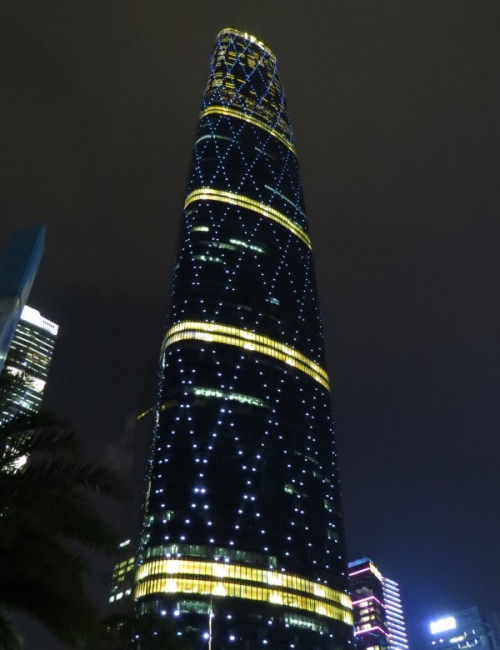
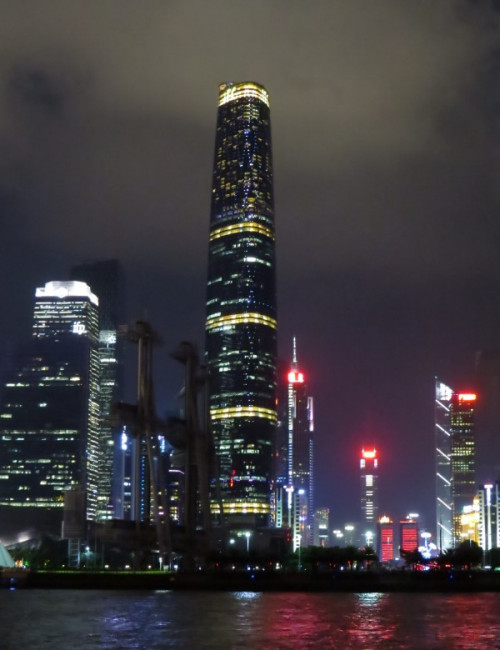
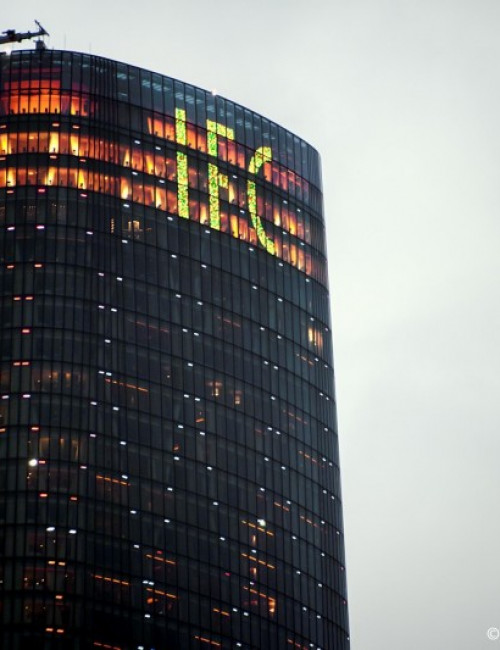
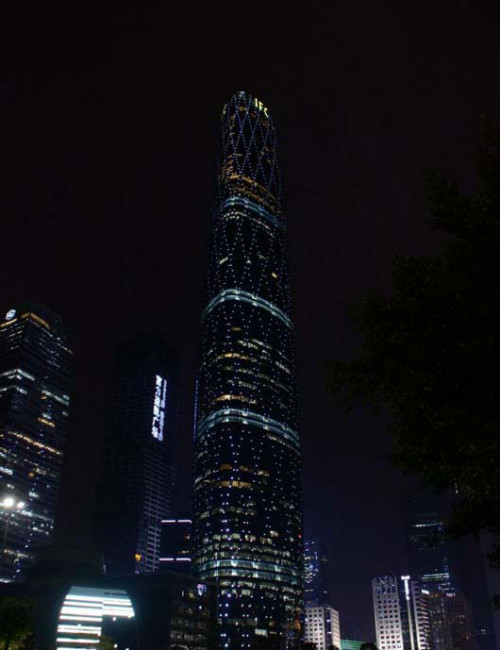
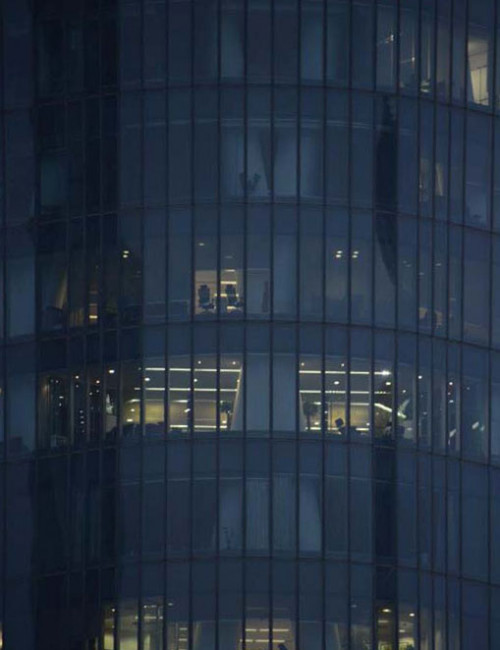
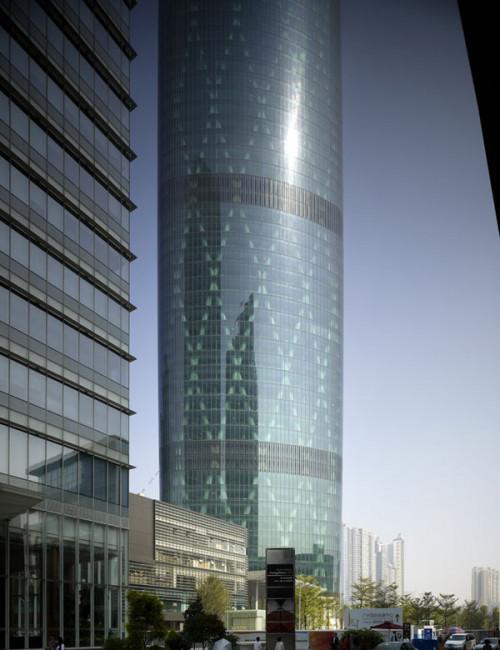
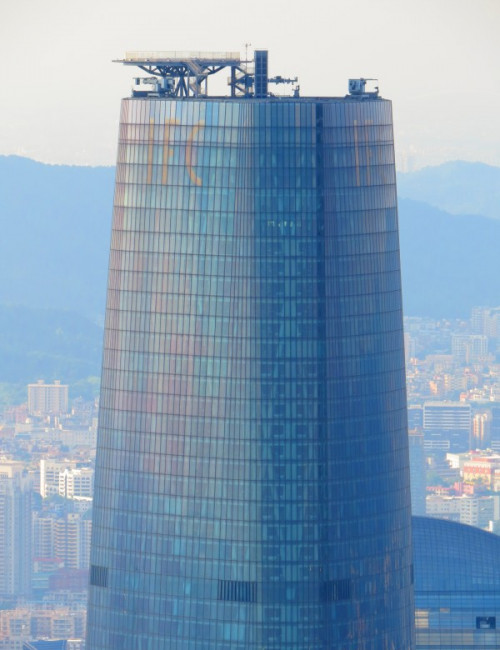
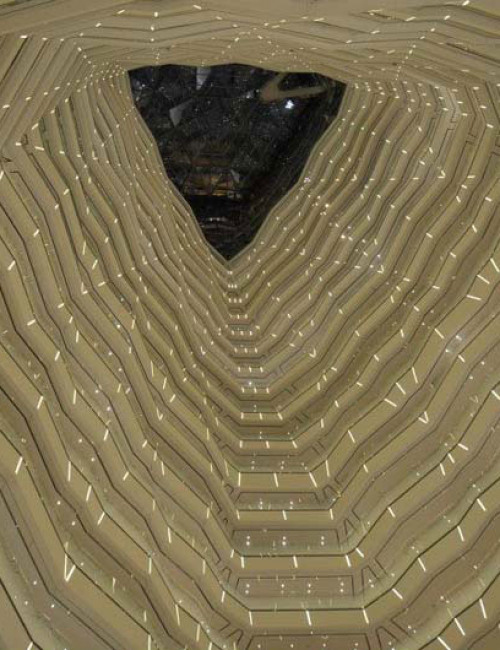
Guangzhou International Finance Center is a landmark tower which defines the emerging international strength of China’s third largest city and serves as a landmark for Guangzhou Zhujiang New Town’s main axis, which links the commercial district in the north with the Pearl River to the south. At the time of its completion it was the fourth tallest building in China and the ninth tallest building in the world. Its elegant simplicity belies the complex geometry of form and structure which makes it possible. Each of the three façades of the curved triangular plan are also curved in section with a radius of 5.1km set out asymmetrically with the widest point at a third of the height, tapering to its narrowest point at the top. There is no spire, and the three curved façades continue up beyond the highest floor and, in some views, seems to disappear to infinity. The highest point is a helicopter landing pad which hovers over the central atrium just overhanging the perimeter cladding. The inside of this atrium, with its crystalline geometry, sparkles with abundant daylight and is taller than the height of London’s St. Paul\'s Cathedral, including its dome.
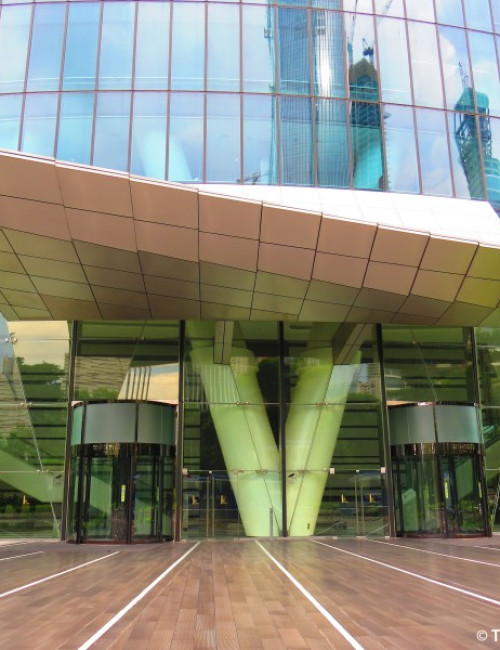
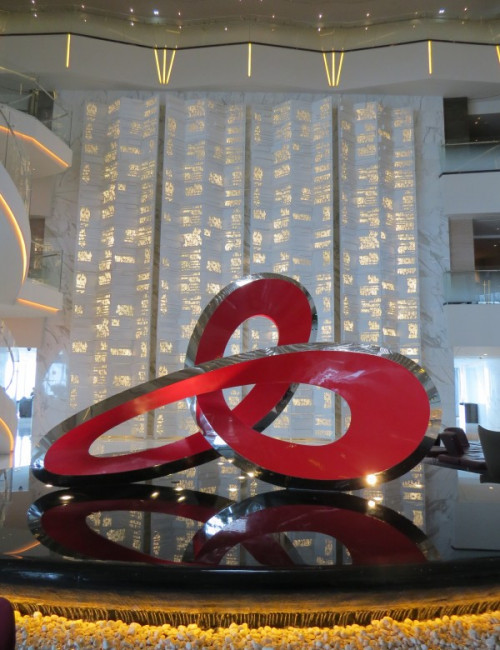
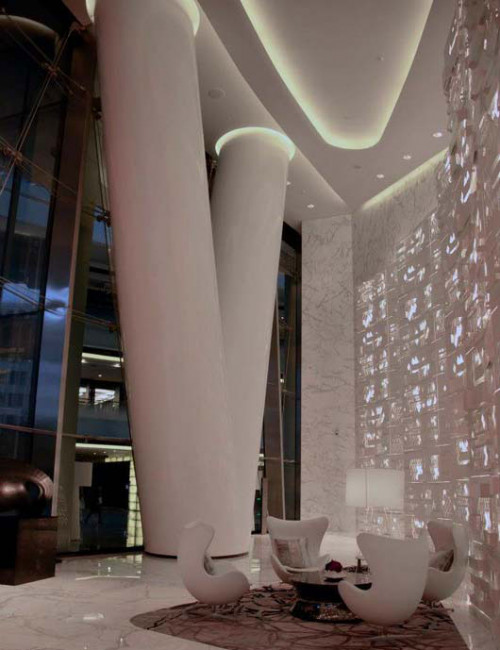
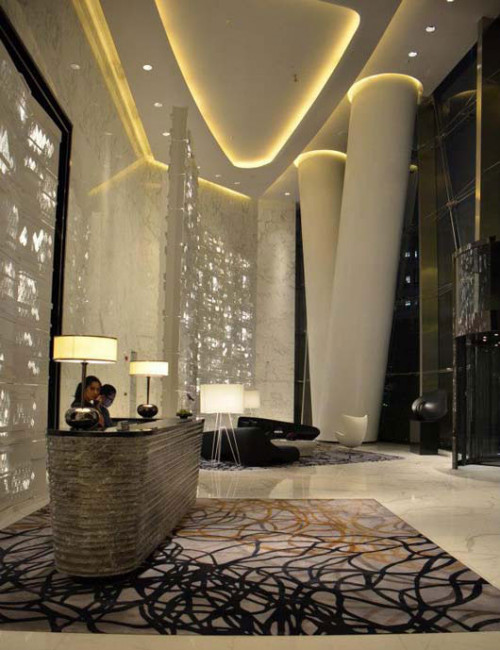
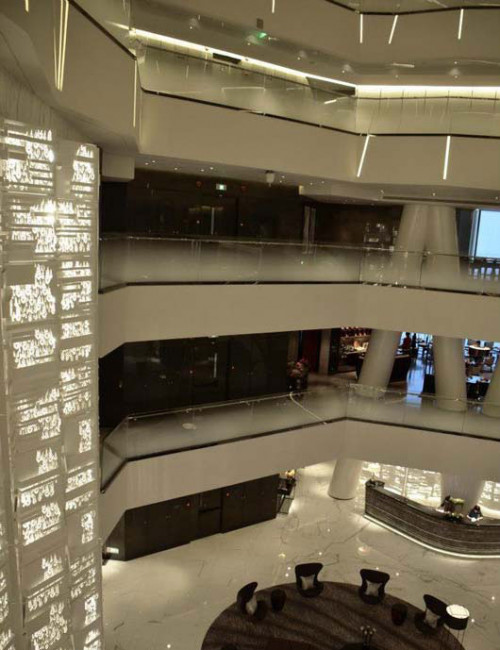
Its rounded triangular plan responds to the need for efficient internal space layouts and excellent environmental performance. The tower has a mixture of uses including office space, a luxury hotel and a top floor observation area. Office floors occupy levels 2 through 67 and a Four Seasons hotel is on levels 67 through 101. The tower has a triple height 12 m (39 ft) high entrance lobby which rings the base of the tower and allows secure access to the building’s double decker shuttles and standard lift groupings. The main lobby also connects via escalators to a secondary office lobby located at the lower basement level, which in turn allows access to below ground retail and the MTR station. A further dedicated lobby and set down has been formed at ground level for the hotel. At ground level, the tower connects with a substantial podium complex containing a retail mall, conference center and serviced apartments. The tower and podium connect to a large retail mall and transport hub below ground, with a retail loop encouraging connections underneath a landscaped central axis.
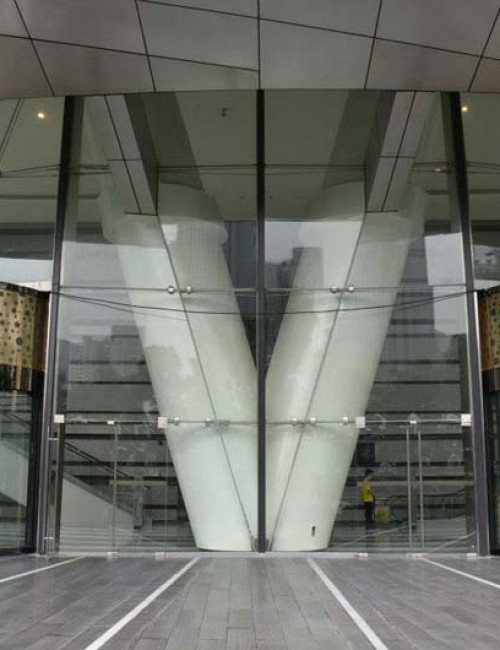
The building utilizes the world’s tallest constructed diagrid structure which is clearly expressed though the building’s façade and gives the building considerable character. The diagrid members are formed from concrete filled steel tubes which provide both good stiffness and fire protection to the structure. However, two hour fire protection was still required in order to meet codes and this was trowel applied directly to the building’s primary structure. The tubular diagrid structure “nodes-out” every 12 stories to form 54 m (177 ft) high giant steel diamonds. At the base of the tower the structural members are 1800 mm (70 in) in diameter and reduce in size up the building to 900 mm (35 in) at the top of the building.
The structural core takes much of the gravity load of the building’s floors and is linked back to the diagrid perimeter structure via floor beams to create a stiff “tube-within-a-tube” structural system. The inherent stiffness in the structure minimizes steel tonnage while providing inherent stiffness and resistance to acceleration and sway, thereby maintaining high comfort levels for the building’s occupants. This stiffness and resistance to acceleration means that no damping of the structure is required.
The building has been designed to be a low carbon and sustainable building. The shape of the building has been designed to reduce the effects of wind, thereby reducing the necessary size and weight of the structure. In addition to fundamental passive measures such as orientation, sustainable building systems have been incorporated into the design which address issues such as comfort, maintenance and cost while paying due regard to environmental sustainability and energy conservation. These include: solar thermal hot water; air-side energy recovery; heat recovery chiller; ice storage system; desiccant dehumidification; high-rise air discharge pressure CFD analysis; free cooling system; and variable air volume.
CVU Awards & Distinctions
10 Year Award 2020 Award of Excellence
2020 CVU Awards
Best Tall Building, by Region, Asia & Australasia 2011 Winner
2011 CVU Awards
Learn more about the Council on Vertical Urbanism
Discover how vertical living is shaping the next generation of urban environments. Explore insights, research, and global leadership in vertical urban development