




Height rank
KK100
Shenzhen
tm-0.jpg)
tm.jpg)
tm.jpg)
tfpfarrells.jpg)
carstenschaelphotography.jpg)
carstenschaelphotography.jpg)
terrimeyerboake.jpg)
tfpfarrells.jpg)
fpfarrells.jpg)
terrimeyerboake.jpg)
tfpfarrells.jpg)


tm.jpg)
terrimeyerboake.jpg)


terrimeyerboake.jpg)
tm.jpg)
tm.jpg)
terrimeyerboake.jpg)
tm.jpg)

terrimeyerboake.jpg)
-(c)tm.jpg)
tfpfarrells.jpg)
terrimeyerboake.jpg)
terrimeyerboake.jpg)
tfpfarrells.jpg)
tfpfarrells.jpg)
tm.jpg)


tm.jpg)
tm.jpg)
- CVU Drawing
- Facts
-
Metrics
You must be a CVU Member to view this resource.
To Tip:
Height is measured from the level of the lowest, significant, open-air, pedestrian entrance to the highest point of the building, irrespective of material or function of the highest element (i.e., including antennae, flagpoles, signage and other functional-technical equipment).Architectural:
Height is measured from the level of the lowest, significant, open-air, pedestrian entrance to the architectural top of the building, including spires, but not including antennae, signage, flag poles or other functional-technical equipment. This measurement is the most widely utilized and is employed to define the Council on Vertical Urbanism (CVU) rankings of the "World's Tallest Buildings."Occupied:
Height is measured from the level of the lowest, significant, open-air, pedestrian entrance to the highest occupied floor within the building.
Above Ground
The number of floors above ground should include the ground floor level and be the number of main floors above ground, including any significant mezzanine floors and major mechanical plant floors. Mechanical mezzanines should not be included if they have a significantly smaller floor area than the major floors below. Similarly, mechanical penthouses or plant rooms protruding above the general roof area should not be counted. Note: CVU floor counts may differ from published accounts, as it is common in some regions of the world for certain floor levels not to be included (e.g., the level 4, 14, 24, etc. in Hong Kong).Below Ground
The number of floors below ground should include all major floors located below the ground floor level.Official Name
KK100
Other Names
KK100 Development, Kingkey 100, Kingkey Finance Center Plaza, Kingkey Finance Tower
Type
Building
Status
Completed
Completion
2011
Country
City
Function
A mixed-use tall building contains two or more functions (or uses), where each of the functions occupy a significant proportion of the tower's total space. Support areas such as car parks and mechanical plant space do not constitute mixed-use functions. Functions are denoted on CVU "Tallest Building" lists in descending order, e.g., "hotel/office" indicates hotel function above office function.
Hotel / Office
Structural Material
Both the main vertical/lateral structural elements and the floor spanning systems are constructed from steel. Note that a building of steel construction with a floor system of concrete planks or concrete slab on top of steel beams is still considered an “all-steel” structure as the concrete elements are not acting as the primary structure.
All-Concrete
Both the main vertical/lateral structural elements and the floor spanning systems are constructed from concrete which has been cast in place and utilizes steel reinforcement bars and/or steel reinforced concrete which has been precast as individual components and assembled together on-site.
All-Timber
Both the main vertical/lateral structural elements and the floor spanning systems are constructed from timber. An all-timber structure may include the use of localized non-timber connections between timber elements. Note that a building of timber construction with a floor system of concrete planks or concrete slab on top of timber beams is still considered an “all-timber” structure as the concrete elements are not acting as the primary structure.
Mixed-Structure
Utilizes distinct systems (e.g. all-steel, all-concrete, all-timber), one on top of the other. For example, a Steel Over Concrete indicates an all-steel structural system located on top of an all-concrete structural system, with the opposite true of Concrete Over Steel.
Composite
A combination of materials (e.g. steel, concrete, timber) are used together in the main structural elements. Examples include buildings which utilize: steel columns with a floor system of reinforced concrete beams; a steel frame system with a concrete core; concrete-encased steel columns; concrete-filled steel tubes; etc. Where known, the CVU database breaks out the materials used within a composite building’s primary structural elements.
Concrete-Steel Composite
Energy Label
LEED Gold
Height
441.8 m / 1,449 ft
Floors Above Ground
98
Floors Below Ground
4
# of Hotel Rooms
249
# of Parking Spaces
2000
# of Elevators
66
Top Elevator Speed
9 m/s
Tower GFA
220,000 m² / 2,368,060 ft²
Rankings
-
By function
You must be a CVU Member to view this resource.
-
By material
You must be a CVU Member to view this resource.
Construction Schedule
Proposed
Construction Start
Completed
Architect
Usually involved in the front end design, with a "typical" condition being that of a leadership role through either Schematic Design or Design Development, and then a monitoring role through the CD and CA phases.
Structural Engineer
The Design Engineer is usually involved in the front end design, typically taking the leadership role in the Schematic Design and Design Development, and then a monitoring role through the CD and CA phases.
MEP Engineer
The Design Engineer is usually involved in the front end design, typically taking the leadership role in the Schematic Design and Design Development, and then a monitoring role through the CD and CA phases.
Material Supplier
Material Supplier refers to organizations which supplied significant systems/materials for a building project (e.g. elevator suppliers, facade suppliers, etc).
Material Supplier refers to organizations which supplied significant systems/materials for a building project (e.g. elevator suppliers, facade suppliers, etc).
You must be a CVU Member to view this resource.
Owner/Developer
Shenzhen Kingkey Real Estate Development Co. Ltd
Architect
Usually involved in the front end design, with a "typical" condition being that of a leadership role through either Schematic Design or Design Development, and then a monitoring role through the CD and CA phases.
Usually takes on the balance of the architectural effort not executed by the "Design Architect," typically responsible for the construction documents, conforming to local codes, etc. May often be referred to as "Executive," "Associate," or "Local" Architect, however, for consistency CTBUH uses the term "Architect of Record" exclusively.
Huasen Architectural & Engineering Designing Consultants Ltd.
Structural Engineer
The Design Engineer is usually involved in the front end design, typically taking the leadership role in the Schematic Design and Design Development, and then a monitoring role through the CD and CA phases.
Arup; RBS Architectural Engineering Design Associates
MEP Engineer
The Design Engineer is usually involved in the front end design, typically taking the leadership role in the Schematic Design and Design Development, and then a monitoring role through the CD and CA phases.
Contractor
The main contractor is the supervisory contractor of all construction work on a project, management of sub-contractors and vendors, etc. May be referred to as "Construction Manager," however, for consistency CTBUH uses the term "Main Contractor" exclusively.
China Construction Fourth Engineering Division Corp. Ltd.
Other Consultant
Other Consultant refers to other organizations which provided significant consultation services for a building project (e.g. wind consultants, environmental consultants, fire and life safety consultants, etc).
Other Consultant refers to other organizations which provided significant consultation services for a building project (e.g. wind consultants, environmental consultants, fire and life safety consultants, etc).
E.W. COX Hong Kong Limited
Laguarda.Low Architects
Adrian L. Norman Limited
Tino Kwan Lighting Consultants Ltd.
Sandu Environmental Signage
Material Supplier
Material Supplier refers to organizations which supplied significant systems/materials for a building project (e.g. elevator suppliers, facade suppliers, etc).
Material Supplier refers to organizations which supplied significant systems/materials for a building project (e.g. elevator suppliers, facade suppliers, etc).
Shenyang Yuanda Aluminium Industry Engineering Co.,Ltd.
China Construction Steel Structure Corporation
CVU Awards & Distinctions
Best Tall Building, by Region, Asia & Australasia 2012 Award of Excellence
2012 CVU Awards
About KK100
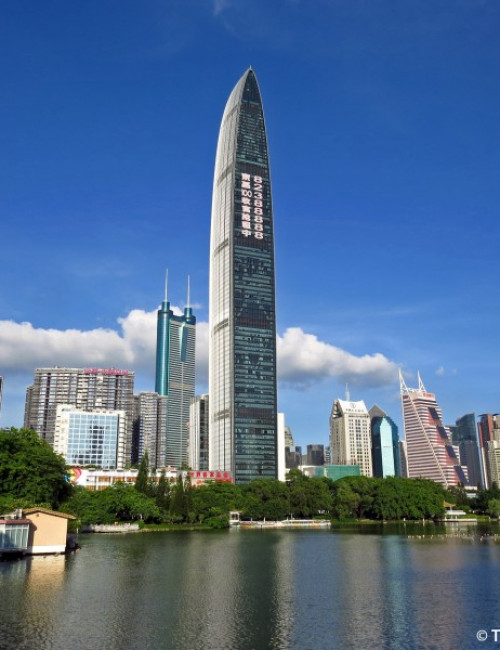
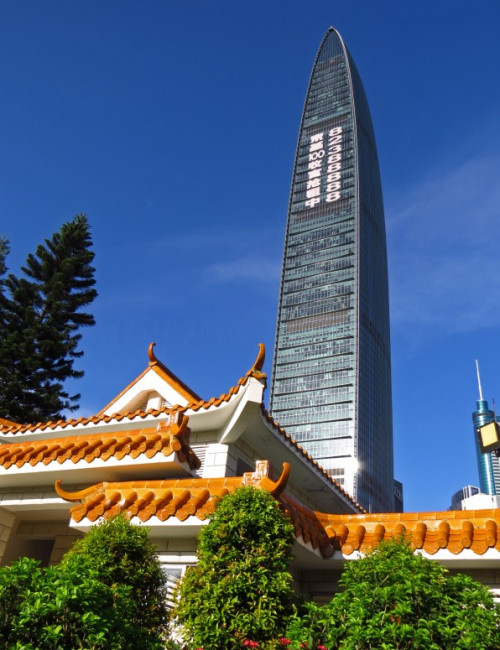
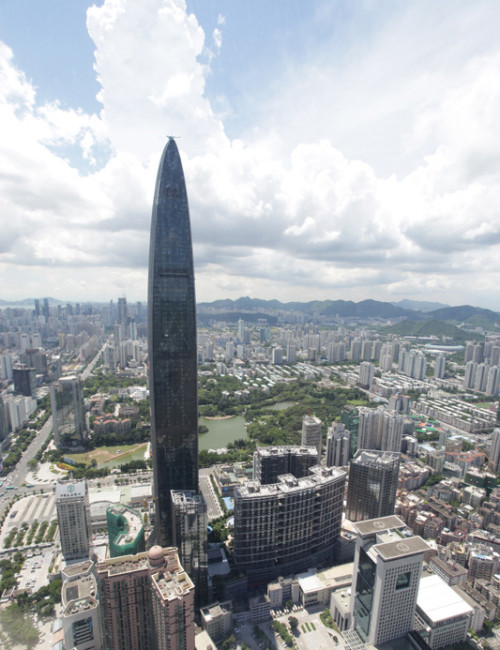
The KK100 development lies between the border of Shenzhen’s business and residential districts in a densely developed area. To facilitate more sustainable development for the fast-growing city, the mixed-use tower was designed to be a hub for transit, provide amenities to the area, and provide an occupant density that would help to reduce urban sprawl and reliance on transportation.
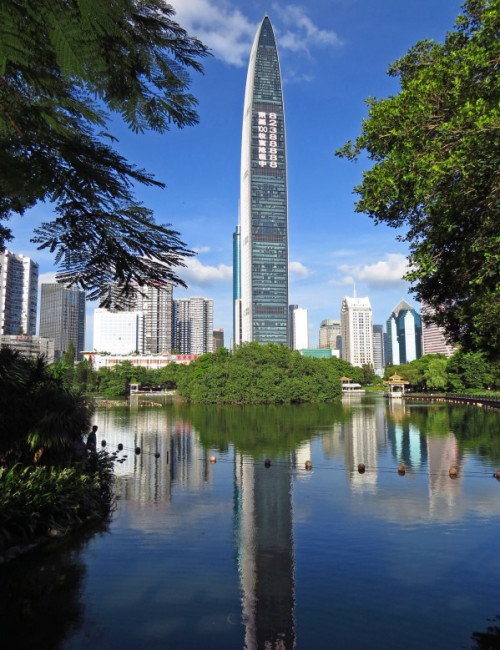
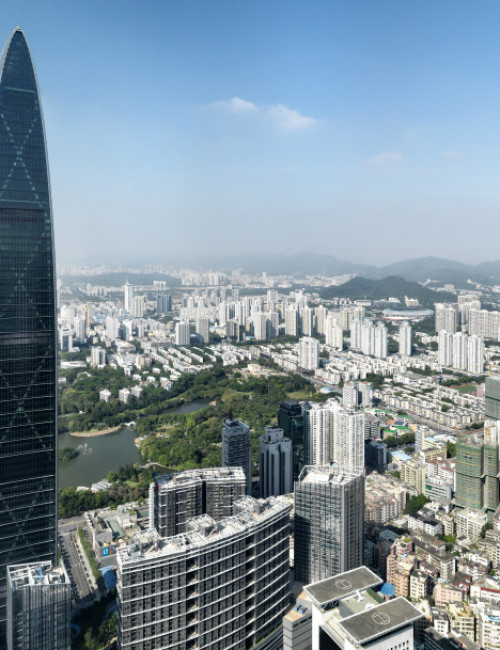
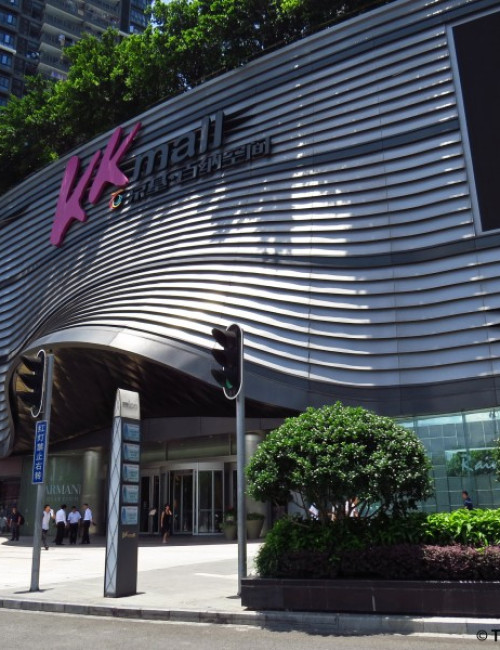
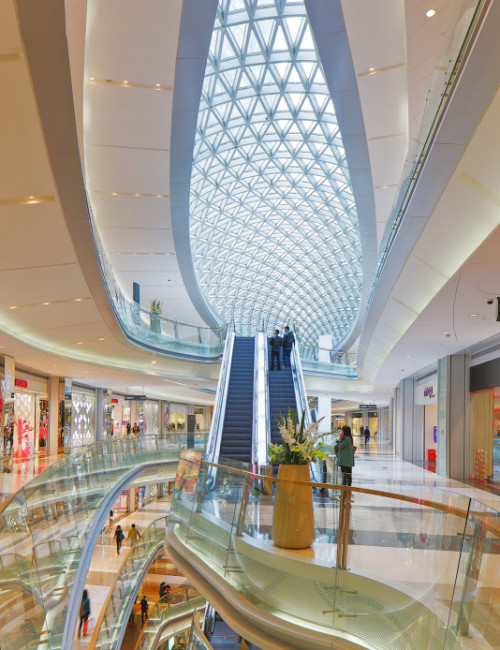
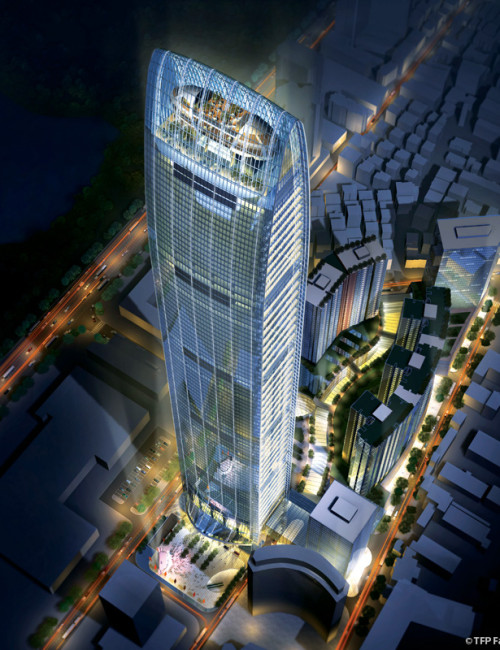
As part of a greater master plan, the site was arranged to include a podium with retail and connections to public transportation, with the tower placed at the southwest end of the site to draw on the views of the city and neighboring Lizhi Park. The site formerly held a residential quarter with poor living conditions. To mitigate the effects of the development on the former residents, a joint initiative was formed which made them stakeholders in the new buildings and maintained the existing community.
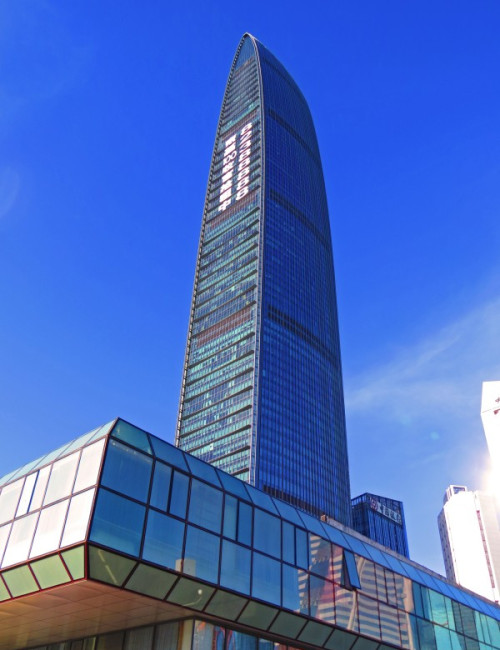
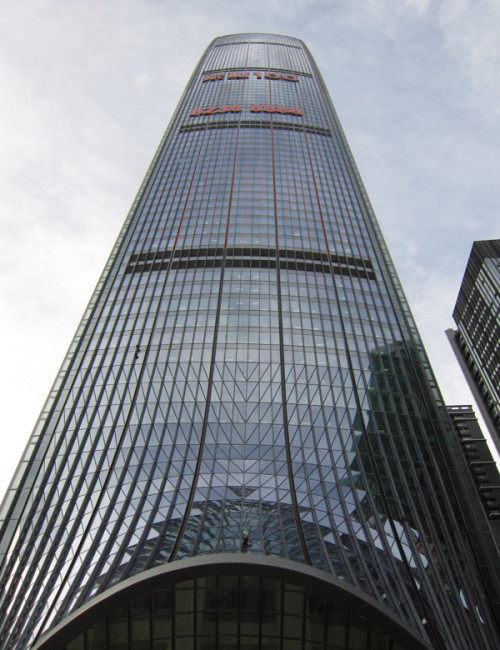
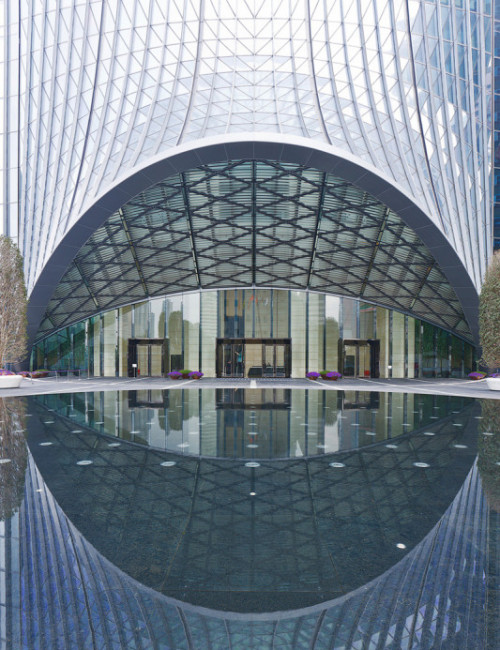
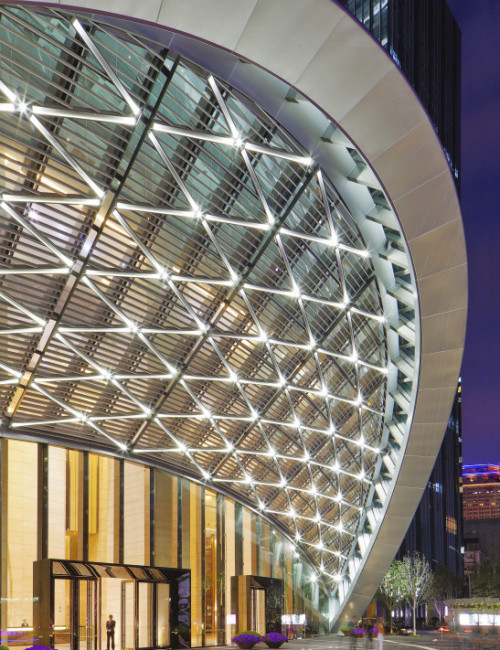
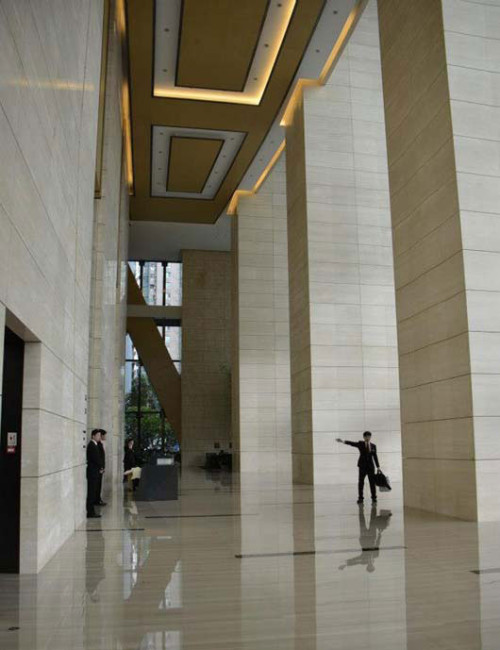
The large podium was designed with a response to the site’s foot traffic and context, providing entrances appropriate to the scale and density of the area. A future residential complex will connect to this podium, as well as the tower, to create an integrated development to serve all the needs of its occupants. The main entrance to the tower takes the building skin and pulls it into an inviting curvilinear canopy, funneling in residents and workers.
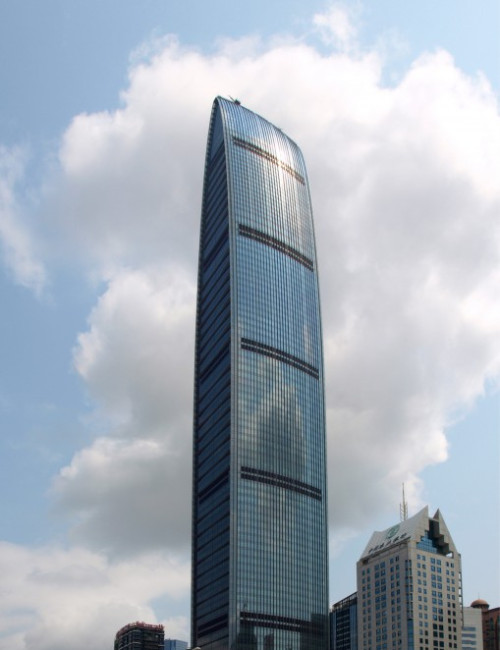
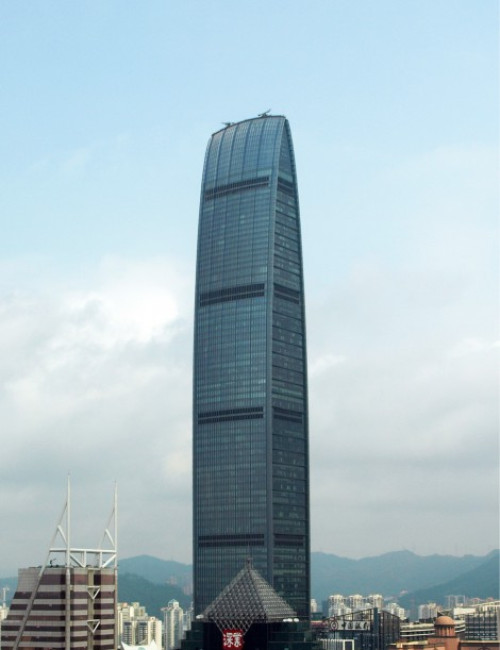
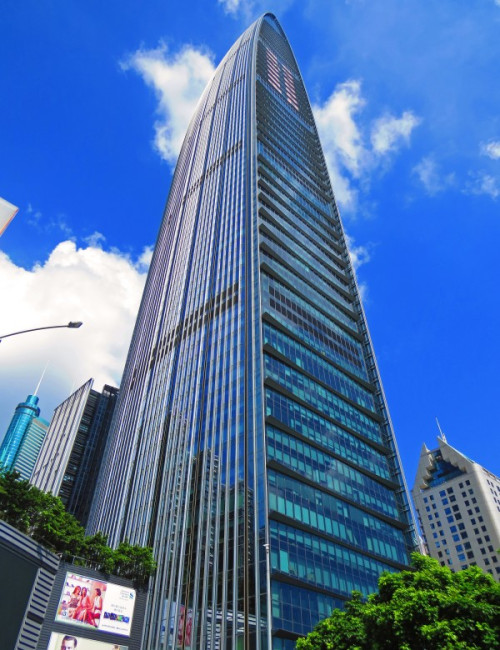
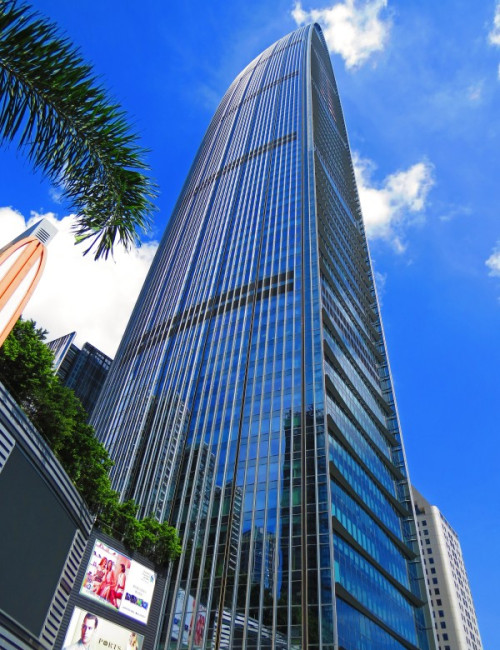
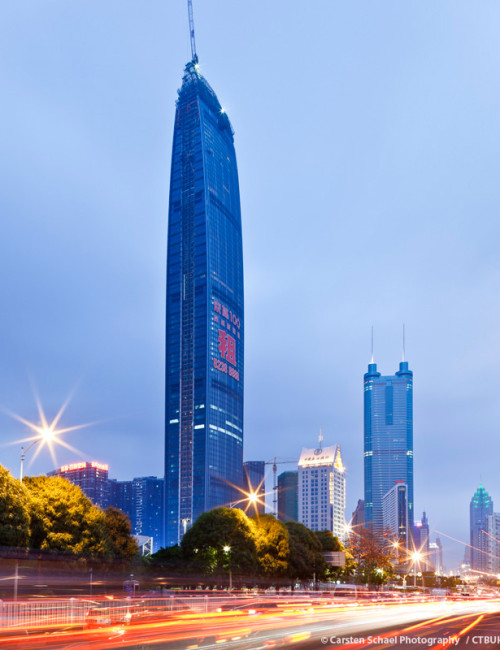
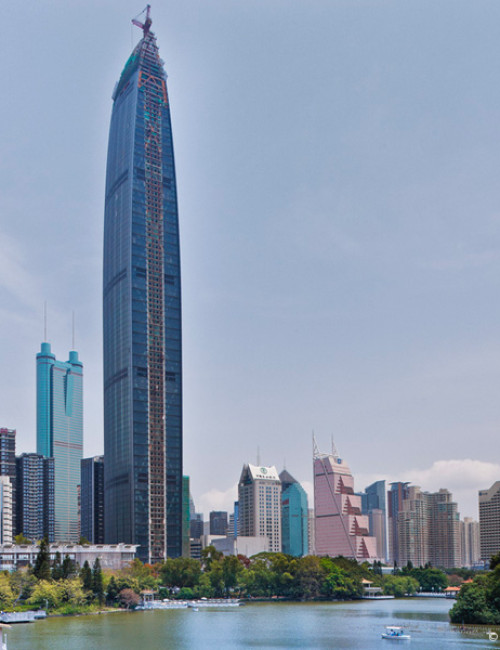
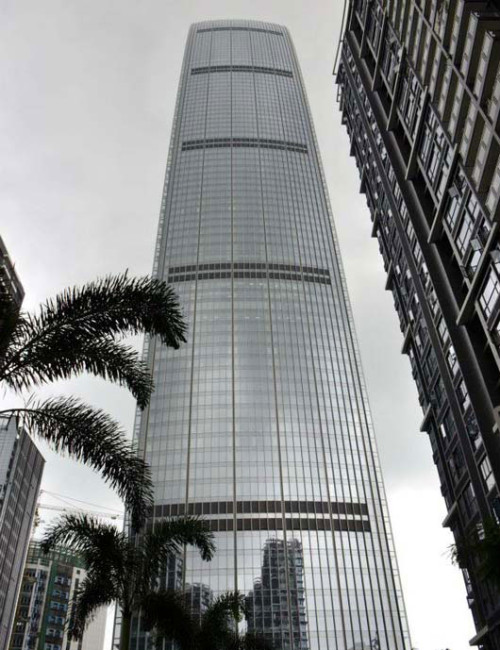
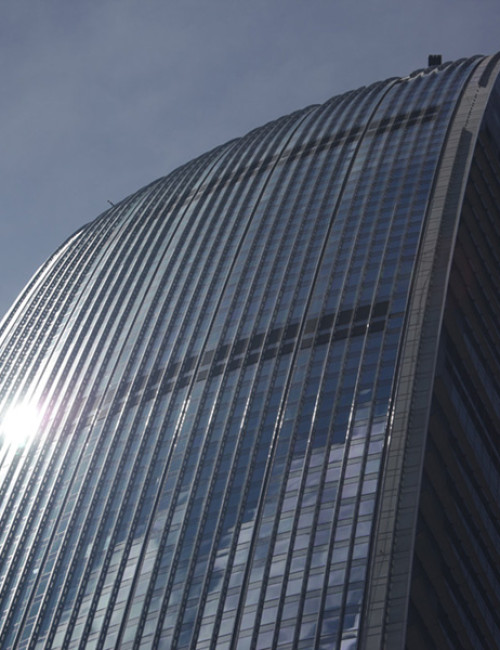
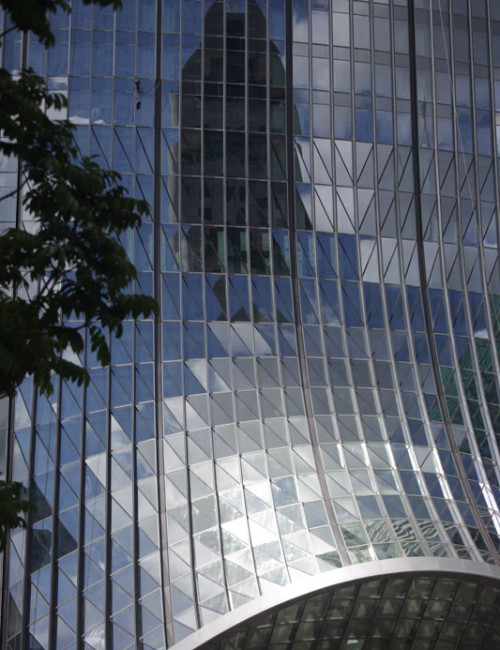
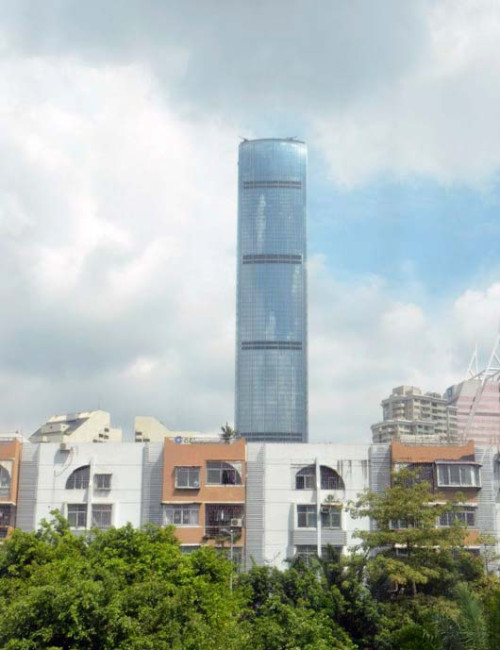
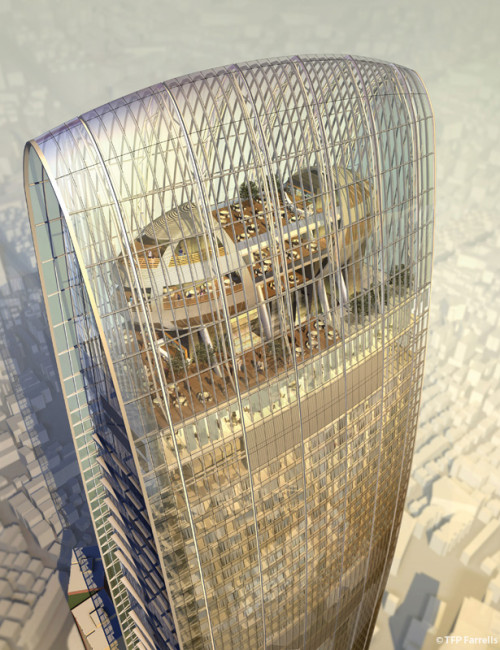
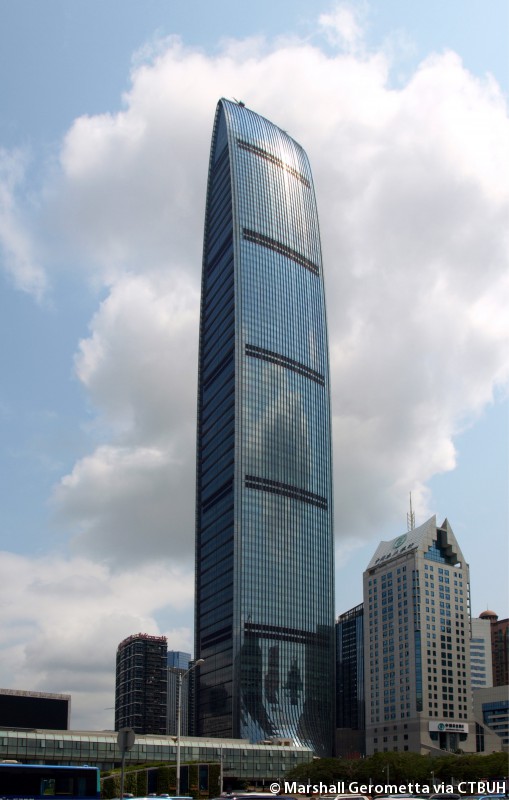
The tower’s curving form was intended to allude to a fountain of water, symbolizing the wealth and prosperity of the city of Shenzhen. The base of the tower connects to the lower-level programs as well as to the urban fabric at the pedestrian scale. The curved north and south façades are oriented to Hong Kong and the Maipo marshes, while the slender east and west façades taper to the curved apex of the tower, providing less area for morning and evening solar gain.
Levels 4–72 of the building comprise office space, with slightly different floor plates between adjacent levels due to the curve of the tower. The floor-to-floor height is a generous four meters, allowing a maximum of daylight penetration into the work spaces. The layout of the office spaces was generated to provide a great deal of flexibility to meet the needs of various tenants.
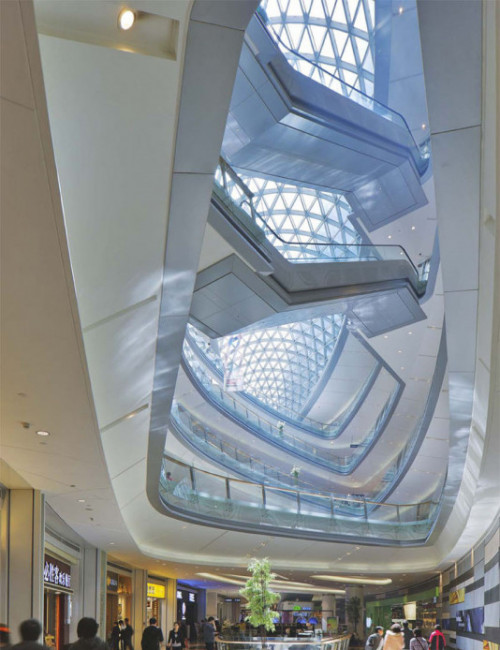
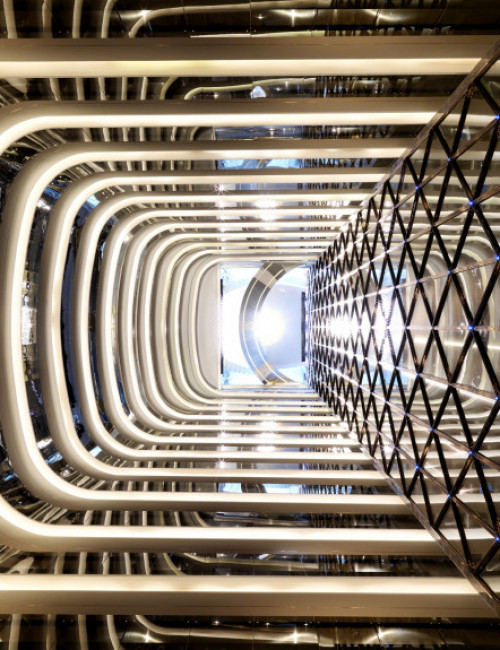
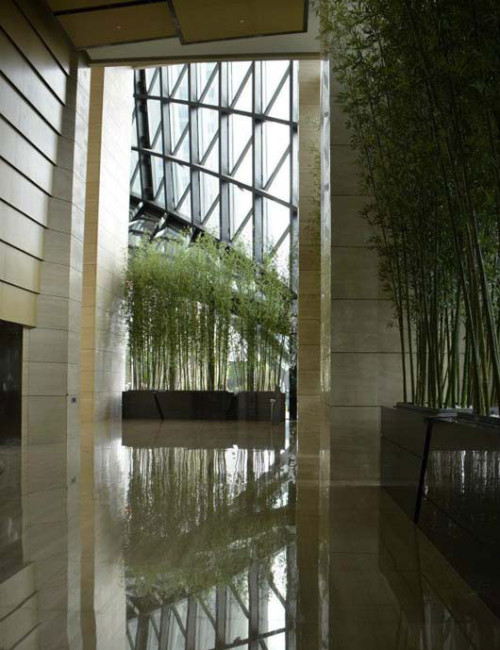
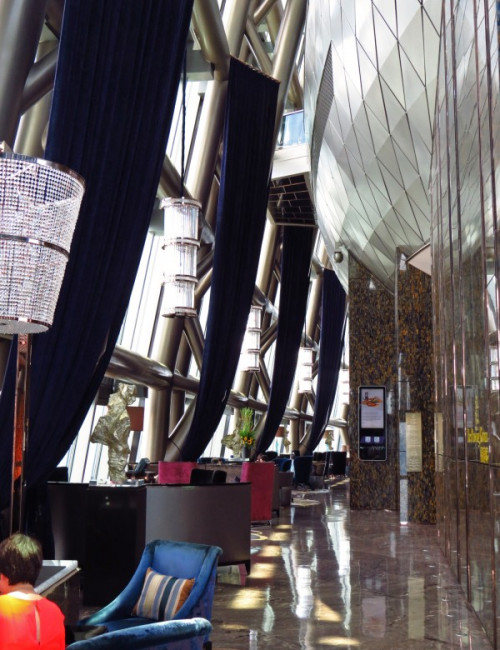
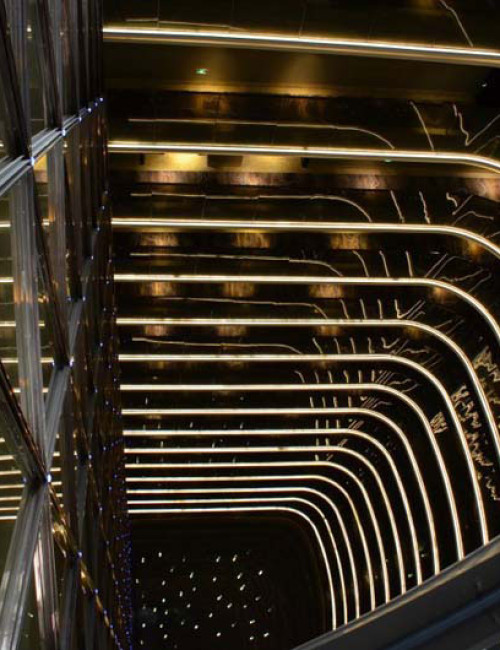
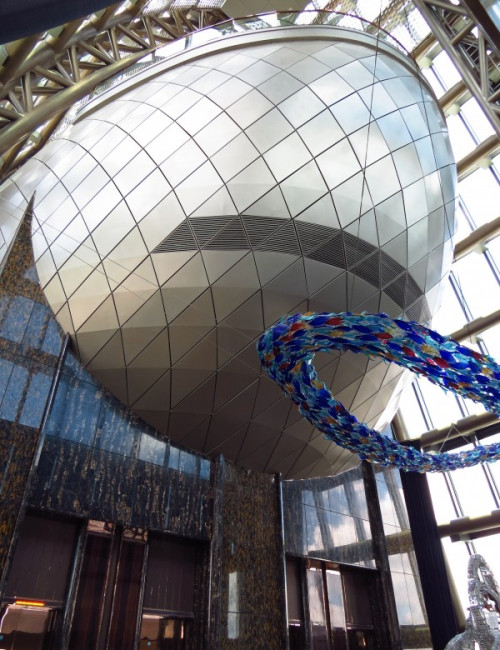
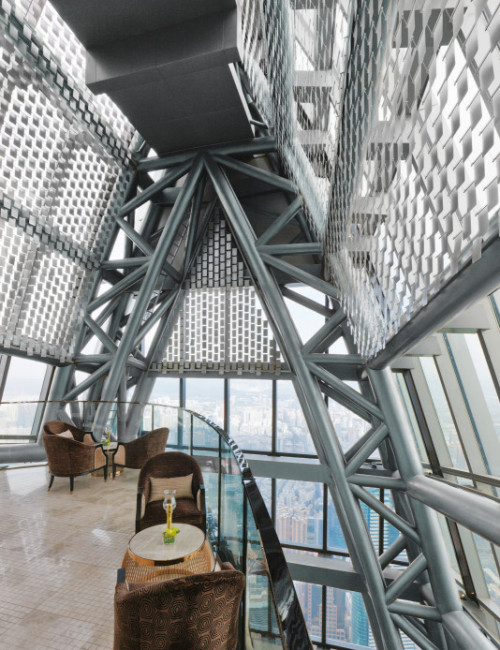
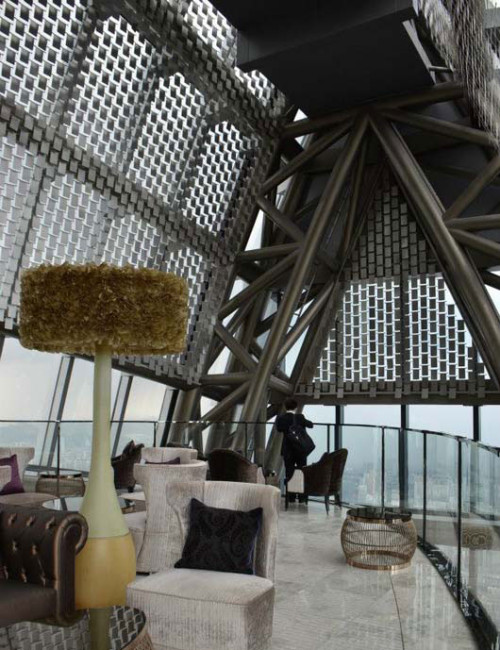
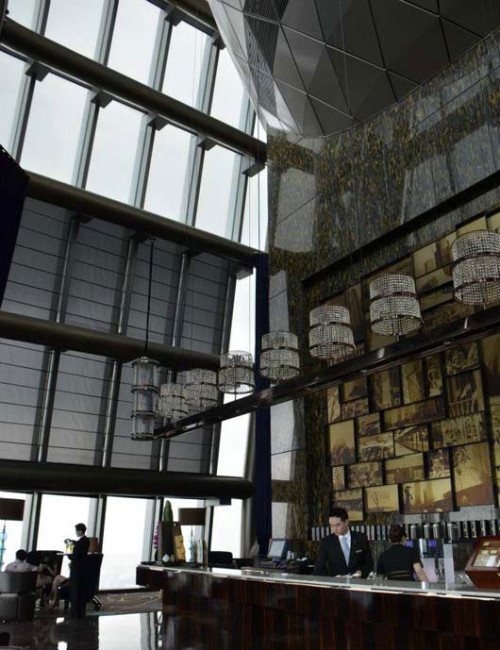
Levels 75–95 house the St. Regis Hotel and its own conference and meeting facilities. Hotel visitors arrive at the sky garden lobby on the 94th floor, which opens into a large, open atrium and garden at the top of the building. This level accommodates several fine-dining options as well as panoramic views of the city surrounding the tower. The atrium stretches 16 stories below the sky garden, housing lifts to reach guest rooms and bringing natural light into the core of the hotel section of the tower.
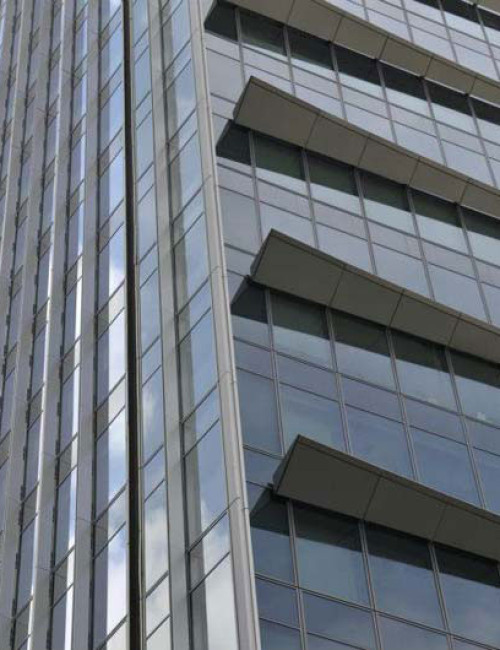
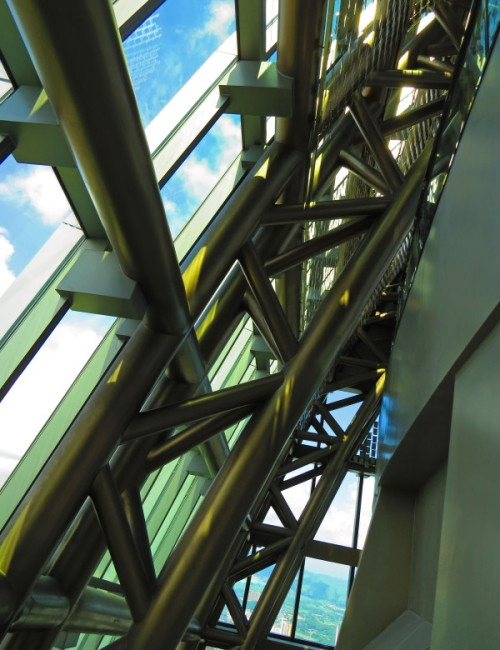
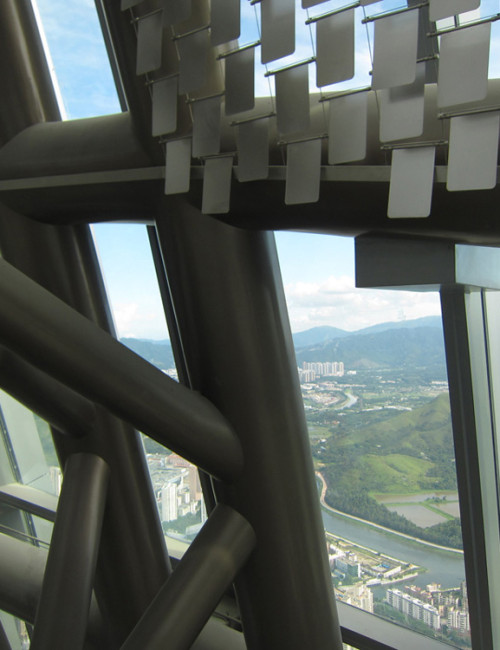
The building aims to be a sustainable example for the city, employing various approaches to create a “green” development. In addition to the building form’s response to the local climate, a free-cooling system was used, as well as a highly developed envelope to improve the performance of the building. Vertical and horizontal fins were employed on the façade to reduce glare and solar gain, increasing the comfort of the inhabitants. Overall, the complex hopes to reduce demands on infrastructure by providing a place where people can work and live, eliminating needs for transit between these uses.
CVU Awards & Distinctions
Best Tall Building, by Region, Asia & Australasia 2012 Award of Excellence
2012 CVU Awards
Learn more about the Council on Vertical Urbanism
Discover how vertical living is shaping the next generation of urban environments. Explore insights, research, and global leadership in vertical urban development