




Height rank
Princess Tower
Dubai


tameer.jpg)
tameer.jpg)
tameerholding.jpg)
tameerholding.jpg)
tameer.jpg)
tameer-0.jpg)
tameer.jpg)
tameer.jpg)
tameer.jpg)
tameerholding.jpg)
tameerholding.jpg)
tonysafarik.jpg)


tameer.jpg)
- CVU Drawing
- Facts
-
Metrics
You must be a CVU Member to view this resource.
- Structure
To Tip:
Height is measured from the level of the lowest, significant, open-air, pedestrian entrance to the highest point of the building, irrespective of material or function of the highest element (i.e., including antennae, flagpoles, signage and other functional-technical equipment).Architectural:
Height is measured from the level of the lowest, significant, open-air, pedestrian entrance to the architectural top of the building, including spires, but not including antennae, signage, flag poles or other functional-technical equipment. This measurement is the most widely utilized and is employed to define the Council on Vertical Urbanism (CVU) rankings of the "World's Tallest Buildings."Occupied:
Height is measured from the level of the lowest, significant, open-air, pedestrian entrance to the highest occupied floor within the building.
Above Ground
The number of floors above ground should include the ground floor level and be the number of main floors above ground, including any significant mezzanine floors and major mechanical plant floors. Mechanical mezzanines should not be included if they have a significantly smaller floor area than the major floors below. Similarly, mechanical penthouses or plant rooms protruding above the general roof area should not be counted. Note: CVU floor counts may differ from published accounts, as it is common in some regions of the world for certain floor levels not to be included (e.g., the level 4, 14, 24, etc. in Hong Kong).Below Ground
The number of floors below ground should include all major floors located below the ground floor level.Official Name
Princess Tower
Type
Building
Status
Completed
Completion
2012
Country
City
Address
Function
A mixed-use tall building contains two or more functions (or uses), where each of the functions occupy a significant proportion of the tower's total space. Support areas such as car parks and mechanical plant space do not constitute mixed-use functions. Functions are denoted on CVU "Tallest Building" lists in descending order, e.g., "hotel/office" indicates hotel function above office function.
Residential
Structural Material
Both the main vertical/lateral structural elements and the floor spanning systems are constructed from steel. Note that a building of steel construction with a floor system of concrete planks or concrete slab on top of steel beams is still considered an “all-steel” structure as the concrete elements are not acting as the primary structure.
All-Concrete
Both the main vertical/lateral structural elements and the floor spanning systems are constructed from concrete which has been cast in place and utilizes steel reinforcement bars and/or steel reinforced concrete which has been precast as individual components and assembled together on-site.
All-Timber
Both the main vertical/lateral structural elements and the floor spanning systems are constructed from timber. An all-timber structure may include the use of localized non-timber connections between timber elements. Note that a building of timber construction with a floor system of concrete planks or concrete slab on top of timber beams is still considered an “all-timber” structure as the concrete elements are not acting as the primary structure.
Mixed-Structure
Utilizes distinct systems (e.g. all-steel, all-concrete, all-timber), one on top of the other. For example, a Steel Over Concrete indicates an all-steel structural system located on top of an all-concrete structural system, with the opposite true of Concrete Over Steel.
Composite
A combination of materials (e.g. steel, concrete, timber) are used together in the main structural elements. Examples include buildings which utilize: steel columns with a floor system of reinforced concrete beams; a steel frame system with a concrete core; concrete-encased steel columns; concrete-filled steel tubes; etc. Where known, the CVU database breaks out the materials used within a composite building’s primary structural elements.
Steel Over Concrete
Official Website
Height
413.4 m / 1,356 ft
Floors Above Ground
101
Floors Below Ground
6
# of Apartments
763
# of Parking Spaces
957
# of Elevators
13
Top Elevator Speed
6 m/s
Tower GFA
171,175 m² / 1,842,512 ft²
Structural Details:
Bottom of Building
Top of Building
Rankings
-
By function
You must be a CVU Member to view this resource.
-
By material
You must be a CVU Member to view this resource.
Construction Schedule
Proposed
Construction Start
Completed
Other Consultant
Other Consultant refers to other organizations which provided significant consultation services for a building project (e.g. wind consultants, environmental consultants, fire and life safety consultants, etc).
Other Consultant refers to other organizations which provided significant consultation services for a building project (e.g. wind consultants, environmental consultants, fire and life safety consultants, etc).
Material Supplier
Material Supplier refers to organizations which supplied significant systems/materials for a building project (e.g. elevator suppliers, facade suppliers, etc).
Material Supplier refers to organizations which supplied significant systems/materials for a building project (e.g. elevator suppliers, facade suppliers, etc).
You must be a CVU Member to view this resource.
Owner
Tameer Holding Investment
Developer
Tameer Holding Investment; Gemstone Development
Architect
Usually involved in the front end design, with a "typical" condition being that of a leadership role through either Schematic Design or Design Development, and then a monitoring role through the CD and CA phases.
Eng. Adnan Saffarini
Structural Engineer
The Design Engineer is usually involved in the front end design, typically taking the leadership role in the Schematic Design and Design Development, and then a monitoring role through the CD and CA phases.
Eng. Adnan Saffarini
MEP Engineer
The Design Engineer is usually involved in the front end design, typically taking the leadership role in the Schematic Design and Design Development, and then a monitoring role through the CD and CA phases.
Eng. Adnan Saffarini
Contractor
The main contractor is the supervisory contractor of all construction work on a project, management of sub-contractors and vendors, etc. May be referred to as "Construction Manager," however, for consistency CTBUH uses the term "Main Contractor" exclusively.
Arabian Construction Company
Other Consultant
Other Consultant refers to other organizations which provided significant consultation services for a building project (e.g. wind consultants, environmental consultants, fire and life safety consultants, etc).
Other Consultant refers to other organizations which provided significant consultation services for a building project (e.g. wind consultants, environmental consultants, fire and life safety consultants, etc).
Material Supplier
Material Supplier refers to organizations which supplied significant systems/materials for a building project (e.g. elevator suppliers, facade suppliers, etc).
Material Supplier refers to organizations which supplied significant systems/materials for a building project (e.g. elevator suppliers, facade suppliers, etc).
Dow Corning Corporation; Sika Services AG
About Princess Tower
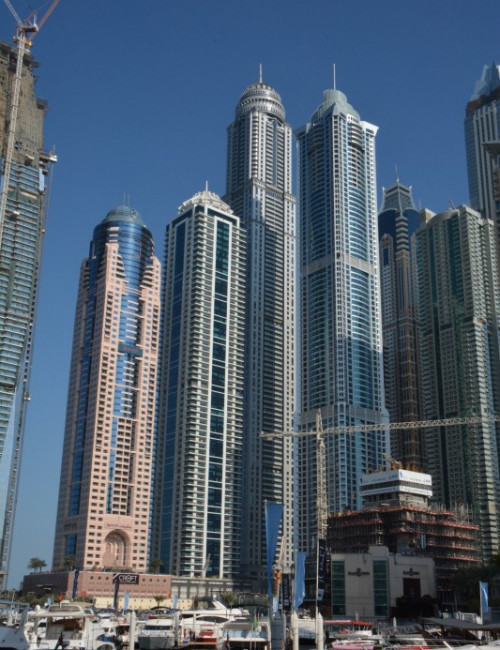
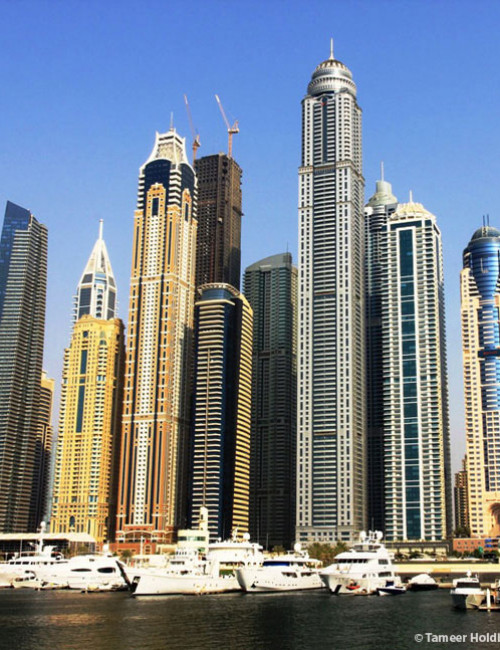
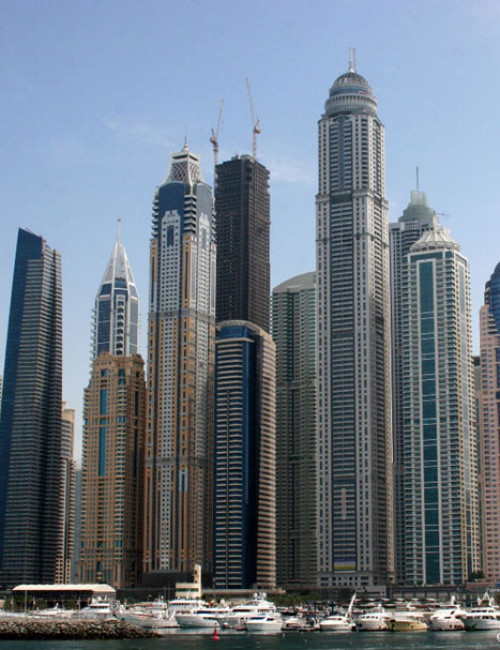
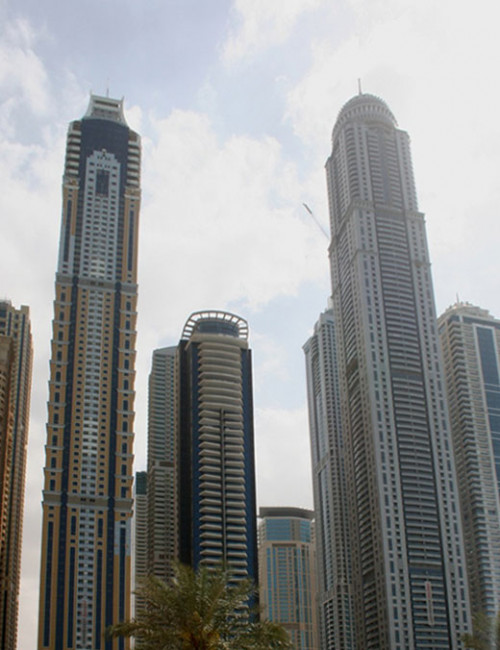
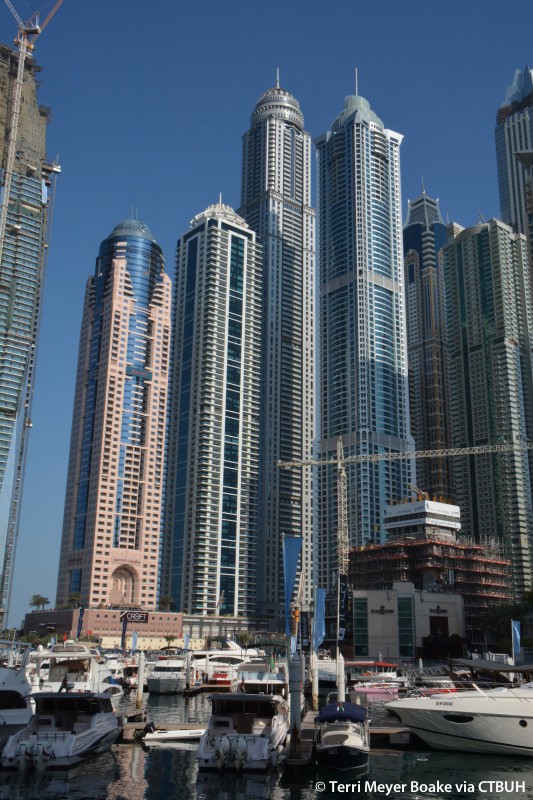
Princess Tower set the precedent for all-residential towers, both in Dubai and around the world. Its prime location puts it in near a number of amenities including several malls, entertainment venues, and cultural attractions. An adjacent tram connects the tower to the rest of the sprawling city. At the time of its completion in 2012, the building was the tallest all-residential tower in the world, a title that is destined to change hands rapidly in the coming years given the number of tall residential towers due for completion.
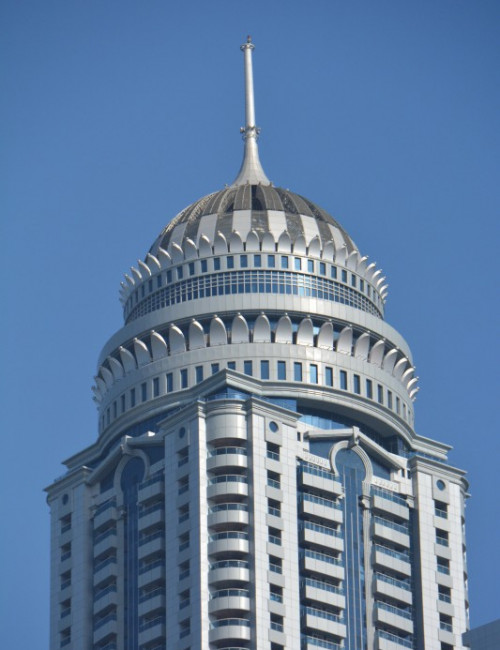
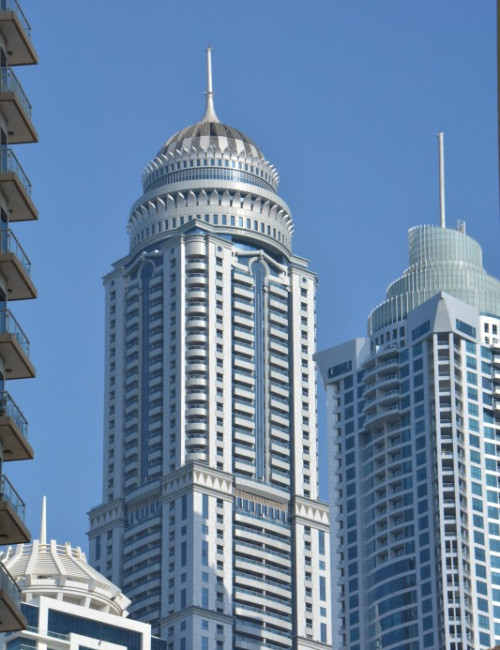
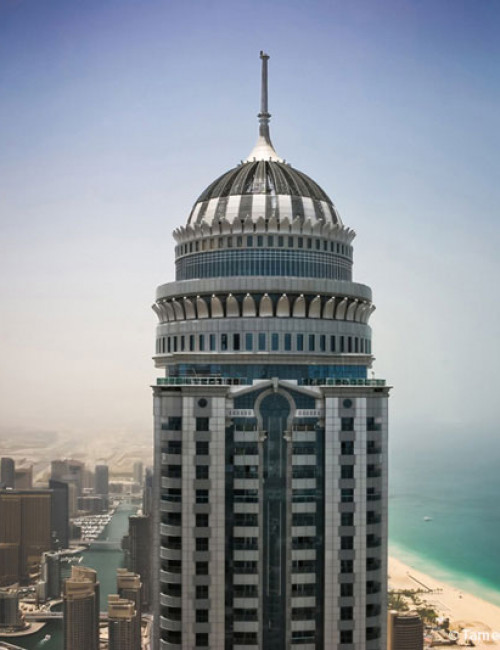
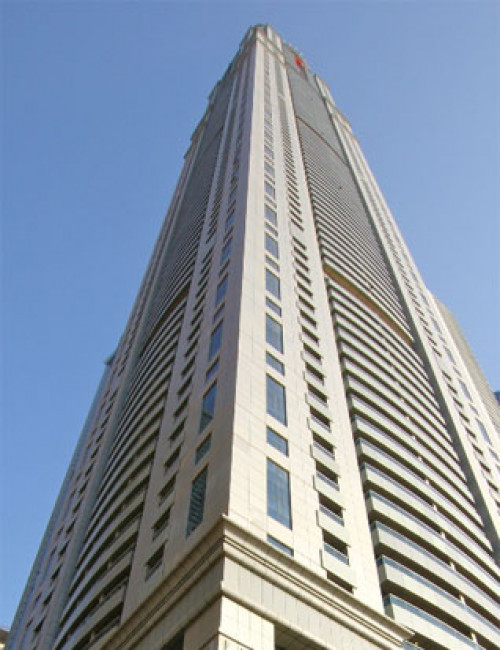
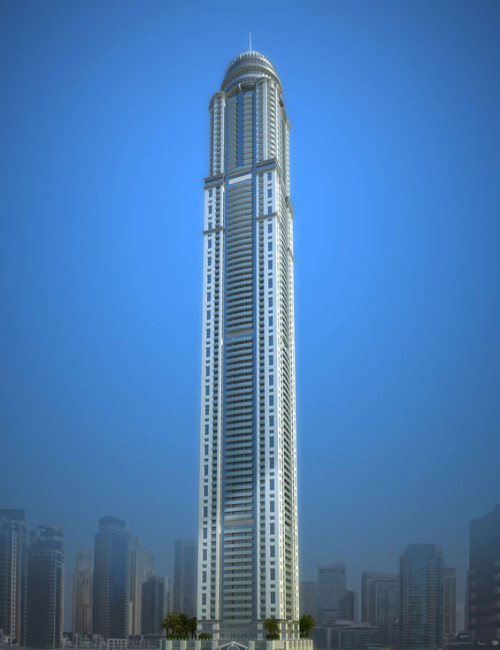
Like many of its nearby counterparts, Princess Tower is lavishly adorned in a style that reflects the region’s emerging architectural formula, with a façade that is broken up into several discernible sections. Its main body is punctuated by a series of gently bowed balconies inset into the center of each wall, while the buildings corners are lined with windows. At higher floors, the exterior pattern changes, with glass cladding broken up by crosscut vertical and horizontal panels. The crown of the tower is perhaps the building’s most remarkable feature. As the crown steps back, two series of crenellated teeth ring around a vertically striped dome that is topped with a compact spire.
The tower incorporates several strategies to manage the safety of its occupants. High-tech fire detection and suppression systems manage risks in the building, exceeding most jurisdictional requirements. To increase comfort levels, a tuned sloshing damper tank was integrated at roof level to compensate for lateral movement of the tower. Additionally, a wind-speed alarm was installed in each apartment on upper floors to warn residents of high winds prior to opening balcony doors. By combining world-class luxury and safety performance, Princess Tower set the standard for supertall residential structures.
Learn more about the Council on Vertical Urbanism
Discover how vertical living is shaping the next generation of urban environments. Explore insights, research, and global leadership in vertical urban development